
What Is a Radar-Based Proximity Warning System & Why Does Every Forklift Need One?
Forklifts are among the most important machines used in warehouses, manufacturing plants, logistics hubs, ports, and industrial facilities. They help move heavy materials quickly and efficiently, but they also create serious safety risks when operating around workers and other vehicles.
According to workplace safety studies, forklift-related accidents cause thousands of injuries worldwide every year. Many of these incidents occur because operators cannot see pedestrians, obstacles, or equipment in their blind spots. This is where a Radar-Based Proximity Warning System becomes a valuable safety solution.
At Myport Services India Pvt Ltd, we understand the growing need for advanced industrial safety technologies that help businesses reduce risks, improve operational efficiency, and protect employees. Radar-based detection systems are becoming an essential part of modern forklift safety programs.
What Is a Radar-Based Proximity Warning System?
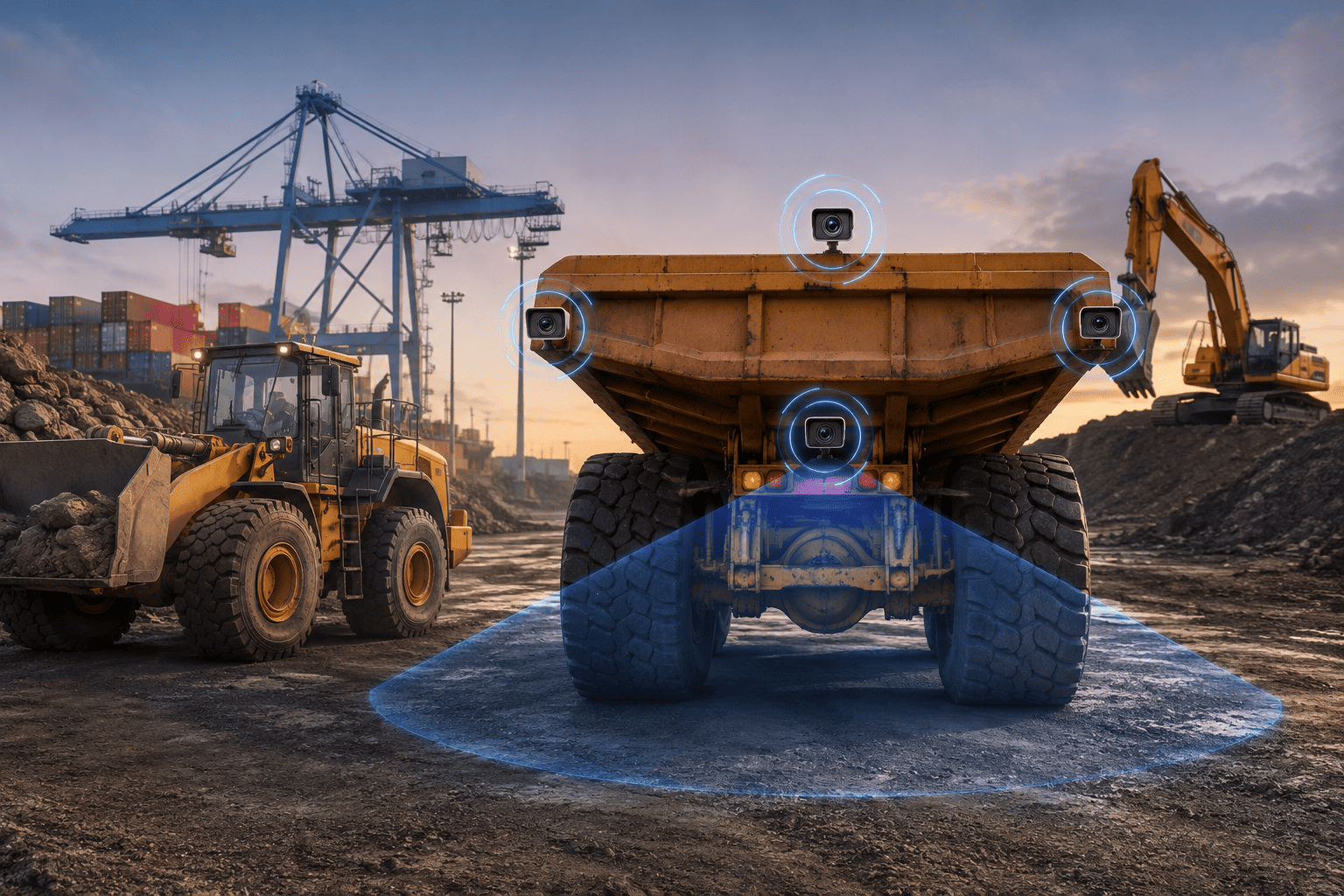
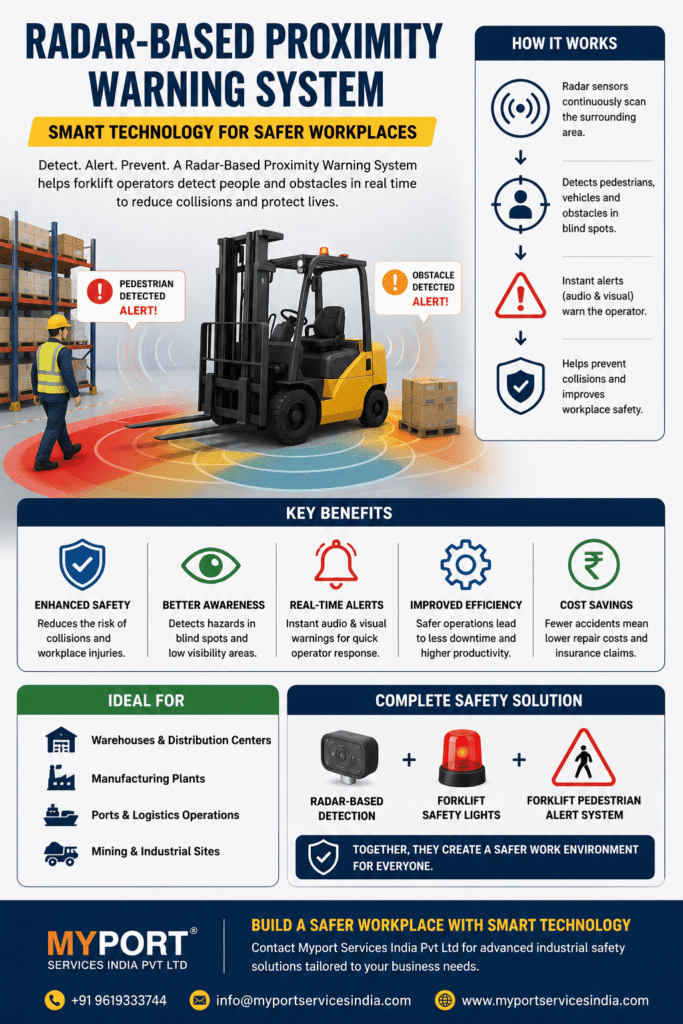
A Radar-Based Proximity Warning System is an advanced safety technology that uses radar sensors to detect objects, vehicles, and pedestrians near a forklift. The system continuously scans the surrounding area and alerts the operator whenever a potential collision risk is detected.
How the System Works
The radar sensors emit radio waves that bounce off nearby objects and return to the sensor. The system analyzes these signals to determine:
- Distance from obstacles
- Direction of movement
- Relative speed
- Collision risk level
- Presence of pedestrians in blind spots
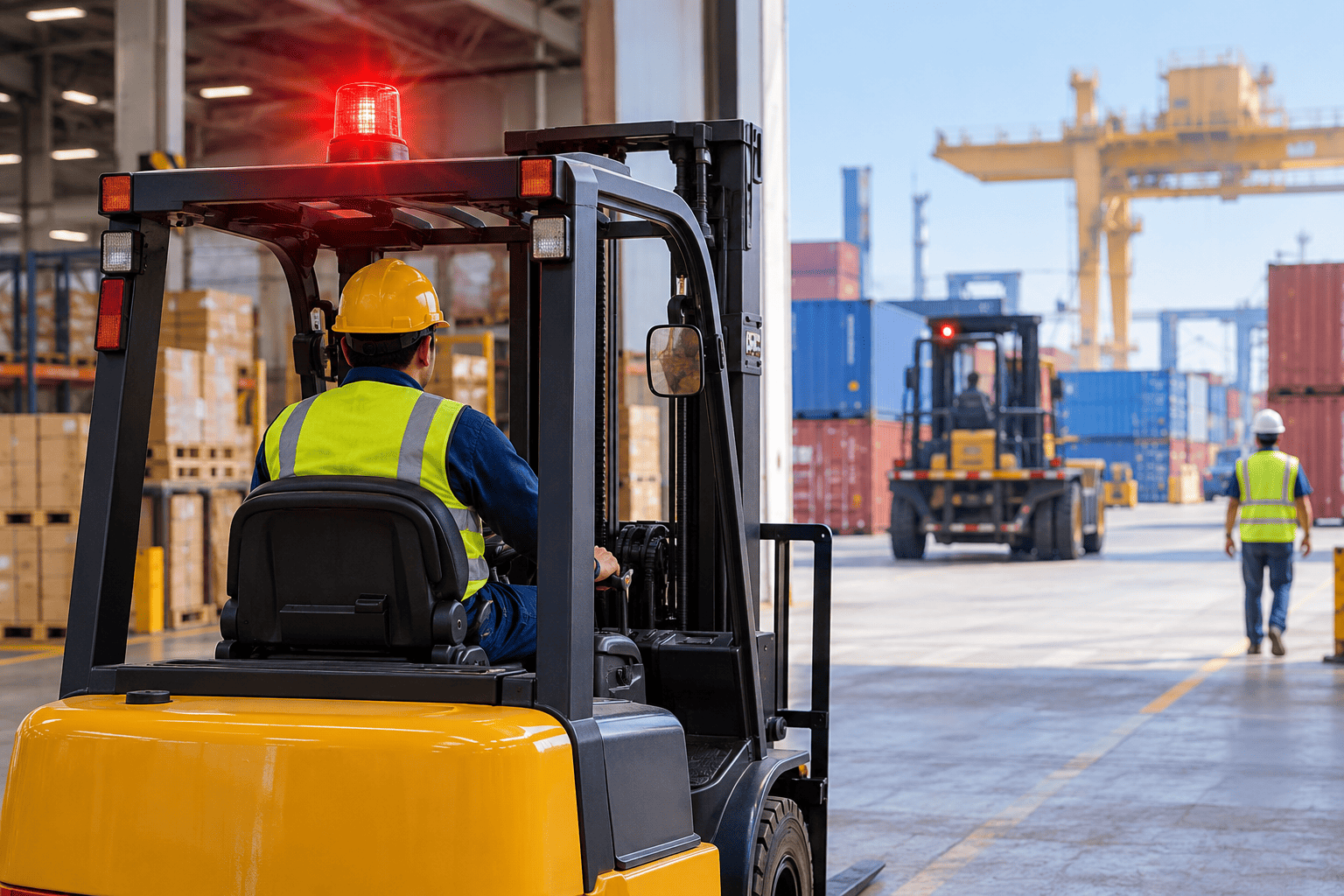
When a hazard is detected, the system immediately provides visual and audible warnings to the operator.
Key Components
A typical system includes:
- Radar sensors
- Control unit
- Audio warning alarms
- Visual display indicators
- Detection zones
- Integration with forklift safety lights
These components work together to create a safer operating environment.
Why Forklift Accidents Continue to Happen
Even experienced forklift operators face challenges in busy industrial environments.
Common Causes of Forklift Accidents
- Limited visibility
- Blind spots around the vehicle
- Poor lighting conditions
- Pedestrian movement in work areas
- Distracted operators
- Congested warehouse traffic
Traditional mirrors and operator experience alone are often not enough to prevent accidents.
The Hidden Danger of Blind Spots
Forklifts carry loads that can block forward visibility. Large warehouse racks, stacked pallets, and moving workers further increase the risk.
A pedestrian can enter a danger zone within seconds, leaving very little reaction time for the operator.
Benefits of a Radar-Based Proximity Warning System
Installing a Radar-Based Proximity Warning System offers significant advantages for industrial facilities.
Enhanced Pedestrian Safety
The system helps operators identify workers who may be hidden behind racks, equipment, or loads.
Benefits include:
- Early hazard detection
- Reduced pedestrian collisions
- Improved awareness in busy areas
- Safer warehouse operations
Real-Time Alerts
Unlike manual safety practices, radar systems operate continuously.
The system provides:
- Instant warnings
- Audible alarms
- Visual notifications
- Continuous monitoring
This allows operators to react quickly before an accident occurs.
Better Performance in Challenging Conditions
Radar technology performs effectively in:
- Dusty environments
- Rainy conditions
- Low-light areas
- Foggy locations
- Outdoor industrial yards
This reliability makes radar systems ideal for demanding industrial operations.
How a Forklift Pedestrian Alert System Improves Workplace Safety
A modern forklift pedestrian alert system works alongside radar technology to create multiple layers of protection.
Protecting Workers in High-Traffic Areas
Warehouses often have employees walking near operating forklifts.
A pedestrian alert system can:
- Warn workers of approaching forklifts
- Alert operators to nearby pedestrians
- Reduce blind corner incidents
- Improve awareness across the facility
Creating a Safety-First Culture
Employees feel more confident when advanced safety systems are installed.
Benefits include:
- Improved worker confidence
- Reduced injury risks
- Better compliance with safety policies
- Enhanced workplace morale
Safety investments often result in higher productivity and lower accident-related costs.

The Role of Forklift Safety Lights in Collision Prevention
While radar systems detect hazards, forklift safety lights help communicate danger to nearby workers.
Visual Warning Zones
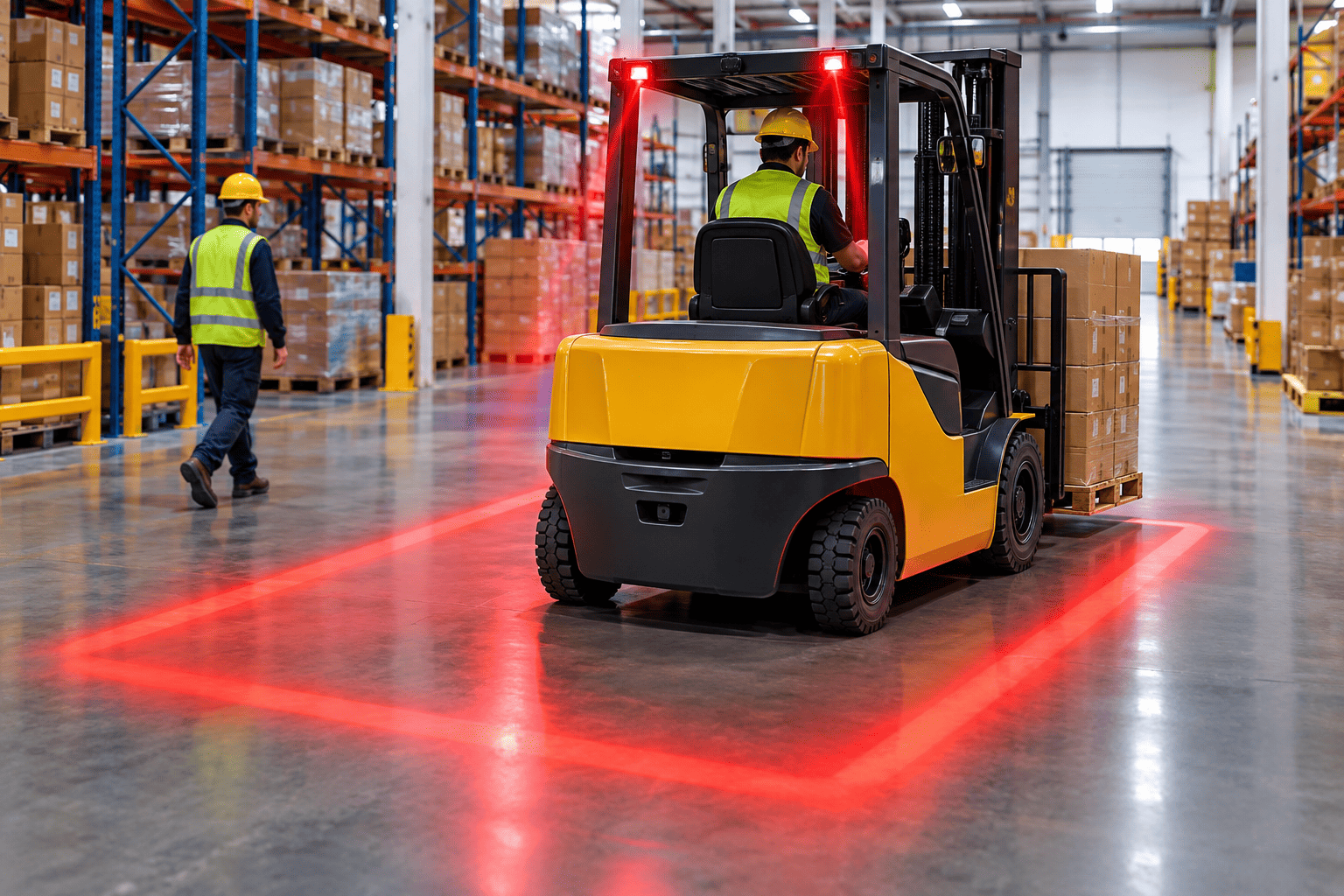
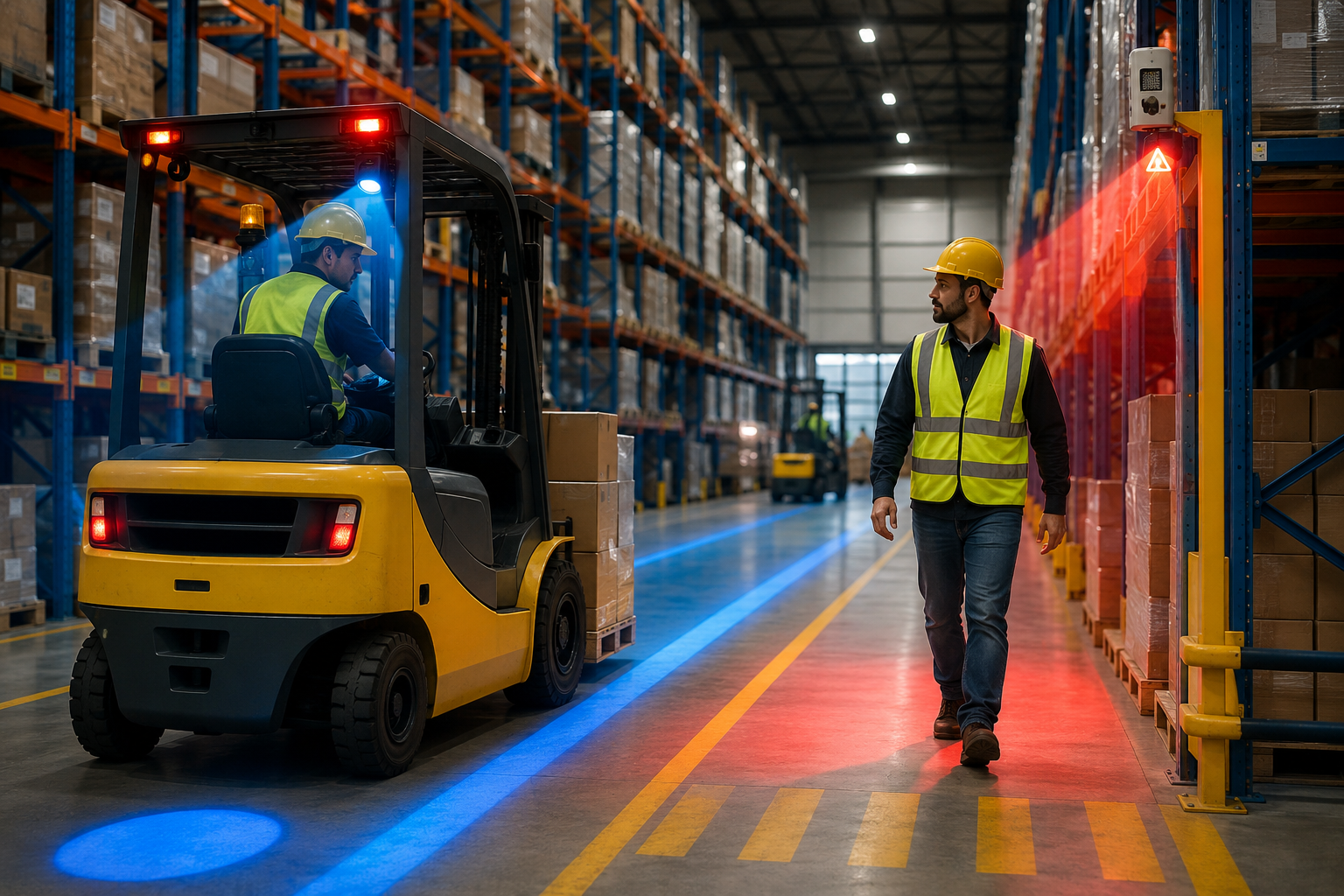
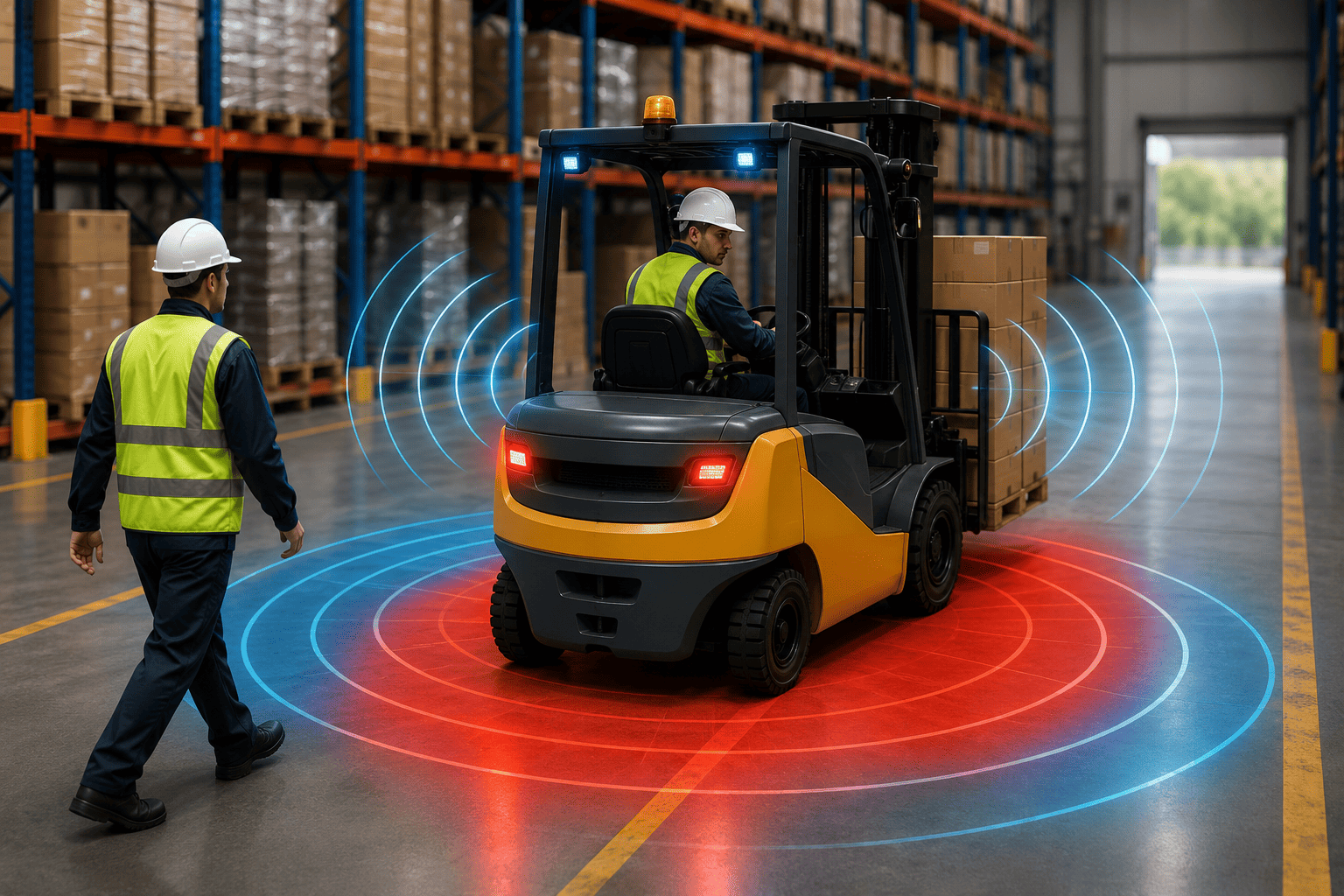
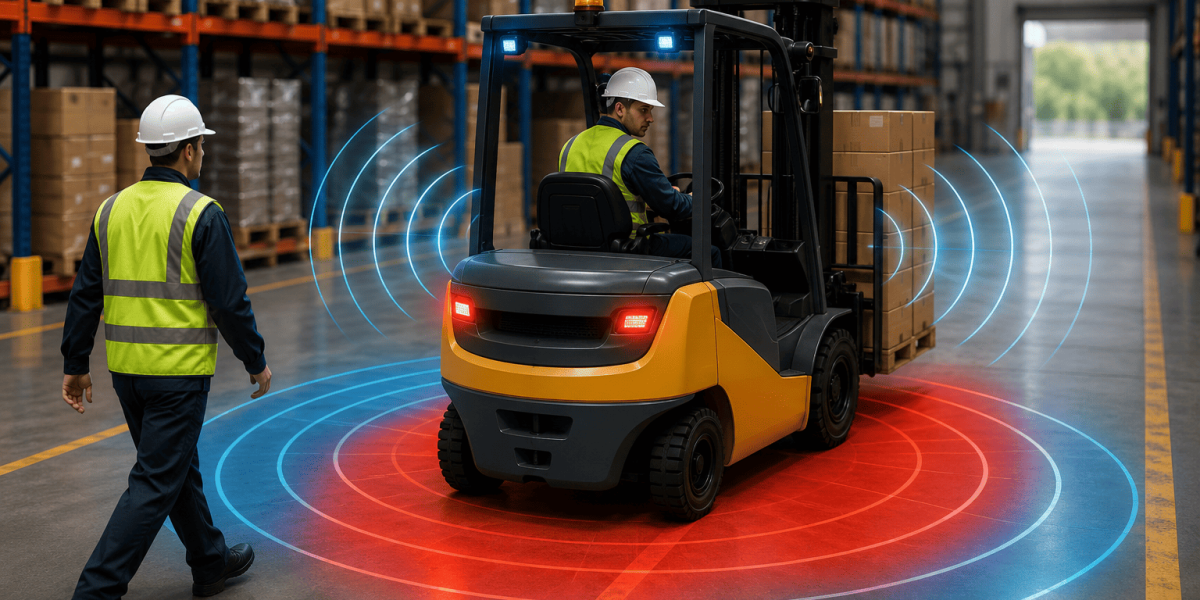
Forklift safety lights project visible warning zones onto the floor around the vehicle.
Common types include:
- Blue spot lights
- Red zone lights
- Arrow projection lights
- Pedestrian crossing projectors
These lights help workers identify forklift movement before the vehicle reaches them.
Combining Radar and Safety Lights
The most effective forklift safety strategy combines:
- Radar detection systems
- Audible alarms
- Pedestrian warning systems
- Forklift safety lights
Together, these technologies provide comprehensive protection for operators and pedestrians.
Industries That Benefit Most from Radar-Based Safety Systems
Many industries now consider radar safety solutions essential.
Warehousing and Distribution
Busy warehouses experience constant movement of:
- Forklifts
- Workers
- Pallet trucks
- Delivery vehicles
Radar systems help reduce collision risks significantly.
Manufacturing Facilities
Production plants often have limited space and high equipment traffic.
Safety systems improve visibility and reduce operational hazards.
Ports and Logistics Operations
Ports handle heavy equipment and continuous cargo movement.
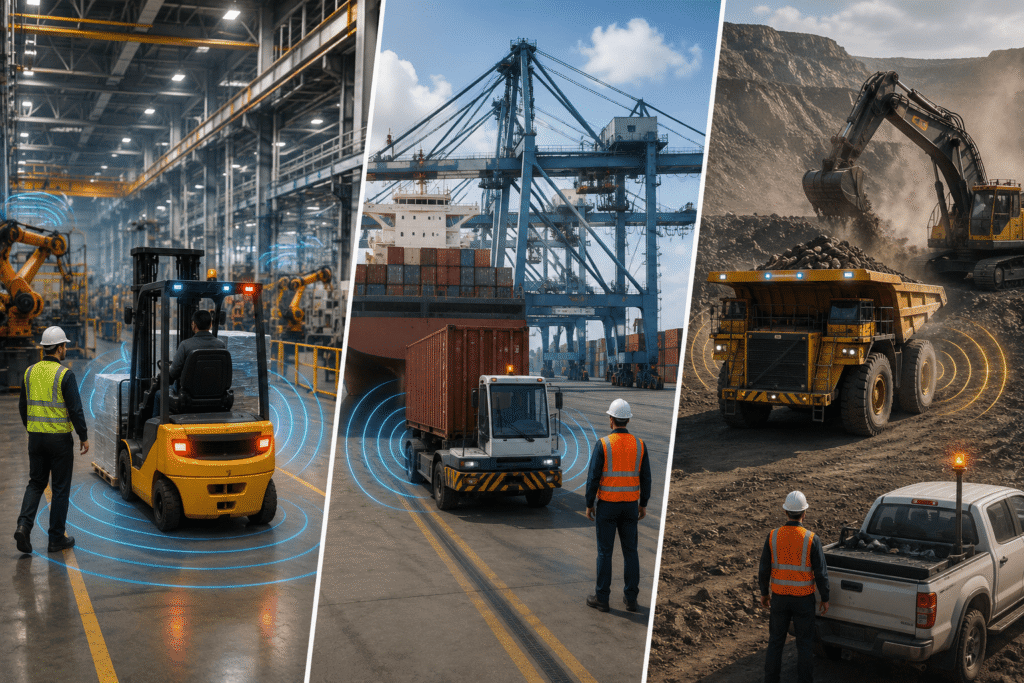
Radar-based detection systems help improve safety in large outdoor operating environments.
Mining and Industrial Sites
Harsh environments require reliable safety technology.
Radar performs effectively even when dust, vibration, and poor visibility conditions exist.
How to Choose the Right Radar-Based Proximity Warning System
Not all systems offer the same level of protection.
Important Features to Look For
Consider systems that provide:
- 360-degree detection coverage
- Adjustable warning zones
- Multiple sensor support
- Audible and visual alerts
- Weather-resistant design
- Easy installation
- Integration with existing safety equipment
Scalability and Future Expansion
Choose a solution that can grow with your facility and support additional safety technologies as operational requirements evolve.
Conclusion
As warehouses, factories, logistics centers, and ports become busier, the risk of forklift-related accidents continues to increase. A Radar-Based Proximity Warning System provides an effective way to detect hazards early, reduce collisions, and improve workplace safety. When combined with a forklift pedestrian alert system and forklift safety lights, businesses can create a safer and more productive operating environment.
Myport Services India Pvt Ltd is a trusted provider of industrial safety solutions, port equipment technologies, forklift safety systems, warning lights, proximity detection systems, and advanced workplace safety products. Our solutions are designed to help businesses improve operational efficiency while protecting workers and equipment.
Looking to improve forklift safety in your facility? Contact Myport Services India Pvt Ltd today for expert guidance, customized solutions, and a free quote. Call now and take the next step toward a safer workplace.
FAQs
It is a safety system that uses radar sensors to detect nearby objects, vehicles, and pedestrians and alerts forklift operators about potential collision risks.
The system identifies pedestrians near a forklift and provides warnings through alarms, displays, or projected safety zones to prevent accidents.
Radar systems can detect objects even in dust, darkness, rain, and poor visibility conditions, making them highly reliable when combined with camera systems.
Yes. Most modern Radar-Based Proximity Warning Systems can be retrofitted to existing forklift fleets.
No. Forklift safety lights provide visual warnings, while radar systems actively detect hazards. Both technologies work best together.