
How Do 360-Degree Camera Systems Eliminate Blind Spots in Trailers and Tankers?
Driving a heavy trailer or tanker is no easy task. These massive vehicles carry tons of cargo, navigate tight roads, and often operate in high-traffic or industrial zones where a single blind spot can lead to a serious accident. Traditional rear-view mirrors and single cameras often fail to capture the full surroundings that’s where 360-degree vehicle camera systems step in as a complete visibility solution.
Let’s explore how these systems work, what makes them indispensable for modern fleets, and how they integrate with other advanced safety tools like driver fatigue monitoring systems, forklift spotlights, and audio-visual alarms to create a safer driving environment.
Understanding the Blind Spot Problem in Heavy Vehicles
Every heavy-duty vehicle — whether it’s a long trailer or a fuel tanker — has areas that the driver simply can’t see. These blind spots exist along the sides, behind the trailer, and sometimes even in front due to the elevated cabin position.
While drivers are trained to use mirrors and sensors, the sheer size of these vehicles means there’s always a margin of error. When maneuvering through warehouses, docks, or highways, that small margin can result in property damage, collisions, or worse injury or loss of life.
That’s why logistics companies are turning toward 360-degree vehicle camera systems to close the visibility gap completely.
What Exactly Is a 360-Degree Vehicle Camera System?
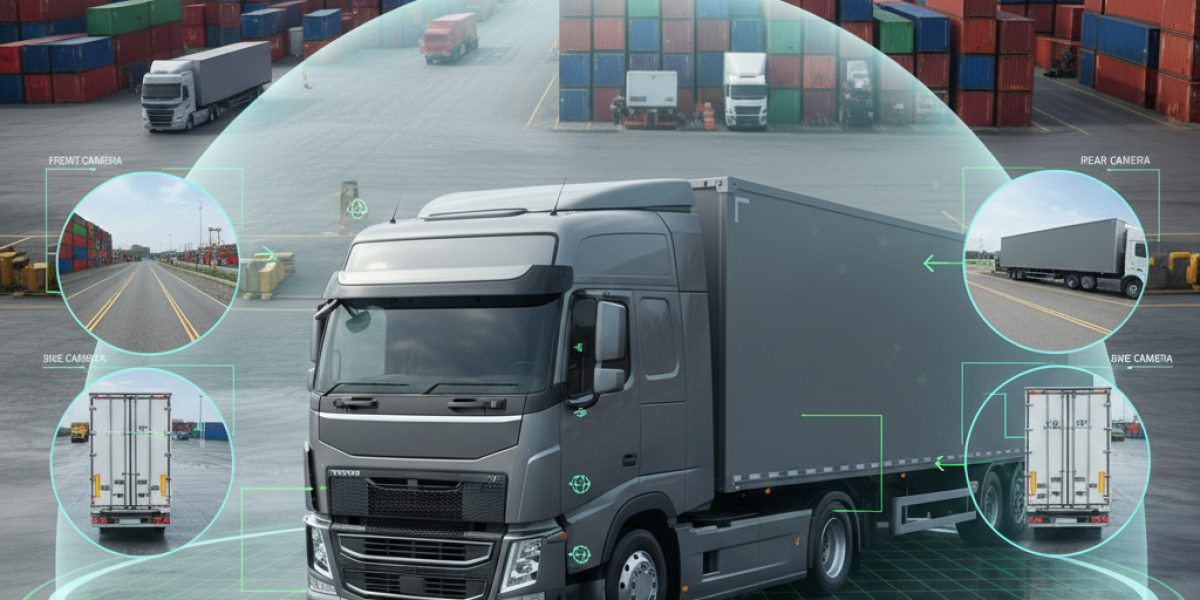
A 360-degree camera system is an integrated safety solution that uses multiple wide-angle cameras positioned around the vehicle typically at the front, rear, and sides. These cameras feed real-time video into a central processing unit that stitches the footage together, creating a seamless bird’s-eye or “surround” view of the vehicle and its environment.
This live feed is displayed on the driver’s in-cabin monitor, allowing them to:
- See all surroundings at once.
- Detect obstacles in tight spaces.
- Safely park or maneuver in congested loading areas.
- Eliminate blind spots during turns or lane changes.
For trailers and tankers, this is a game-changer especially when reversing into narrow docks, merging on highways, or transporting hazardous materials where precision and awareness are non-negotiable.
How 360-Degree Camera Systems Eliminate Blind Spots
1. Full Perimeter Awareness
Unlike rear-view or side-view mirrors that cover limited angles, a 360-degree camera captures every corner around the vehicle. This complete coverage ensures that nothing escapes the driver’s sight be it a nearby pedestrian, another vehicle, or warehouse equipment.
2. Real-Time Hazard Identification
The system instantly alerts the driver when an obstacle or movement is detected near the vehicle. This visual awareness reduces dependence on guesswork, especially in low-light or high-traffic conditions.
3. Enhanced Night and Low-Light Visibility
Modern systems integrate infrared cameras or pair with forklift spotlights, illuminating dark corners and making it easier to navigate during nighttime loading or deliveries.
4. Elimination of Rear Blind Spots During Reversing
Traditional mirrors often fail when reversing large tankers. The 360-degree camera provides a top-down view that eliminates blind zones behind the trailer, preventing collisions with stationary objects or people.
5. Safer Turns and Lane Changes
Trailers have extended side blind spots that make lane changes risky. With cameras installed on both sides, drivers gain a clear perspective of adjacent lanes, significantly reducing side-swipe incidents.
Integrating AI and Alerts for Enhanced Safety
A 360-degree view is powerful, but when combined with intelligent systems, it becomes unstoppable.
AI-Based Driver Fatigue Monitoring System
Fatigue remains one of the leading causes of accidents involving long-haul trucks and tankers. AI-powered fatigue monitoring uses facial recognition and behavior analysis to detect signs of drowsiness or distraction.
When paired with 360-degree cameras, it ensures that the driver not only sees everything but also stays alert and responsive. The system can automatically trigger audio-visual alarms if fatigue or inattention is detected prompting the driver to take immediate corrective action.
Audio-Visual Alarms for Instant Response
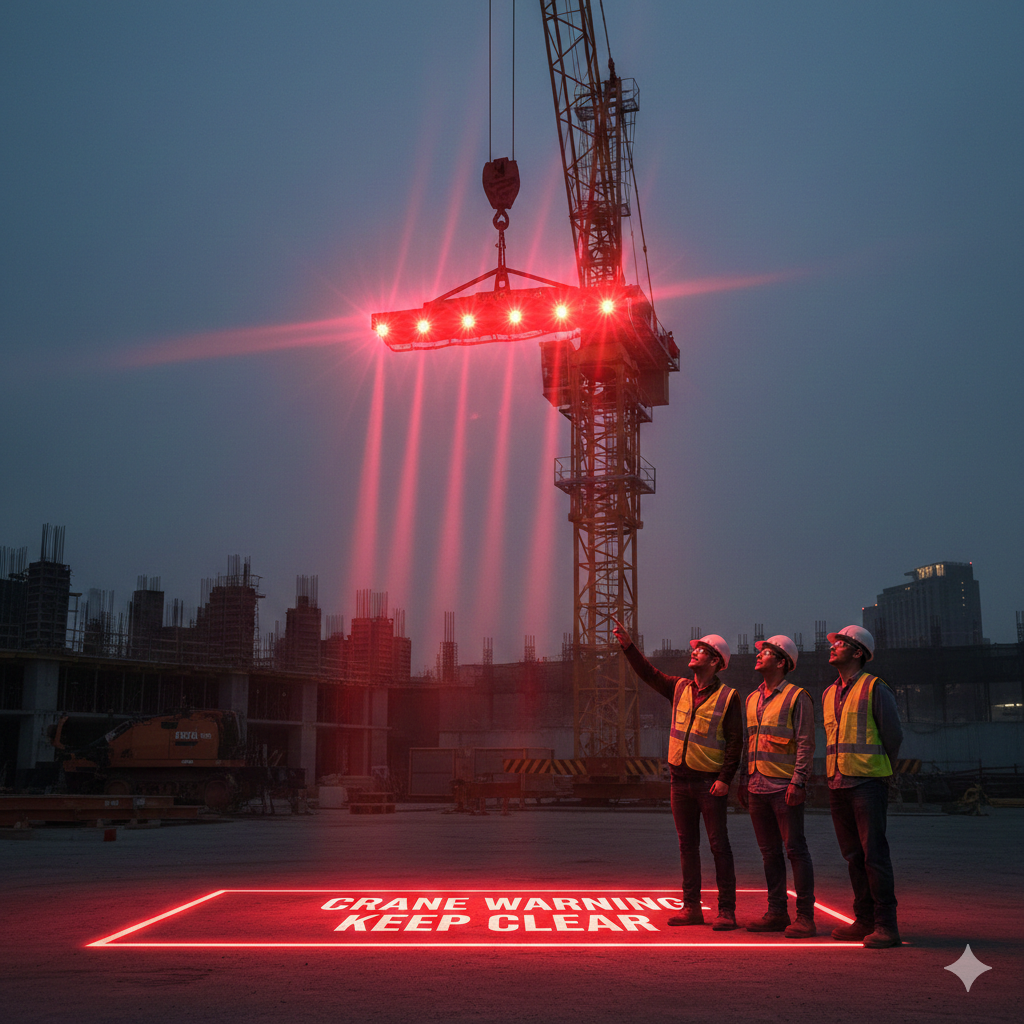
These alarms act as the voice of the vehicle alerting both drivers and nearby workers about imminent danger. Whether it’s a reversing truck or a distracted operator, the loud sound and flashing visual signals ensure no warning goes unnoticed.
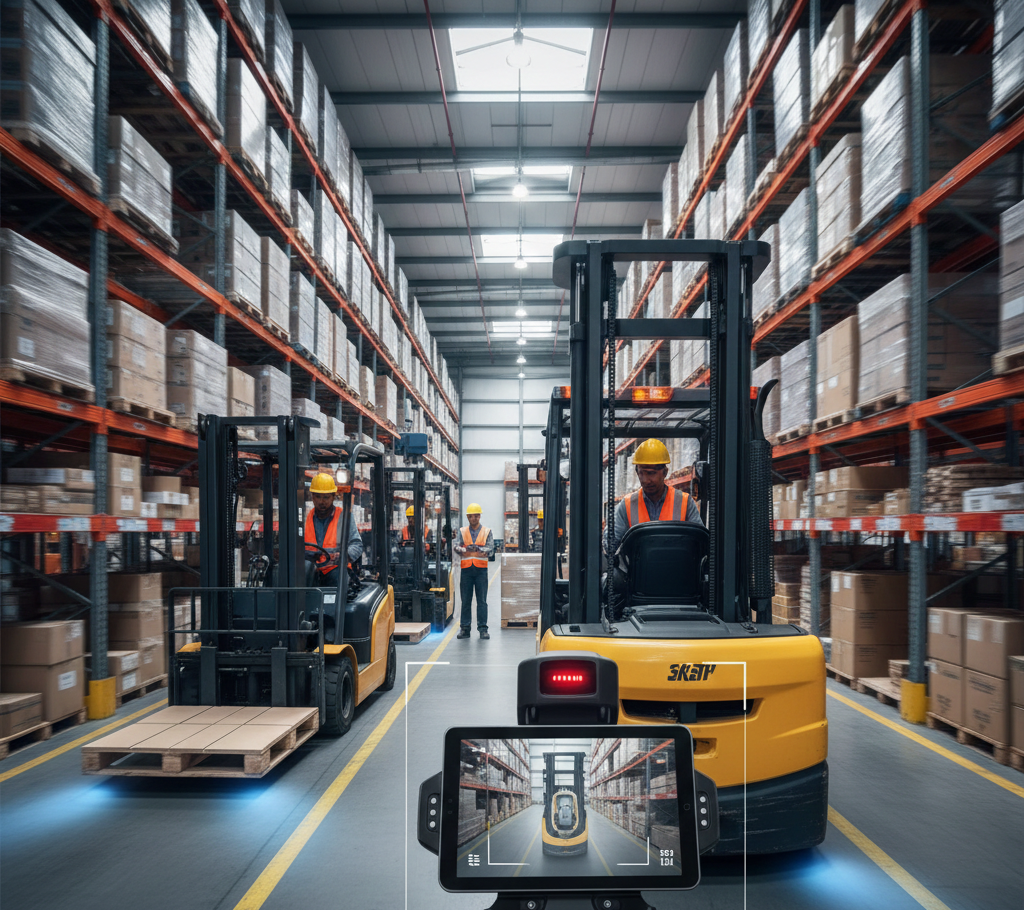
Forklift Spotlights and Night Operations
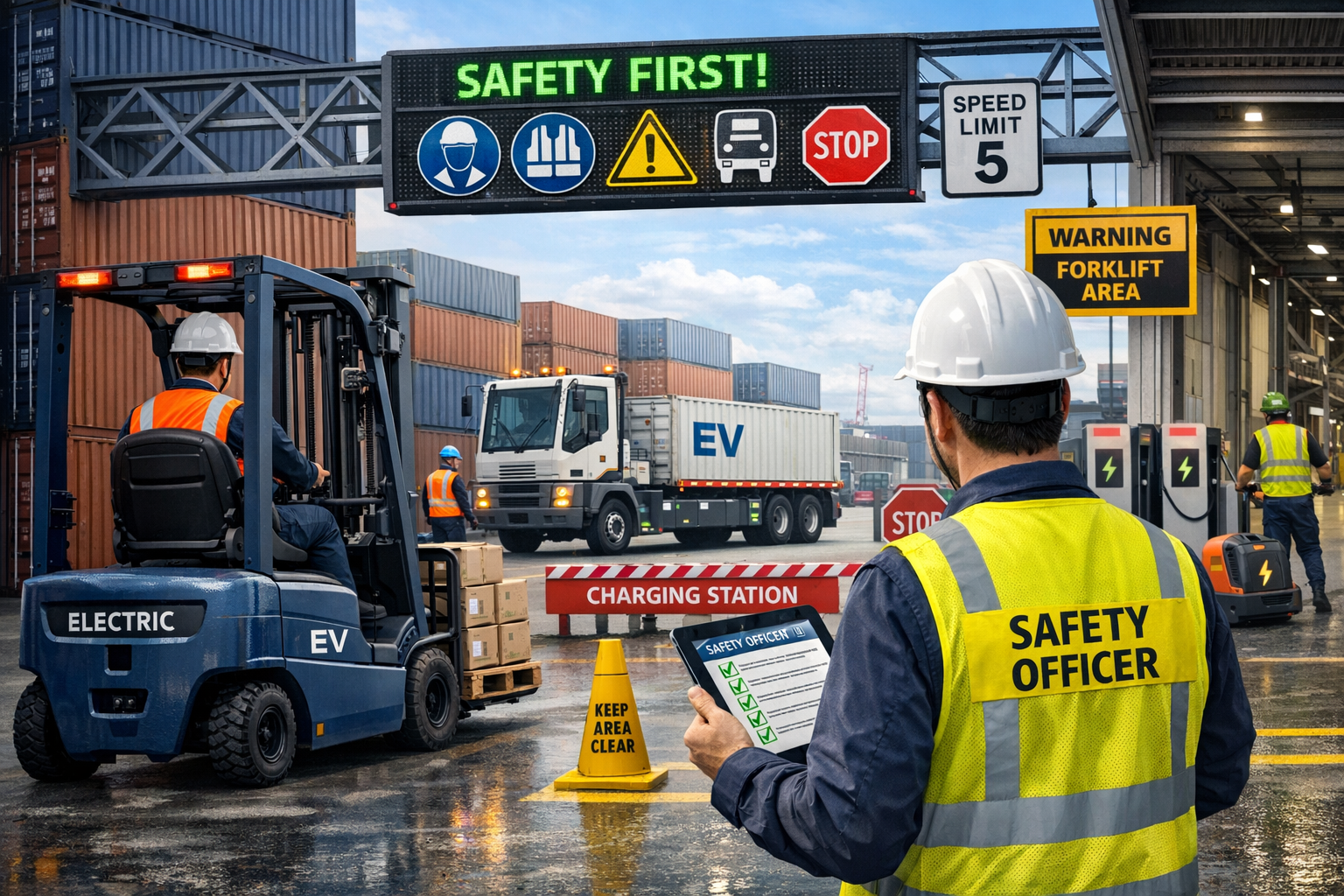
In warehouse or port environments, forklift spotlights complement camera systems by providing directional lighting that follows vehicle movement. This prevents accidents in low-light areas, ensuring that operators and pedestrians can see each other clearly.
Real-World Example: How 360° Vision Prevents Incidents
Imagine a fuel tanker reversing into a crowded depot. Without a 360-degree view, the driver relies on mirrors and a rear camera, which can’t detect workers standing close to the sides. One wrong move could lead to property damage or a human tragedy.
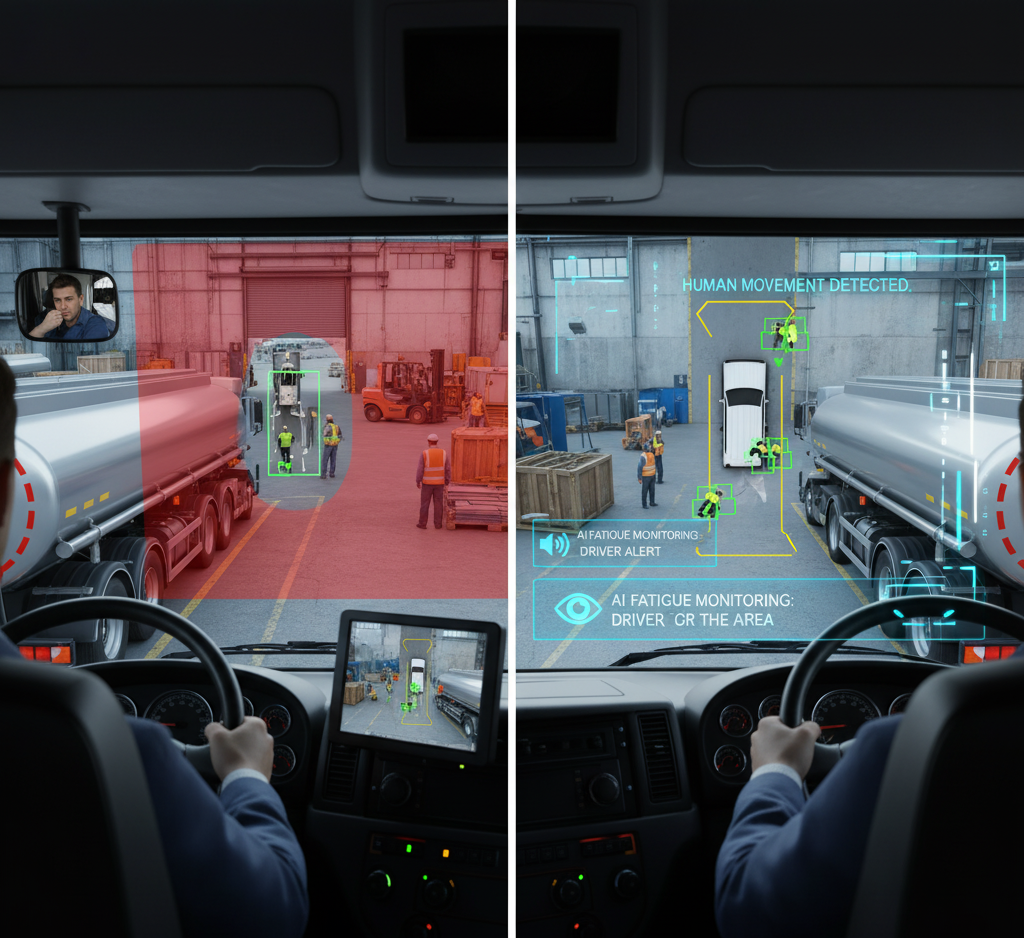
Now picture the same scenario with a 360-degree vehicle camera system:
- The driver sees a top-down view of the entire area.
- Sensors detect movement and issue alerts.
- The AI-based driver fatigue monitoring system ensures the driver is attentive.
- Audio-visual alarms warn nearby workers.
Result? A near miss is avoided. Safety wins effortlessly.
Why Fleet Managers Should Prioritize 360° Camera Systems
For decision-makers managing transport fleets, safety technology isn’t an expense it’s a safeguard for people, property, and brand reputation. Investing in 360-degree vehicle camera systems doesn’t just reduce accident rates; it improves driver confidence, lowers downtime, and ensures compliance with modern safety regulations.
Moreover, when combined with supporting technologies like fatigue detection, alarms, and spotlights, it creates a multi-layered safety ecosystem one where visibility, awareness, and alertness work hand in hand.
See Beyond Blind Spots: The Safer Road Ahead
Blind spots may be invisible, but their impact is not. Modern transport safety depends on awareness — visual, cognitive, and environmental.
A 360-degree vehicle camera system gives drivers the visibility they need, while driver fatigue monitoring systems, forklift spotlights, and audio-visual alarms add layers of intelligence and protection.
At MyPort Services India Pvt. Ltd., we understand that safety on the road and in logistics yards goes beyond compliance — it’s about ensuring every driver, vehicle, and consignment reaches its destination securely. Our advanced vehicle safety solutions, including 360° camera systems, AI-based driver monitoring, and audio-visual alert systems, are designed to help fleet operators eliminate blind spots, reduce risks, and build a smarter, safer transport ecosystem
These technologies together create a comprehensive safety net, protecting operators, pedestrians, and assets in every environment — from mining pits to distribution centers.