
Future of Pedestrian Safety in Plants and Warehouses
Industrial plants and warehouses are evolving rapidly. Faster operations, automation, and higher equipment movement mean pedestrians are exposed to greater risks than ever before. Forklifts, cranes, loaders, and transport vehicles operate in shared environments where even a small mistake can lead to serious injury.
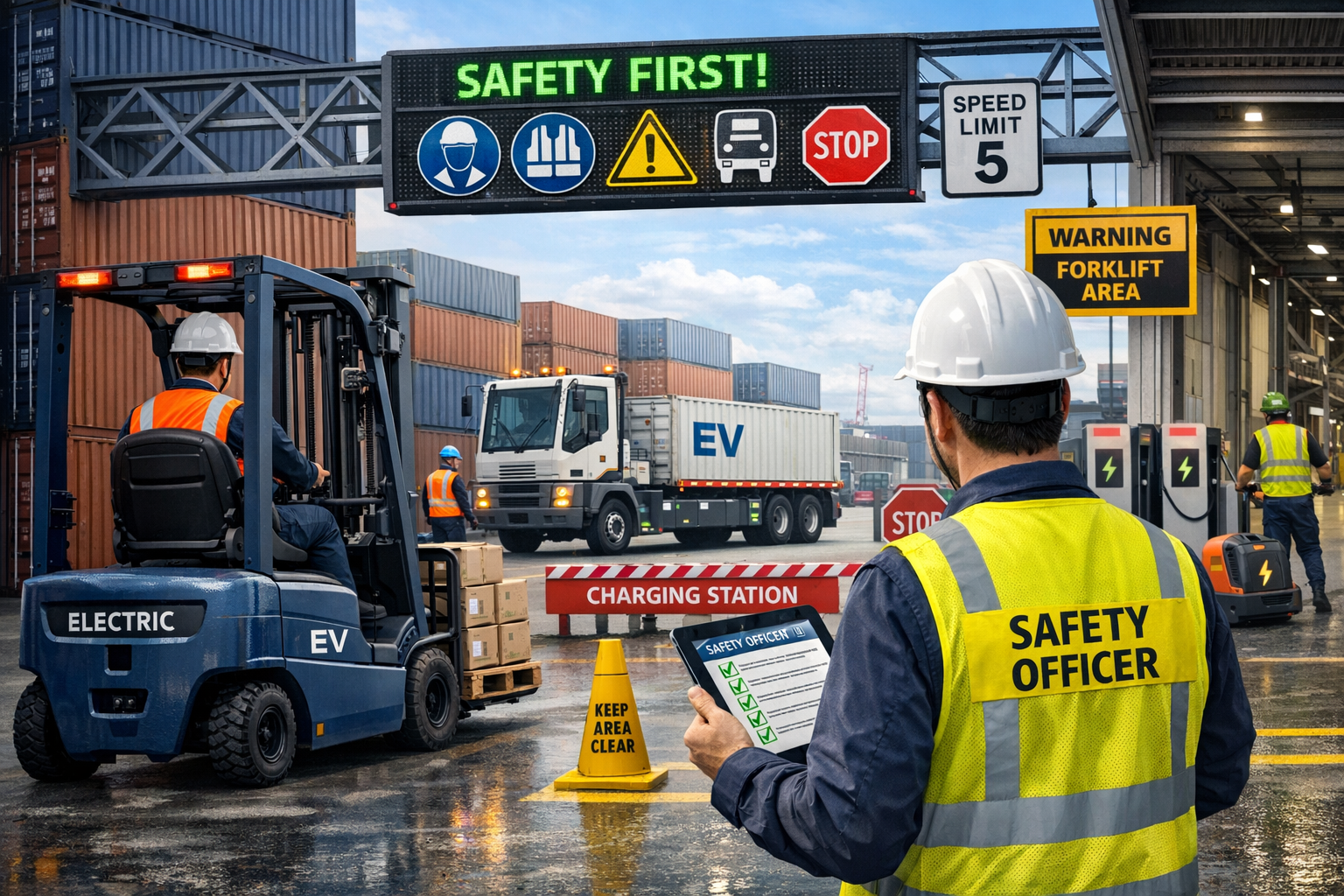
The future of pedestrian safety is shifting from basic warning signs and painted lines to smart, technology-driven prevention systems. At My Port Service, we help industrial businesses implement advanced industrial safety and port equipment solutions that reduce risk and improve operational control. Let’s explore how pedestrian safety in plants and warehouses is transforming — using both clear explanations and practical pointers.
1. Why Pedestrian Safety is Becoming a Top Priority
Workplace safety is no longer only about compliance — it is about operational continuity and workforce protection. As warehouse activities increase, the interaction between pedestrians and machines becomes more frequent and more complex.
Key Reasons:
- Increased forklift and material handling movement
- Congested loading and unloading zones
- Tight warehouse layouts with limited visibility
- Rising safety compliance requirements
- Higher cost of workplace accidents
When plants grow but safety systems remain outdated, risks multiply. Businesses must now think proactively rather than reactively.
2. Smart Technology is Shaping the Future
Modern pedestrian safety depends heavily on technology. Instead of depending only on driver awareness, industries are adopting systems that actively detect and prevent risks.
Smart safety systems provide real-time alerts, improve visibility, and reduce human error — which is one of the leading causes of accidents in industrial environments.
Emerging Technologies Include:
- AI-based pedestrian detection cameras
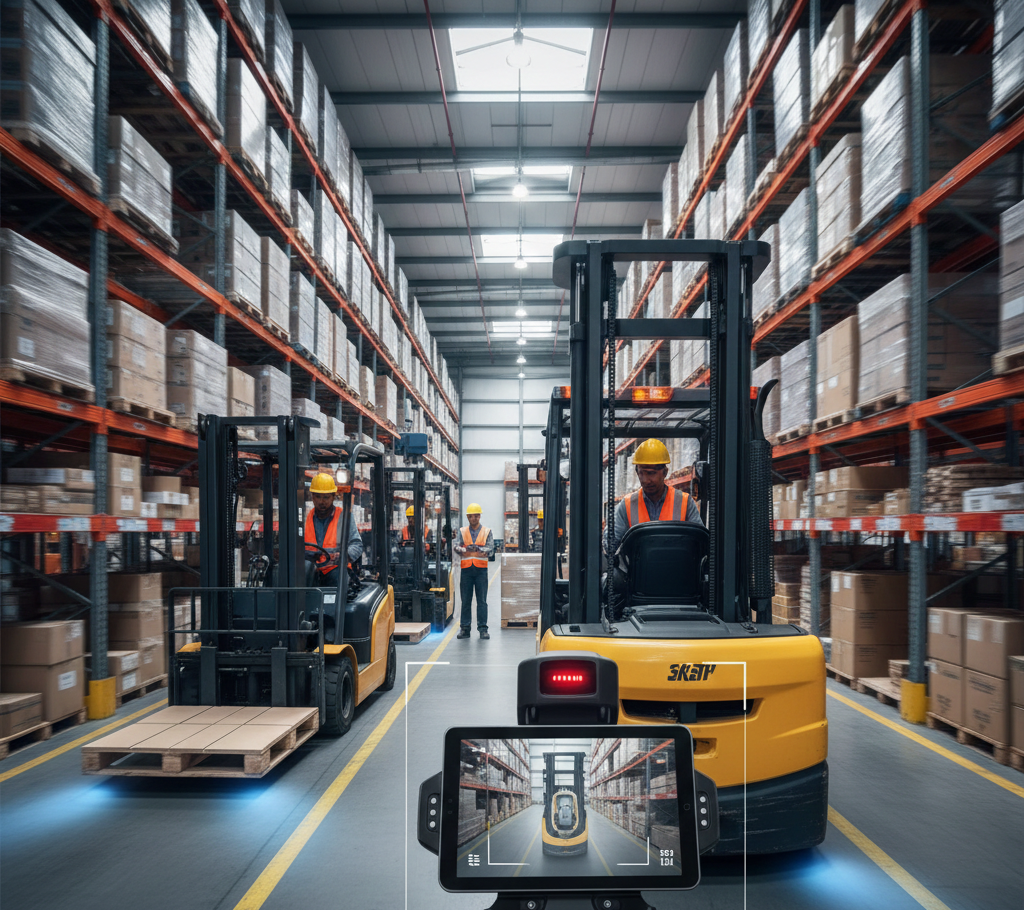
- 360-degree vehicle camera systems
- Proximity warning sensors
- Automatic braking integration in advanced setups
- Smart zone monitoring systems
These technologies create an additional layer of protection around workers on foot.
3. Advanced Warning Systems in High-Risk Areas
High-risk areas like loading docks, intersections, and storage aisles require enhanced warning mechanisms. Visual and audio alerts play a major role in preventing accidents.
Instead of relying only on horns or manual signals, modern plants are installing intelligent warning systems that activate automatically when danger is detected.
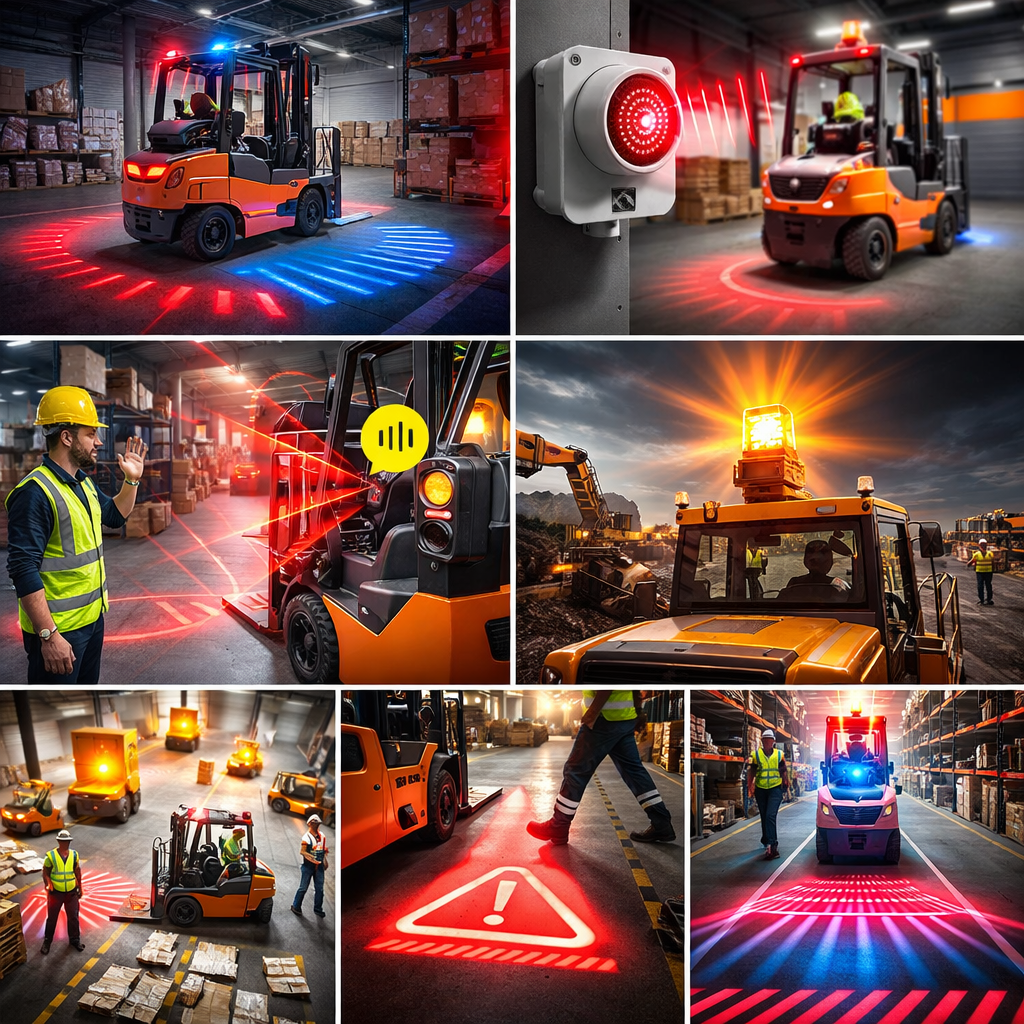
Common Safety Installations:
- LED red/blue safety zone lights around forklifts
- Reverse motion alarms
- Motion-triggered voice alerts
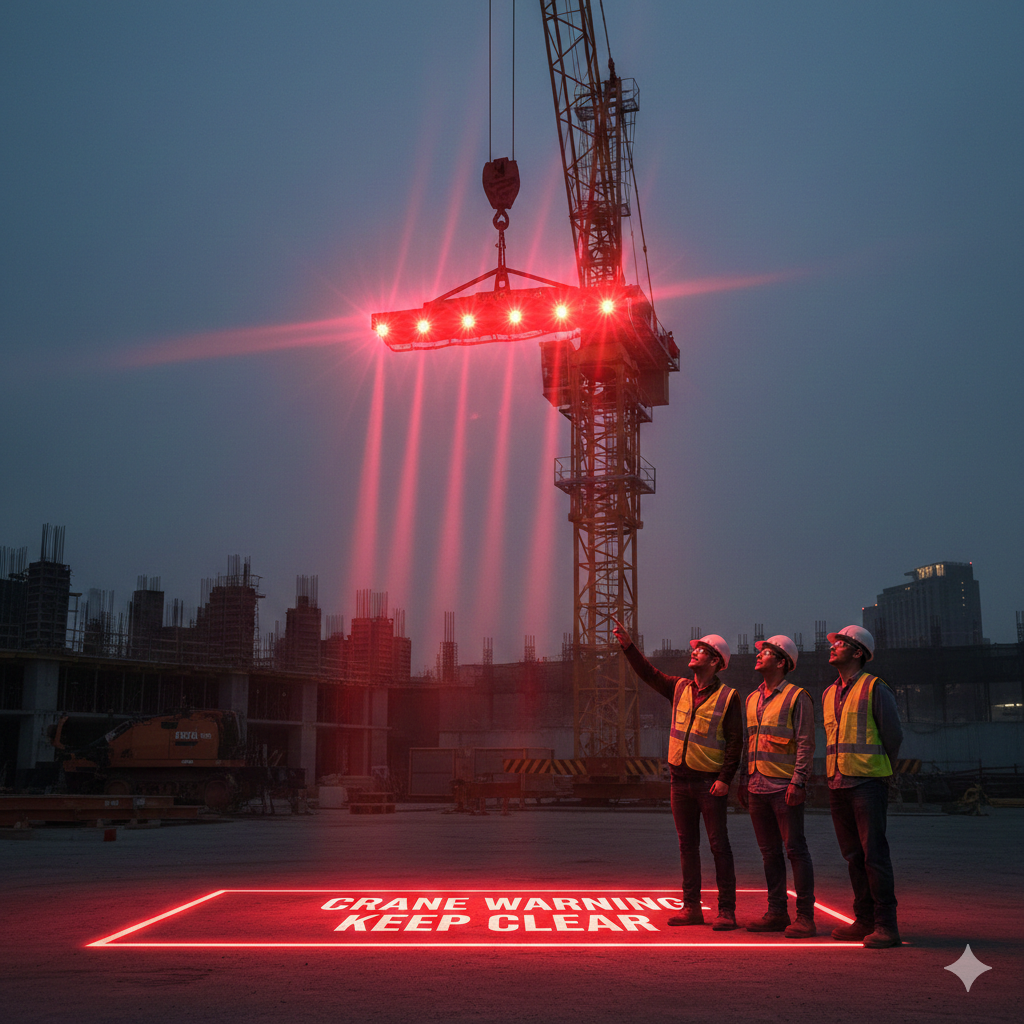
- Flashing beacon lights on heavy equipment
- Floor projection warning lights
These systems help pedestrians identify danger zones instantly, even in noisy or low-visibility environments.
4. Better Infrastructure Design for Pedestrian Movement
Technology alone cannot solve everything. The future of pedestrian safety also depends on better warehouse planning and infrastructure design.
Separating pedestrian pathways from vehicle routes significantly reduces risk. Structured layouts improve both safety and productivity.
Infrastructure Improvements Include:
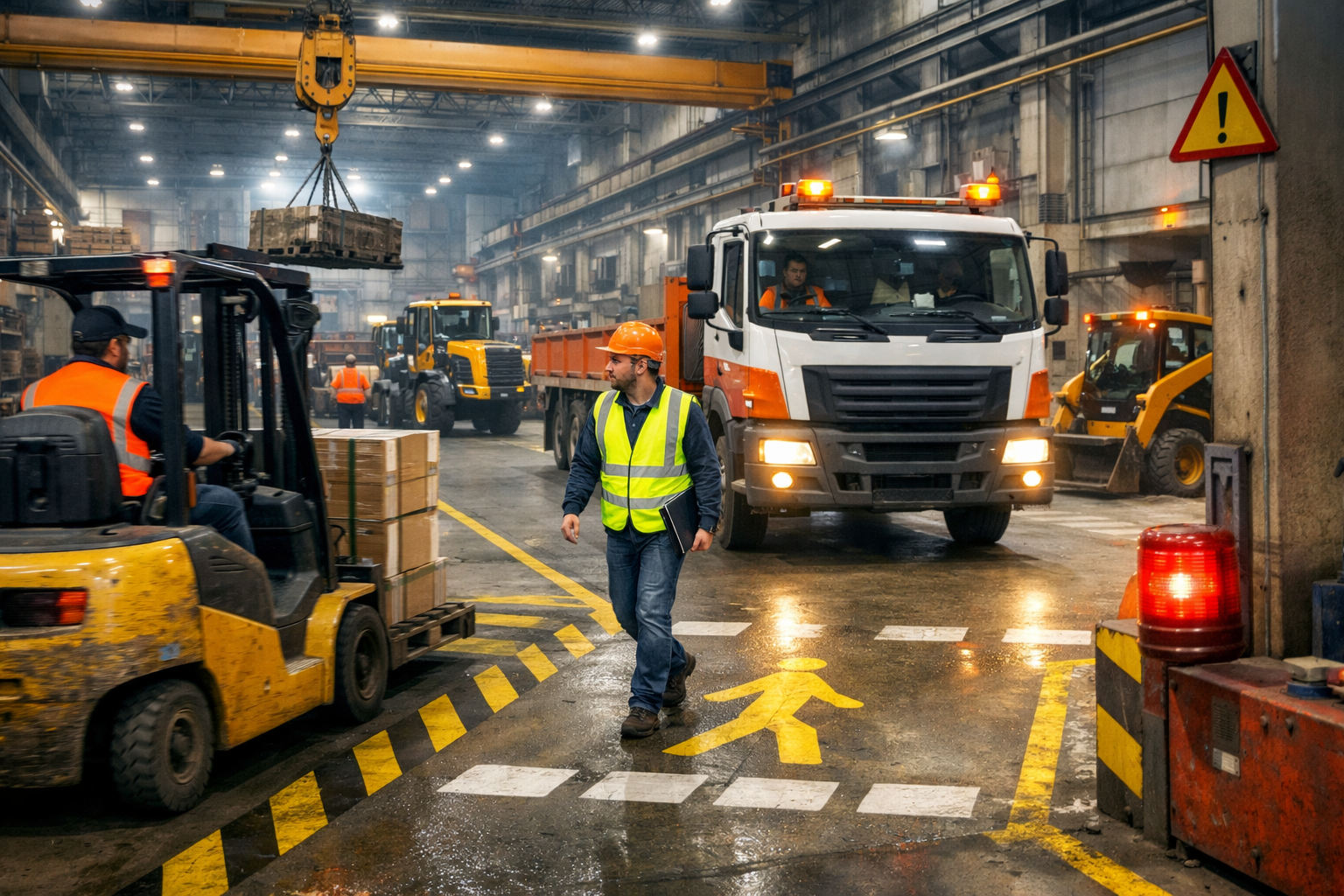
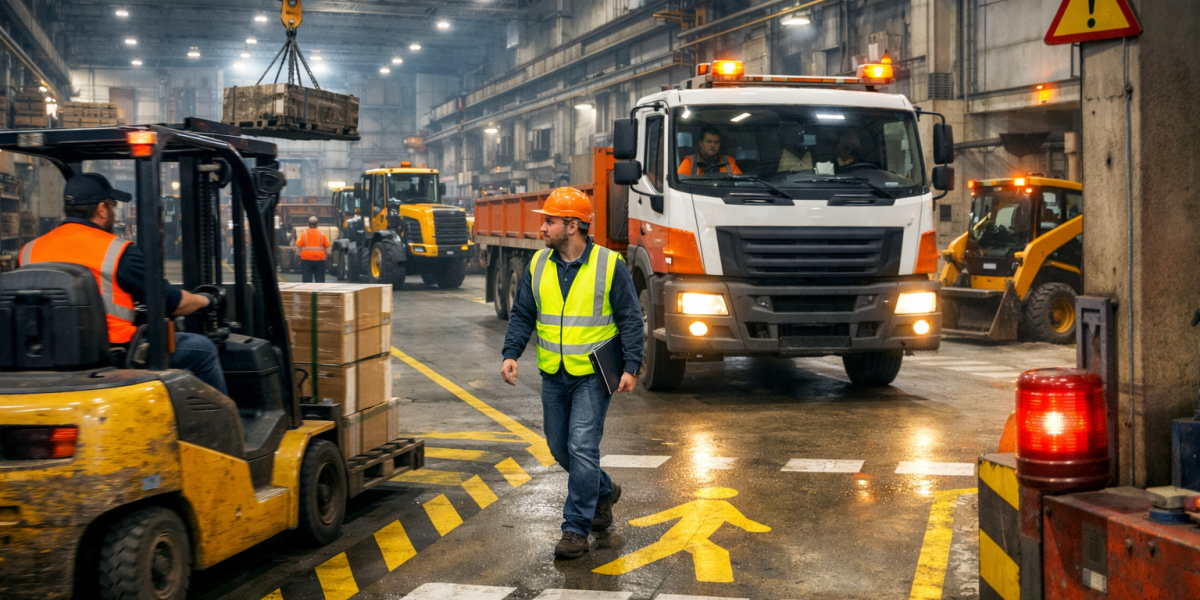
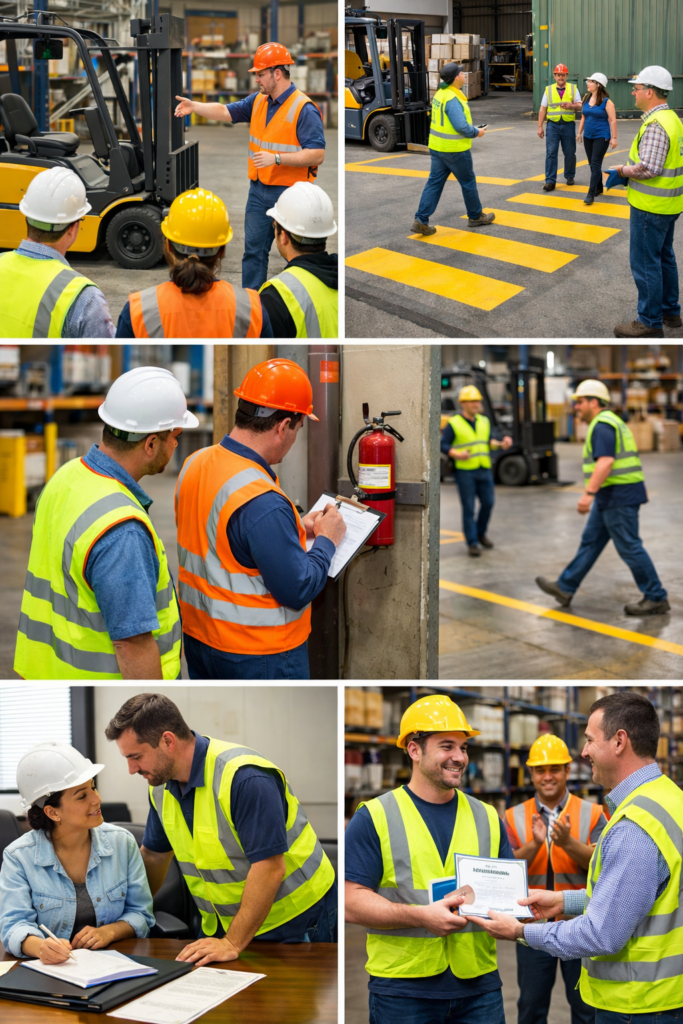
- Dedicated pedestrian walkways
- Guard rails and protective barriers
- Clearly marked crossing zones
- Anti-slip industrial flooring
- Convex mirrors at blind corners
When layout planning and safety technology work together, the workplace becomes significantly safer.
5. Data-Driven Safety Management
The future of pedestrian safety is not only about prevention but also about monitoring and analysis. Modern safety systems generate valuable data that can be used to improve processes.
Data helps safety managers identify recurring risk zones, high-traffic areas, and unsafe driving behaviors.
Benefits of Data-Based Monitoring:
- Track near-miss incidents
- Identify high-risk operational hours
- Improve driver training programs
- Reduce repeat safety violations
- Support compliance documentation
Data-driven decisions allow businesses to continuously improve their safety standards.
6. Building a Strong Safety Culture
Technology and infrastructure are powerful tools, but safety culture remains the foundation. Employees must be trained, aware, and responsible.
Regular training sessions, safety audits, and communication programs ensure that pedestrian safety becomes part of daily operations — not just a policy document.
Ways to Strengthen Safety Culture:
- Conduct regular forklift operator training
- Organize pedestrian awareness programs
- Perform routine safety inspections
- Encourage reporting of near-miss incidents
- Reward safe behavior
A safety-first mindset ensures long-term protection and operational stability.
Conclusion
The future of pedestrian safety in plants and warehouses lies in smart technology, better infrastructure planning, real-time monitoring, and a strong safety culture. Businesses that adopt proactive safety solutions today will not only reduce accidents but also improve productivity and compliance.
My Port Service specializes in industrial safety systems and port equipment solutions designed for plants, warehouses, logistics hubs, and port operations. From warning lights and monitoring systems to advanced vehicle safety solutions, the company provides reliable and practical safety upgrades tailored to industrial needs.
If you are looking to enhance pedestrian safety in your facility, now is the right time to act.
Contact My Port Service today to discuss your safety requirements, request a site assessment, or get a customized quote. Call now and take the next step toward a safer workplace.
FAQs
Pedestrian safety is critical because workers often share space with heavy machinery. Without proper systems, the risk of collisions and serious injuries increases significantly.
The most effective solutions include AI detection systems, proximity warning sensors, LED safety lights, designated walkways, and proper training programs.
Proximity systems detect when pedestrians enter a vehicle’s danger zone and immediately alert the operator, reducing reaction time and preventing accidents.
Yes. Even smaller facilities experience blind spots and congestion. Scalable safety solutions can be customized based on operational size and risk level.
Safety systems should be inspected regularly — ideally during routine maintenance checks — to ensure proper functioning and compliance.