
Are You Using the Right Forklift Safety Devices to Protect Your Workforce and Assets?
Forklifts are the backbone of warehouses, ports, manufacturing plants, and logistics hubs. Yet, they are also among the most dangerous industrial vehicles when safety systems are outdated or incomplete. Every year, preventable forklift accidents lead to injuries, damaged goods, halted operations, and legal liabilities.
Today’s industrial environments demand smarter protection—solutions that go beyond basic warnings and mirrors. Advanced systems such as a forklift safety camera system, collision sensor for forklift, 360 degree vehicle camera system, and AI-Based Driver Fatigue Monitoring Systems are redefining how businesses protect people and assets.
The real question is no longer “Do we need safety devices?”
It is “Are we using the right ones?”
1. The Real Cost of Inadequate Forklift Safety
Forklift accidents rarely happen due to a single failure. They occur when limited visibility, delayed reactions, and human fatigue combine. Unfortunately, many facilities still rely on outdated safety methods that cannot handle modern operational complexity.
Accident Impact by the Numbers
- Forklift incidents account for nearly 25% of warehouse injuries
- Poor visibility causes over 60% of forklift collisions
- Equipment damage and downtime increase operational costs by 30–40% annually
While traditional safety tools may appear cost-effective, the long-term financial and human costs are far greater. This is where advanced systems like a forklift safety camera system and collision sensor for forklift deliver measurable value.
2. Forklift Safety Camera Systems: Seeing Beyond Blind Spots
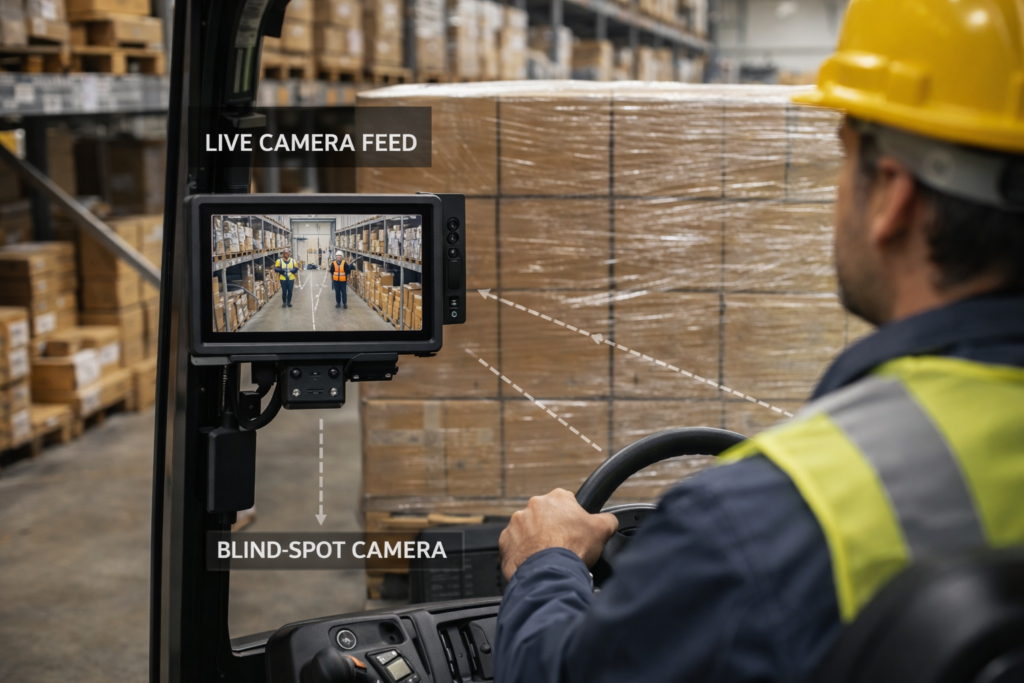
A forklift safety camera system provides operators with real-time visuals of blind zones, rear movement, and surrounding activity. Unlike mirrors, cameras offer consistent clarity regardless of load size, lighting, or vibrations.
These systems significantly improve decision-making, especially in narrow aisles and high-traffic zones.
Visibility & Safety Improvements
- Reduces blind-spot incidents by up to 65%
- Improves operator reaction time by 50%
- Lowers product damage claims by 30%
When combined with other safety technologies, a forklift safety camera system becomes the foundation of a modern industrial safety ecosystem.
3. Collision Sensors: Preventing Impact Before It Happens
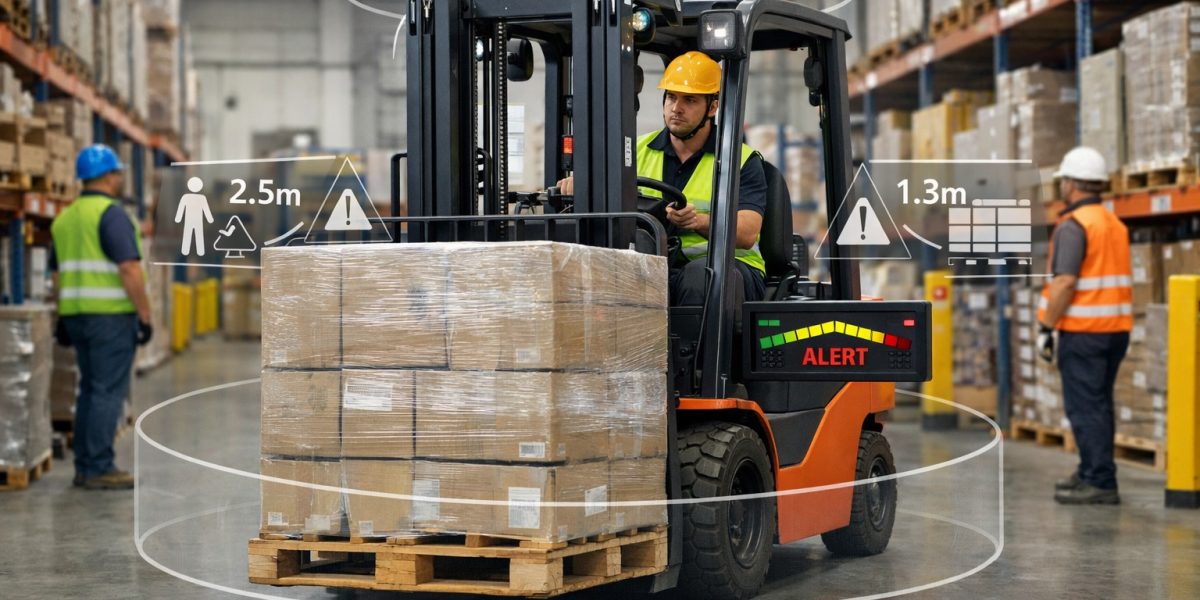
A collision sensor for forklift adds a critical layer of proactive protection. These sensors detect nearby objects, pedestrians, or vehicles and alert operators before contact occurs.
Unlike passive safety measures, collision sensors actively prevent accidents rather than responding after damage is done.
Collision Prevention Statistics
- Reduces forklift-to-person collisions by over 70%
- Lowers repair and maintenance costs by 25%
- Improves compliance with workplace safety regulations
Trade-Off: Sensitivity vs Practicality
While overly sensitive sensors may trigger frequent alerts, modern collision sensor for forklift solutions are adjustable. Providers like MyPort Services India Pvt. Ltd. ensure sensors are calibrated to real operational conditions, not theoretical scenarios.
4. 360 Degree Vehicle Camera Systems: Total Situational Awareness
In complex industrial layouts, a single camera is not enough. A 360 degree vehicle camera system offers a bird’s-eye view of the forklift and its surroundings, eliminating guesswork entirely.
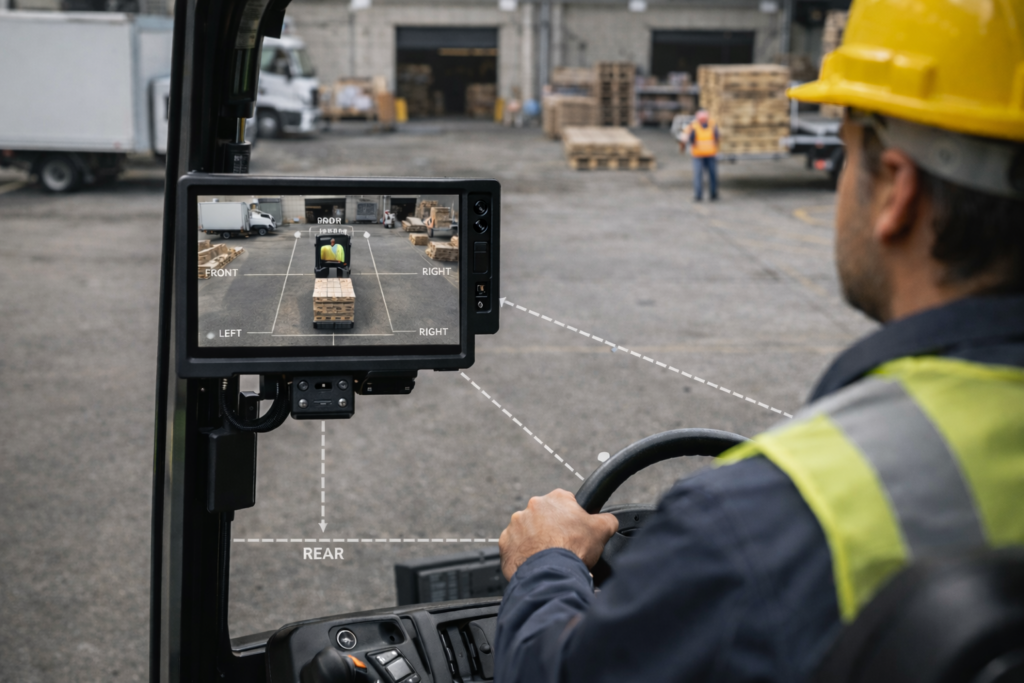
This system is especially effective in busy yards, loading docks, and shared pedestrian zones.
Operational Advantages
- Cuts collision risk by up to 70%
- Improves maneuvering efficiency by 20%
- Reduces insurance claims related to vehicle damage
When paired with a forklift safety camera system, a 360 degree vehicle camera system delivers unmatched visibility and operational confidence.
5. Addressing Human Risk With AI-Based Driver Monitoring
Even with the best visibility tools, human fatigue remains a major risk factor. Long shifts, repetitive movements, and high-pressure environments reduce alertness over time.
AI-Based Driver Fatigue Monitoring Systems analyze facial movements, eye closure, and attention levels to detect fatigue or distraction in real time.
Fatigue-Related Risk Reduction
- Fatigue-related incidents drop by up to 60%
- Reaction delays reduce by 45%
- Operator well-being improves significantly over long shifts
Integrating AI-Based Driver Fatigue Monitoring Systems with forklift operations ensures that safety is not just mechanical—but human-centric.
6. Building a Complete Safety Ecosystem (Not Just Devices)
The most effective safety strategy is not about installing one device—it’s about creating a connected safety environment. Cameras, sensors, and AI systems work best when integrated into a unified framework.
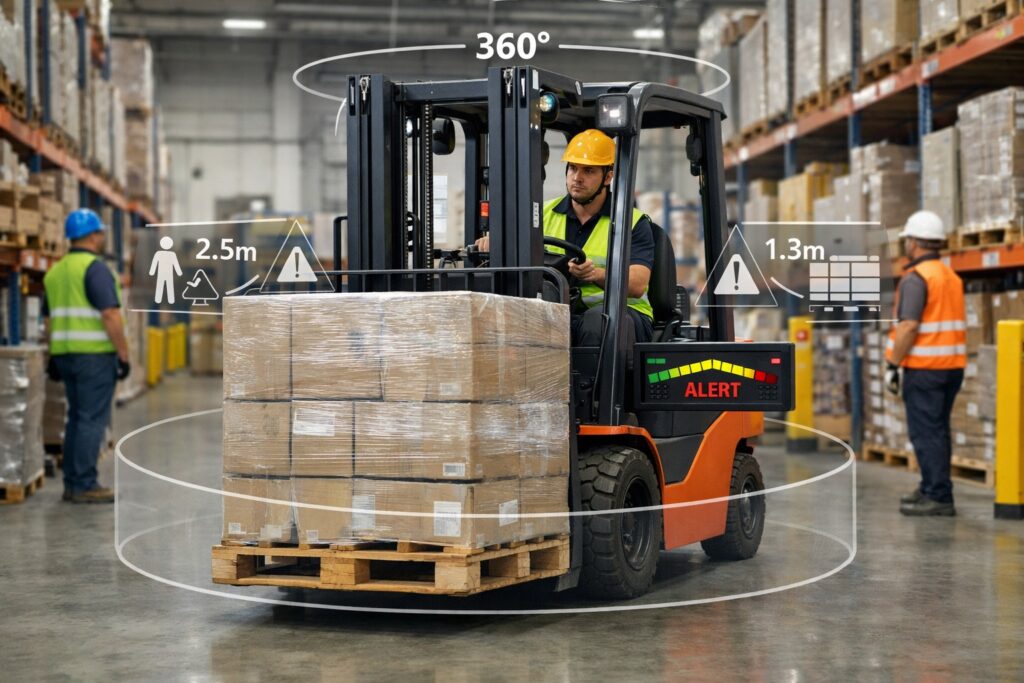
Why Integration Matters
- Multi-layered safety reduces risk by over 80%
- Operators respond faster to combined visual and behavioral alerts
- Safety data helps improve training and process design
MyPort Services India Pvt. Ltd. specializes in delivering integrated safety solutions that combine a forklift safety camera system, collision sensor for forklift, 360 degree vehicle camera system, and AI-Based Driver Fatigue Monitoring Systems—all tailored to Indian industrial conditions.
Are You Truly Protecting Your People and Assets?
Forklift safety is no longer about compliance—it’s about responsibility. Relying solely on basic tools leaves gaps that modern workplaces cannot afford. Advanced solutions like a forklift safety camera system, collision sensor for forklift, 360 degree vehicle camera system, and AI-Based Driver Fatigue Monitoring Systems address both mechanical and human risk factors.
MyPort Services India Pvt. Ltd. helps businesses move from reactive safety to proactive protection—reducing accidents, safeguarding assets, and building a safety-first culture.
Protect your workforce. Secure your assets. Upgrade your forklift safety today.
Get in touch with MyPort Services India Pvt. Ltd. to explore intelligent forklift safety solutions designed for real-world industrial challenges.