

How Do Beacon Lights Improve Industrial Vehicle Safety?
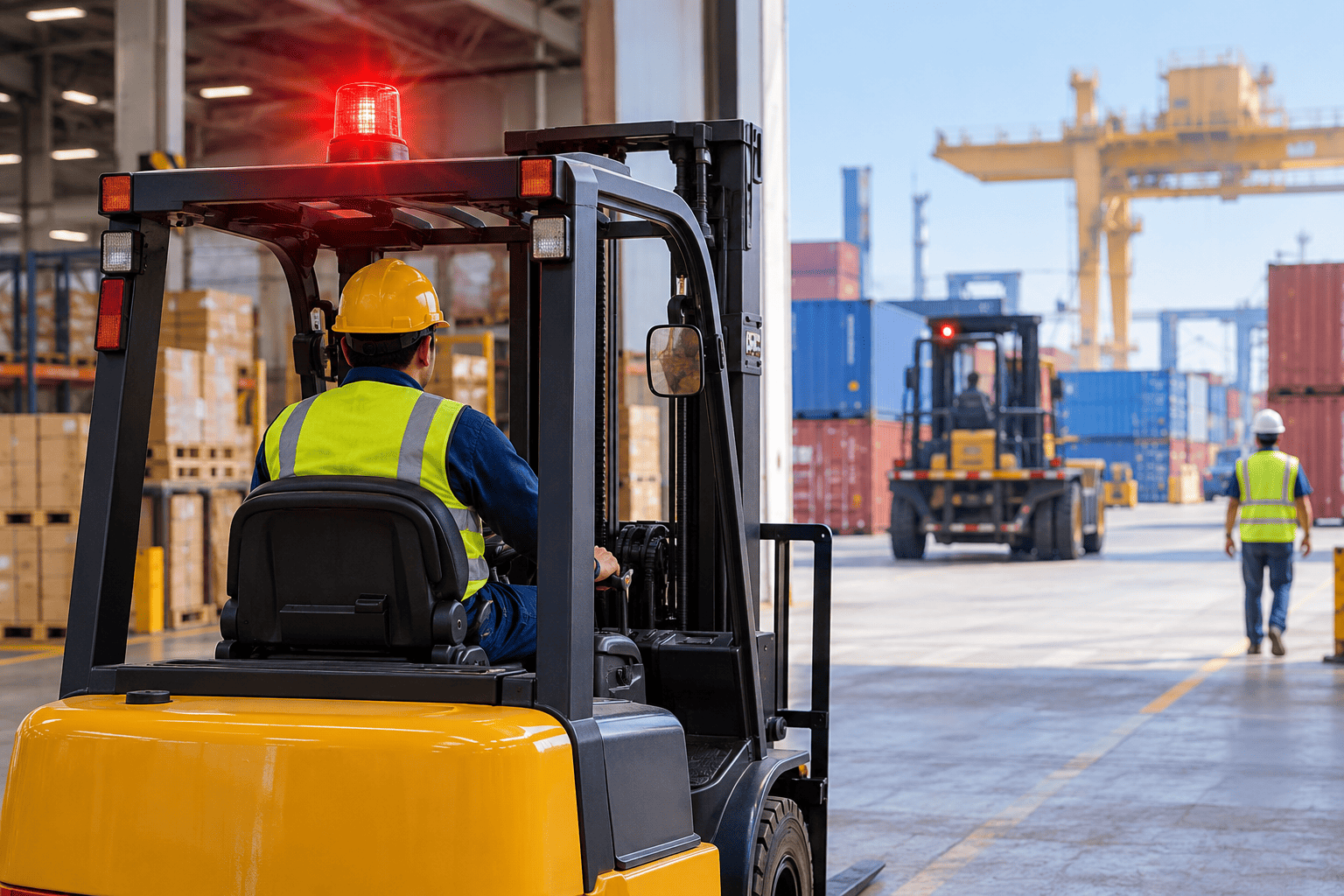
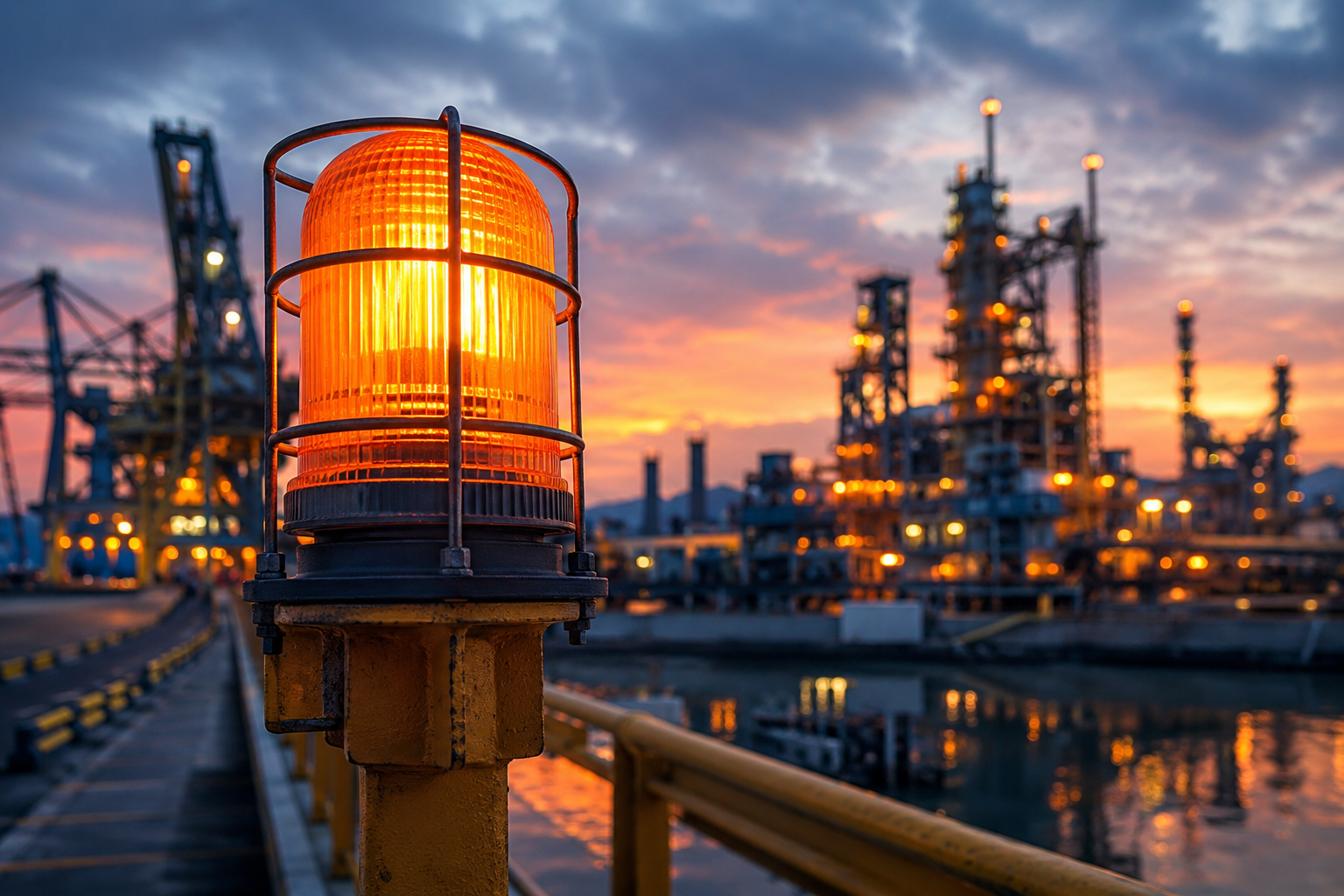
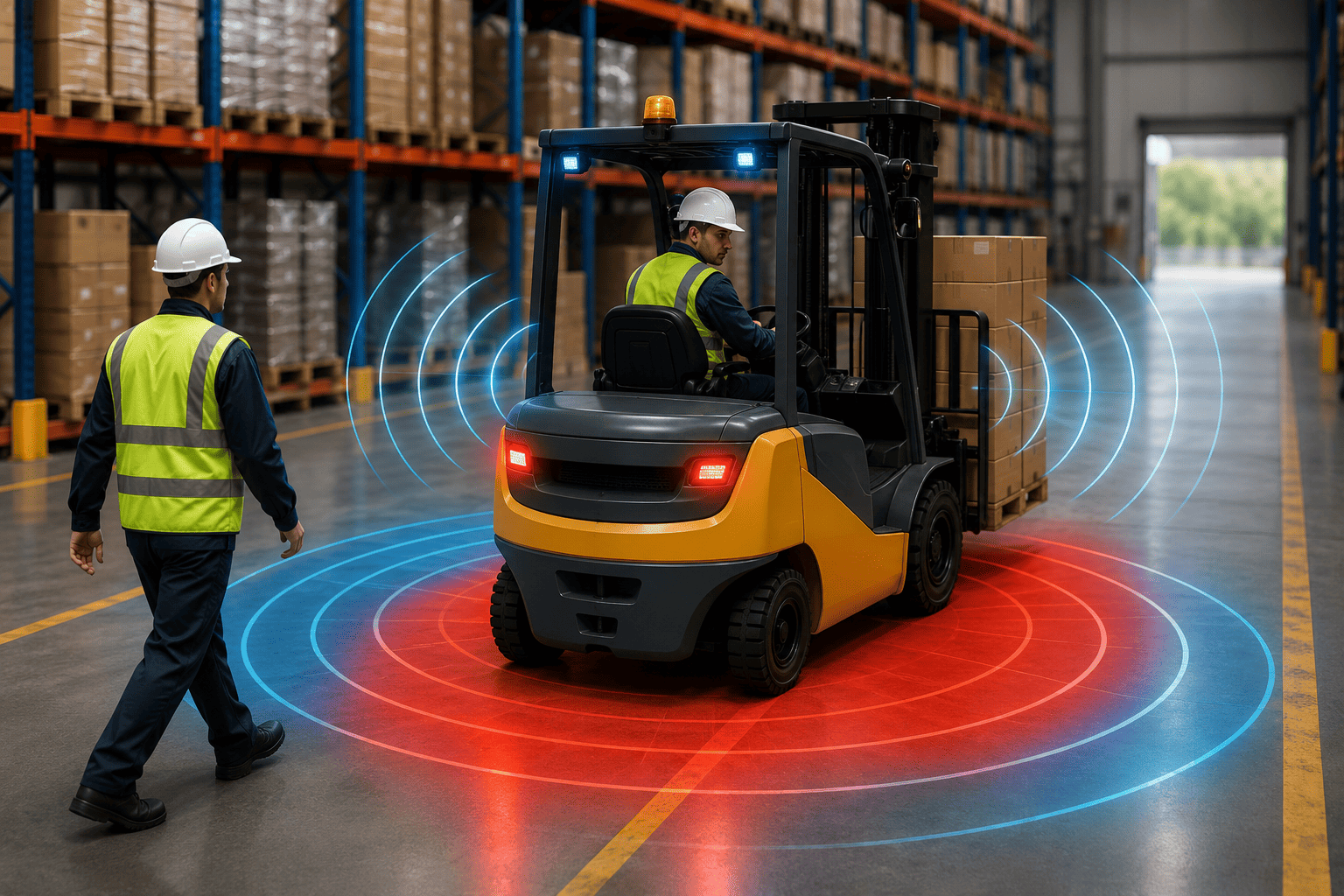
Every day, forklifts, cranes, and yard vehicles move across busy warehouse floors, ports, and construction sites. Sudden turns, blind corners, and heavy loads create real risk for pedestrians and drivers alike. A red beacon light mounted on top of a vehicle gives workers a clear, instant signal that equipment is approaching, often before they can even hear the engine.
Myport Services India Pvt Ltd has spent years supplying industrial safety equipment across Indian ports, warehouses, and manufacturing plants. Beacon lights are one of the simplest and most affordable tools the company recommends for improving vehicle visibility on any operational floor.
What Are Beacon Lights and Why Do They Matter
Beacon lights are visual warning devices fitted on top of vehicles, machinery, or fixed hazard points. They flash, rotate, or pulse to draw attention long before a worker notices the vehicle itself. In loud, crowded industrial spaces, sound alone is often not enough, so a bright visual signal fills that gap.
A well placed beacon serves several purposes at once:
- Warns pedestrians that a vehicle is moving or reversing
- Marks restricted or active work zones
- Signals priority movement for cranes and heavy equipment
- Supports compliance with plant safety rules
Types of Beacon Lights Used on Industrial Vehicles
LED Beacon Light
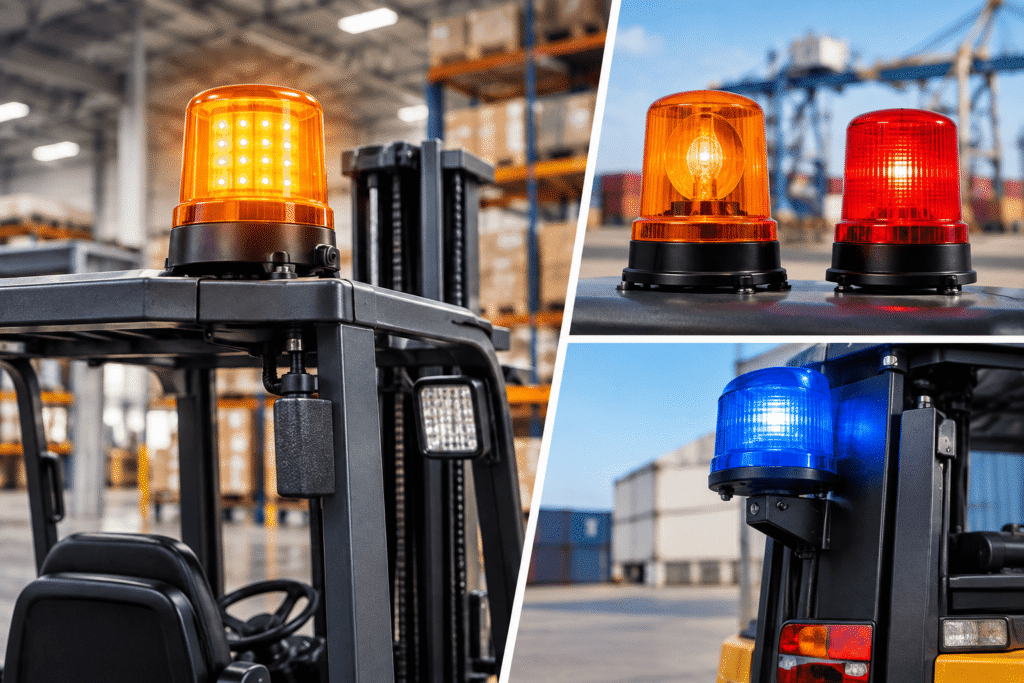
An led beacon light is now the most common choice for warehouses and ports because it uses far less power than older halogen units, runs cooler, and lasts much longer. Facilities that switch to LED typically spend less time on bulb replacement and maintenance.
Rotating and Strobe Beacons
Rotating beacons sweep light across a wide area, useful in open yards where vehicles approach from many directions. Strobe beacons pulse in short bursts and stand out well in bright daylight or foggy conditions.
Blue Beacon Light for Reversing Alerts
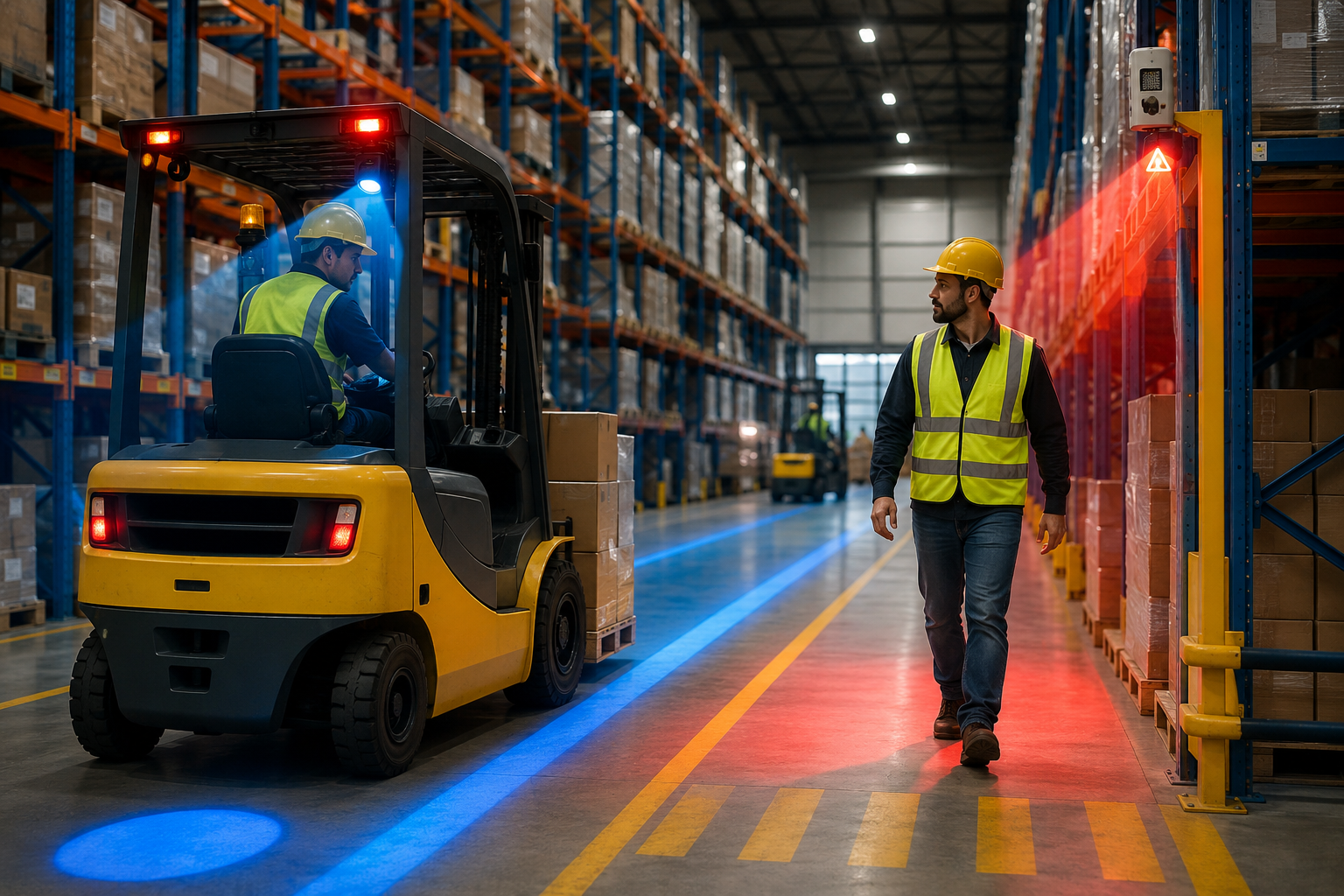
A blue beacon light is often paired with forklifts to warn pedestrians during reversing or turning, since blue stands out clearly against the usual red and amber signals already used on site. For added reversing visibility, some facilities also pair beacons with a forklift blue spot light that projects a marker on the floor ahead of the vehicle.
How Beacon Lights Improve Industrial Vehicle Safety
Vehicle related injuries remain one of the biggest safety concerns in warehouses and plants. According to OSHA estimates, between 35,000 and 62,000 forklift injuries occur every year in the United States, and around 87 workers lose their lives annually in forklift related accidents. A large share of these incidents happen because a pedestrian or another driver simply did not see the vehicle in time.
Beacon lights address that gap directly:
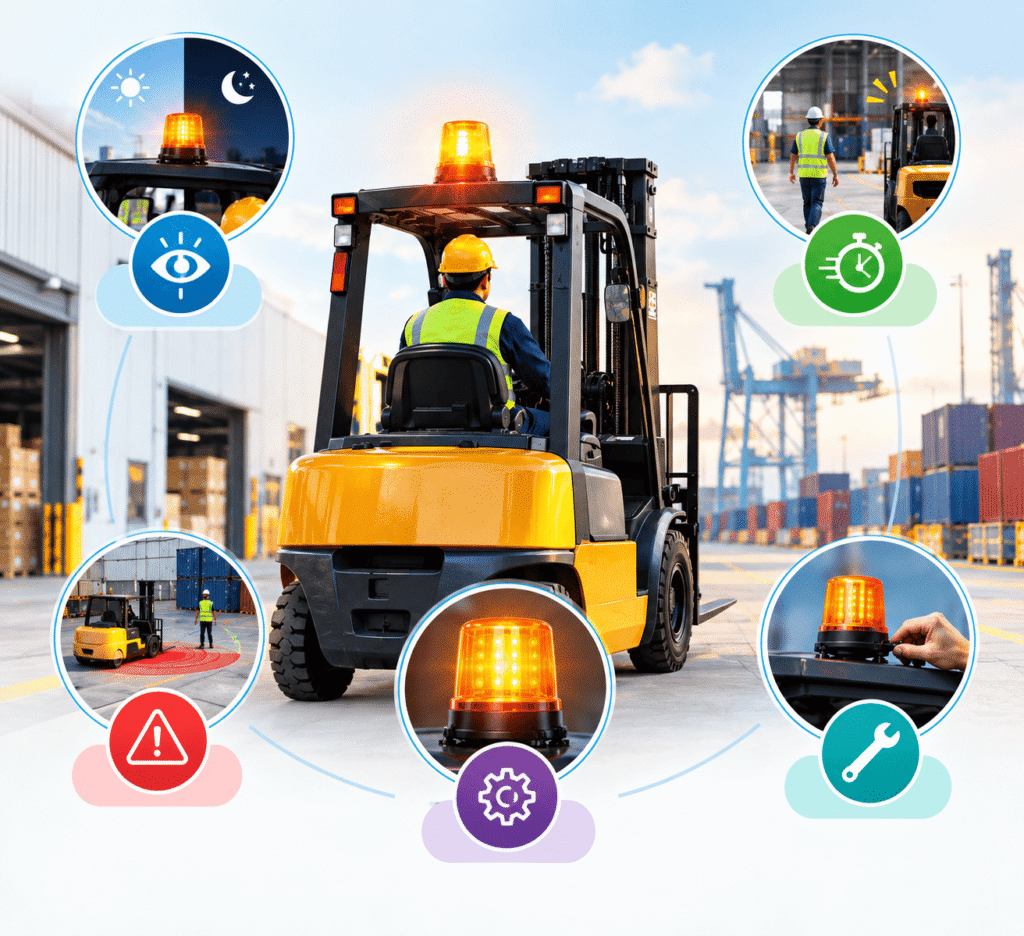
- Give an early visual warning before a vehicle enters a shared aisle
- Cut reaction time by making vehicles visible from a distance
- Work in low light, night shifts, and dusty or foggy conditions
- Reduce reliance on horns alone, which are easy to miss in noisy plants
OSHA also notes that a large share of forklift accidents, close to 70 percent by some estimates, could be prevented through better training combined with visibility tools such as beacon lights, mirrors, and cameras.
Where Beacon Lights Make the Biggest Difference
Forklifts and Pallet Trucks
Forklifts operate in tight aisles alongside pedestrians, making early warning critical. A beacon paired with a pedestrian alert system gives both audio and visual cues, which is far more effective than relying on either signal alone.
Loading Docks and Yard Areas
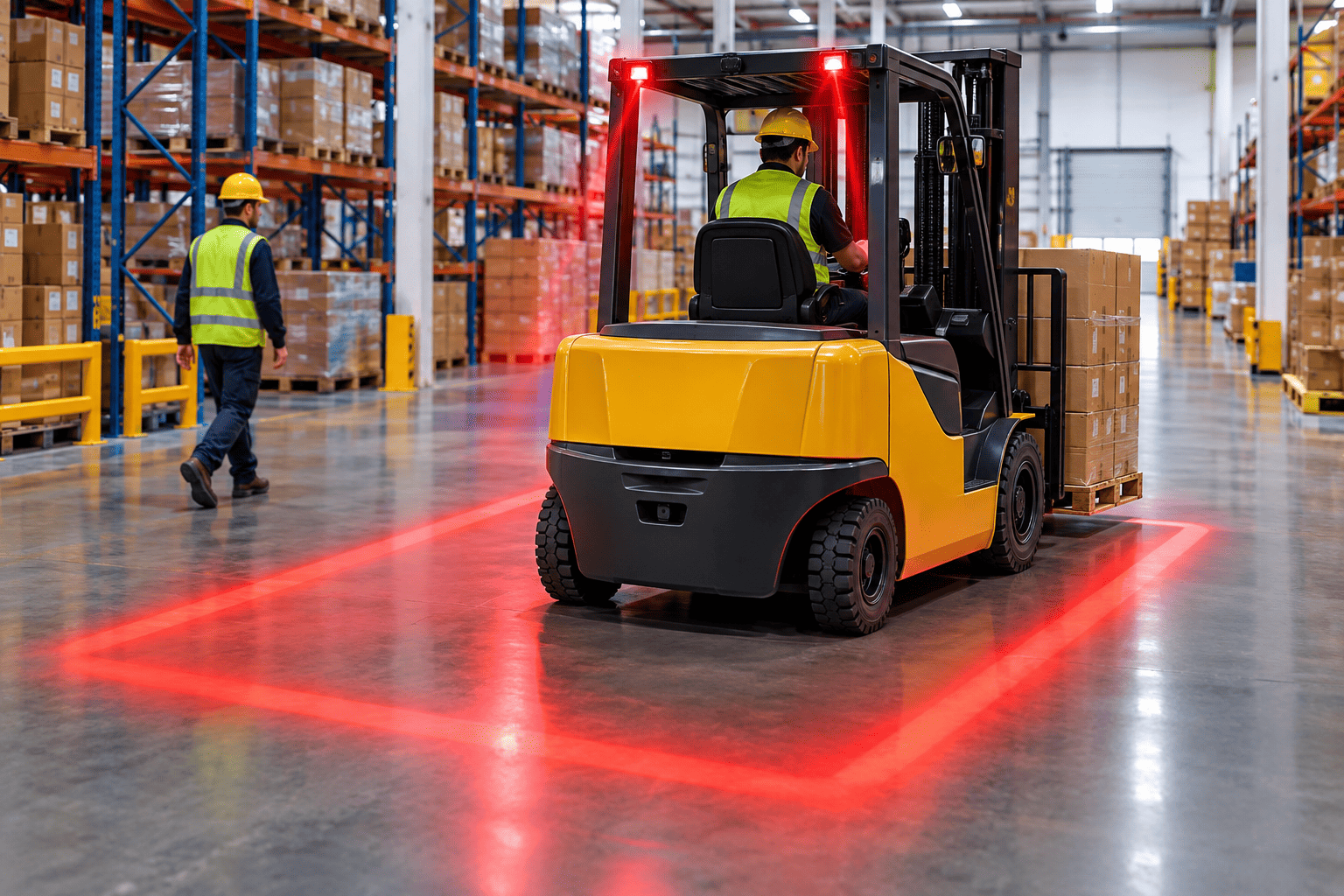
Loading docks see constant vehicle movement from multiple directions. Combining beacon lights with clearly marked red zone lights around active vehicles helps pedestrians judge a safe distance before stepping closer.
Cranes and Heavy Machinery
Overhead cranes and lifting equipment move slowly but carry heavy loads, so ground crews need clear warning well in advance. Facilities often combine beacons with high power crane warning lights to cover both the vehicle and the load path.
Key Benefits of Installing Beacon Lights
- Improved visibility across day and night shifts
- Faster reaction time for pedestrians and other drivers
- Lower risk of collisions in shared traffic zones
- Low maintenance, especially with LED beacon light models
- Simple installation on existing vehicles and equipment
How to Choose the Right Beacon Light for Your Facility
Color and Visibility
Color choice should match how the vehicle is used. Amber and red beacon light units are common for general warning, while blue is often reserved for reversing alerts so it does not get confused with other signals already on site.
Mounting and Power Options
Beacons are available in pole, bolt, and magnetic mounting styles, with multi voltage options for different vehicle types. A short checklist before buying:
- Match beacon color to your existing warning system
- Confirm the mounting style fits your vehicle type
- Choose LED where possible for lower running cost
Beacon Lights and Safety Compliance
Many industrial sites now require warning lights that meet recognized standards, particularly where vehicles interact with pedestrians or public areas near ports. Choosing SAE and ECE R65 approved beacons helps a facility stay aligned with these expectations.
For teams building a broader visibility program, pairing beacons with other warning tools is worth reviewing in more detail; this guide on how pedestrian warning systems work in warehouses covers the wider setup that beacons usually support.
Conclusion
Myport Services India Pvt Ltd is a manufacturer and supplier of industrial safety systems and port equipment solutions, covering forklift safety devices, pedestrian warning systems, proximity sensors, and vehicle monitoring tools for ports, warehouses, and manufacturing plants across India.
Beacon lights remain one of the fastest, most affordable ways to cut down vehicle related accidents on any operational floor. Whether your team needs a red beacon light for general warning, an led beacon light for round the clock reliability, or a blue beacon light for reversing safety, choosing the right option can make a real difference to your daily operations.
Ready to upgrade your fleet with dependable beacon lights? Contact Myport Services India today to get a quote and speak with our safety equipment team.
FAQs
A beacon light is used to give an early visual warning that a vehicle is moving, turning, or reversing, which helps pedestrians and other drivers react before an incident occurs.
Yes, an led beacon light generally lasts longer and uses less power than a halogen unit, which lowers both replacement costs and overall energy use across a fleet.
A red beacon light is typically mounted on the roof or highest point of a forklift so it remains visible from all directions, including around racking and blind corners.
A blue beacon light is often chosen for reversing alerts because it stands out clearly against the red and amber signals already used for general warnings on the same site.
OSHA estimates that between 35,000 and 62,000 forklift injuries occur every year in the United States, with a large share linked to poor visibility between vehicles and pedestrians.
Yes, strobe and rotating beacon lights are designed to remain visible in bright daylight, fog, and rain, in addition to low light and night shift conditions.