
What Is the Use of Red Zone Lights in Forklifts?
Every warehouse manager knows that forklifts and pedestrians rarely mix well. Even with training and floor markings, workers can wander into a forklift’s path without realizing how close they are to danger. This is exactly the problem that Red Zone Lights were built to solve. Myport Services India Pvt Ltd, a manufacturer of industrial safety systems and port equipment solutions, designs visual warning devices that help operators and pedestrians share the same floor space safely. In this blog, we explain what red zone lights are, how a forklift red zone light works, and why so many facilities are adding this simple yet effective safety tool to their fleet.
What Are Red Zone Lights?
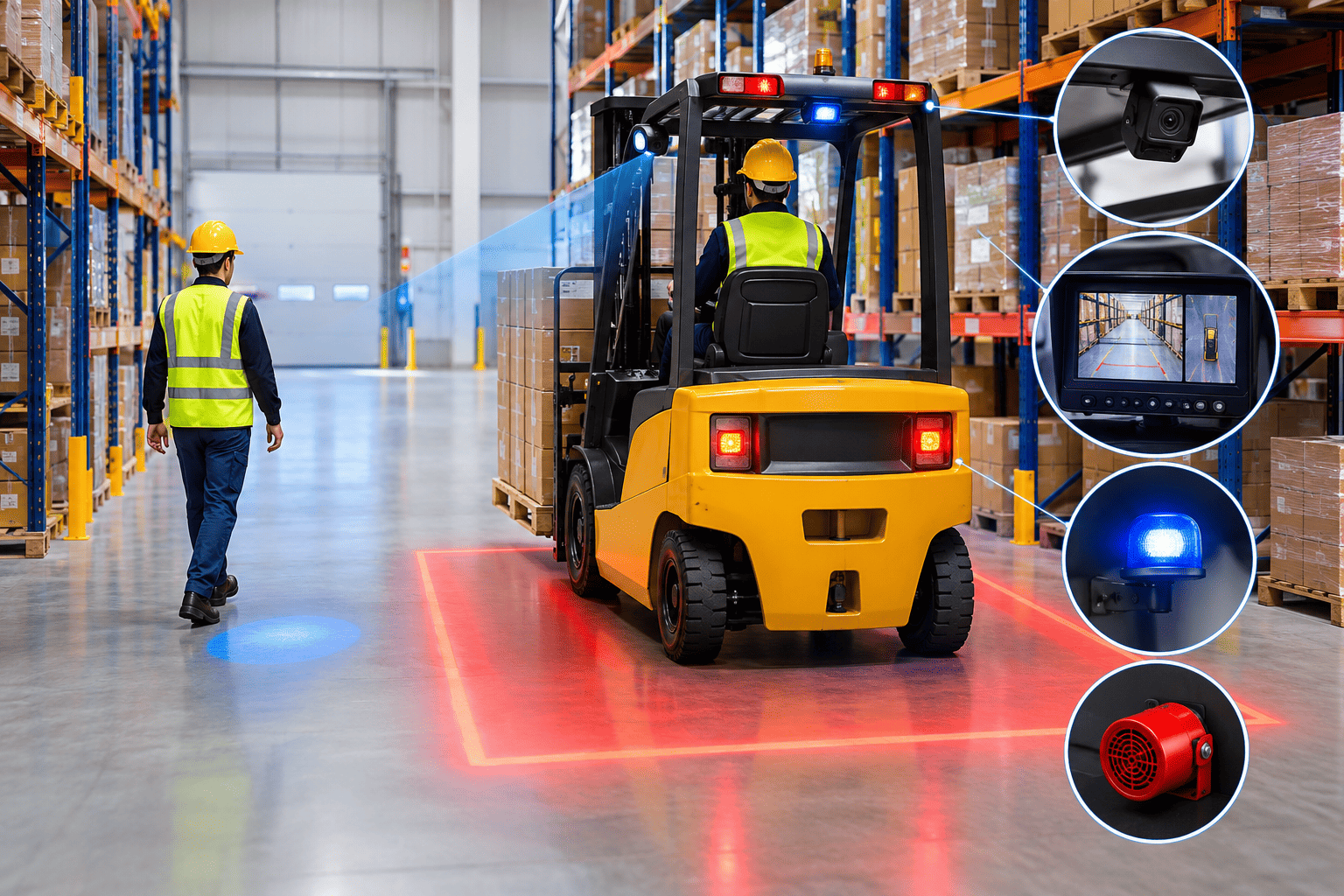
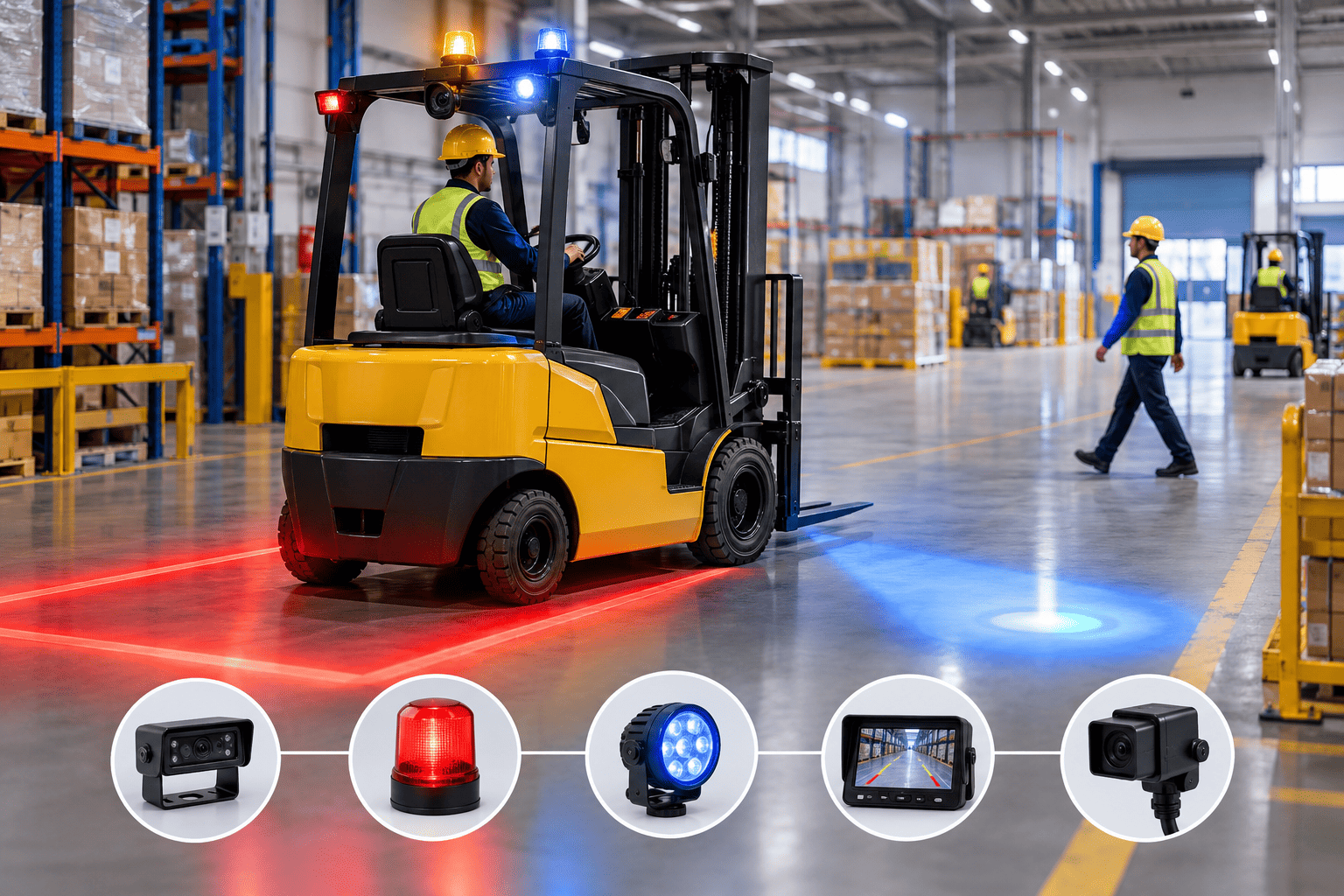
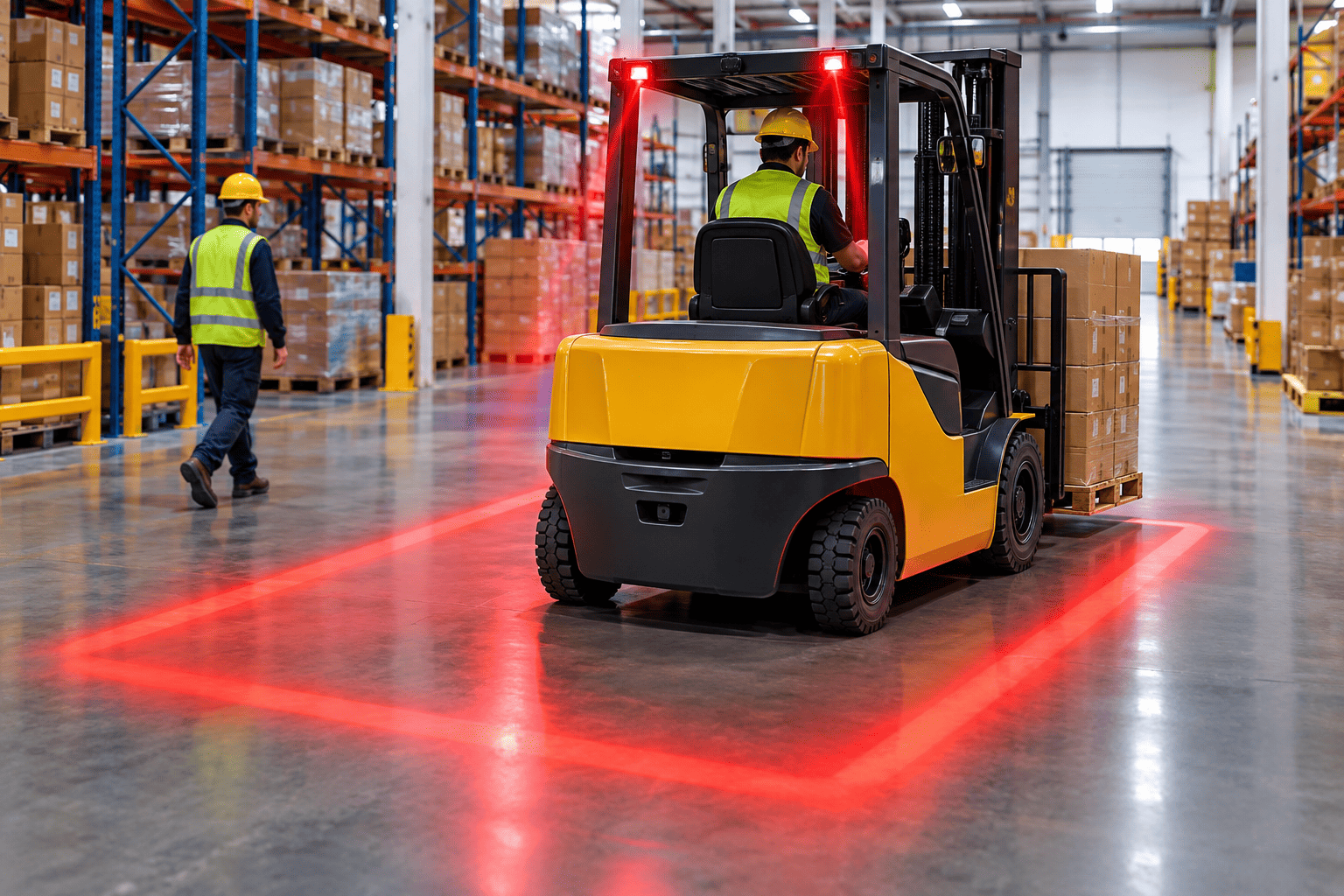
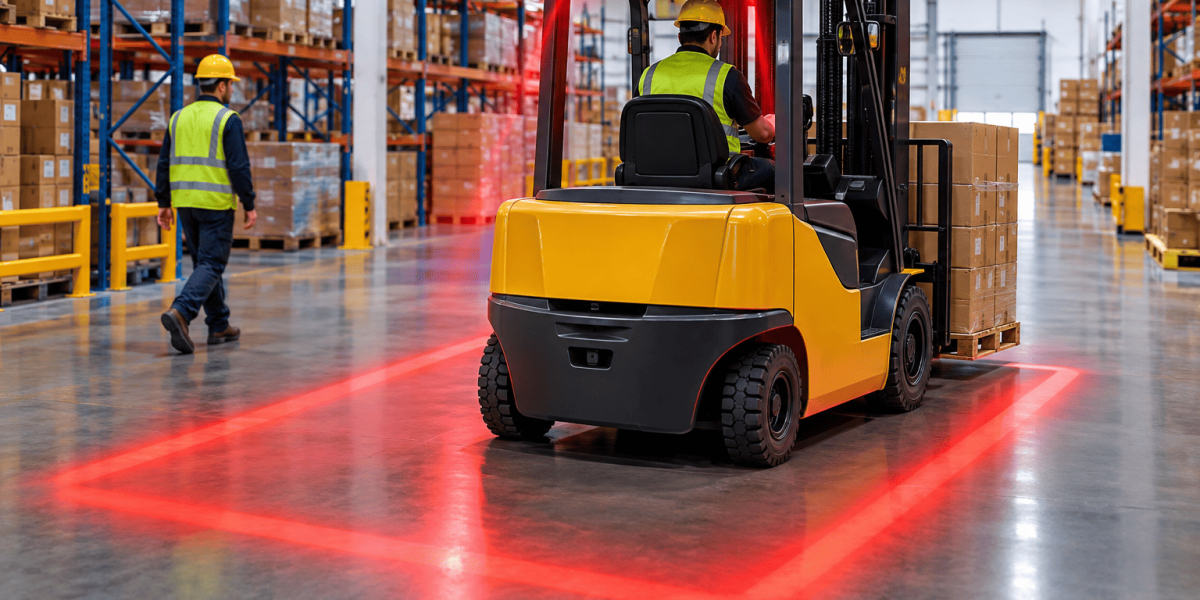
Red Zone Lights are LED devices mounted on a forklift that project bright red lines onto the floor around the vehicle. These lines mark out a clear no entry area, giving pedestrians an instant visual cue to stay back. Unlike a painted line or a fixed sign, this warning moves with the forklift, so the safe zone is always visible no matter where the vehicle travels inside the facility.
How a Forklift Red Zone Light Works
A forklift red zone light uses a strong LED chip, often from a trusted brand such as Cree or Osram, to cast three or four sharp red lines that form a closed boundary around the truck. The housing is usually made from diecast aluminum, which keeps the unit protected from dust, moisture, and daily wear on the warehouse floor.
- Projects three or four bright red lines to form a clear boundary
- Built with a durable diecast aluminum housing
- Rated for more than 50000 hours of continuous use
- Mounts easily on the sides or rear of most forklift models
Where These Lights Are Installed
Most facilities mount a red zone warning light on the rear or sides of the forklift, at a height that projects the red lines clearly onto the floor. This placement gives pedestrians walking from any direction enough warning before they get close to the vehicle.
Why Warehouses Need Red Zone Lights
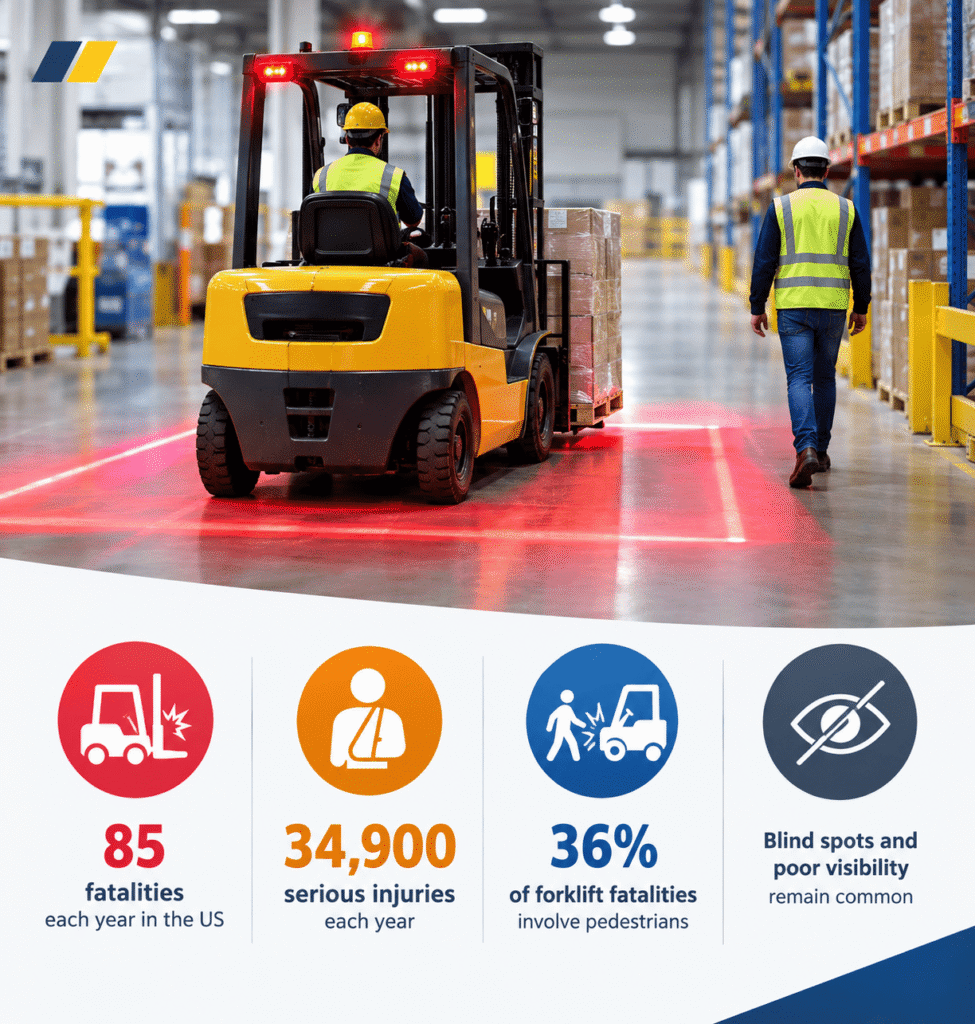
Pedestrian safety around forklifts is not a small concern. OSHA estimates that forklift related incidents cause close to 85 fatalities and about 34900 serious injuries every year across American workplaces. Data cited by OSHA also shows that pedestrians struck by forklifts account for around 36 percent of all forklift fatalities, making it one of the leading causes of death connected to this equipment. These figures explain why many safety managers are rethinking how visible their equipment really is on a busy floor, a topic we covered in our post on why safety warning lights are important in industrial areas.
- Close to 85 forklift related fatalities occur every year in the US
- About 34900 serious injuries are linked to forklift use annually
- Around 36 percent of forklift fatalities involve pedestrians being struck
- Blind spots and poor visibility remain common contributing factors
Key Benefits of a Red Zone Warning Light
Better Visibility Where It Matters
A forklift red zone light gives pedestrians a boundary they can see from a distance, even in noisy or crowded aisles where an alarm might go unheard.
Fewer Near Misses and Faster Reactions
Because the warning is visual, workers can react before they step into the danger area, rather than after they hear a horn or alarm too late.
- Creates an easy to understand no entry boundary around the vehicle
- Works well in both bright and dimly lit sections of a facility
- Reduces reliance on pedestrians hearing an alarm over machine noise
- Simple to fit onto existing forklifts without major modification
- Supports compliance with internal safety audits and client site requirements
Red Zone Lights Compared to Other Warning Systems
Facilities often ask how a red zone warning light compares with other forklift safety devices already on the market. Each system plays a slightly different role, and many businesses use them together for complete coverage.
Red Zone Lights and Blue Spot Lights
A forklift blue spot light projects a single blue dot ahead of or behind the vehicle to warn pedestrians of an approaching forklift around blind corners, while red zone lights mark a full boundary around the truck itself. Used together, they cover both the approach and the immediate danger area.
Red Zone Lights and Audible Alarms
Audible alarms rely on sound, which can be missed in loud environments such as ports or manufacturing floors. A visual system like a red zone light does not depend on hearing, so it adds a layer of protection that sound alone cannot provide.
Features to Look for in a Forklift Red Zone Light
Not every red zone warning light on the market offers the same quality. Before choosing one for your fleet, it helps to compare a few technical details.
- Brightness and clarity of the projected lines in daylight conditions
- Chip quality, since branded LED chips tend to last longer
- Waterproof and dustproof rating for outdoor or port use
- Housing material strength, with diecast aluminum being a common choice
- Ease of mounting across different forklift models
- Expected working life, ideally rated well beyond 40000 hours
Where Forklift Red Zone Lights Are Used
These lights are not limited to one type of facility. Any workplace where forklifts and people share floor space can benefit from clearer visual boundaries, a point covered in more detail in our guide on how pedestrian warning systems work in warehouses.
- Warehouses and distribution centers
- Manufacturing plants and assembly lines
- Cold storage and food processing units
- Ports, container yards, and logistics hubs
- Construction sites with frequent vehicle movement
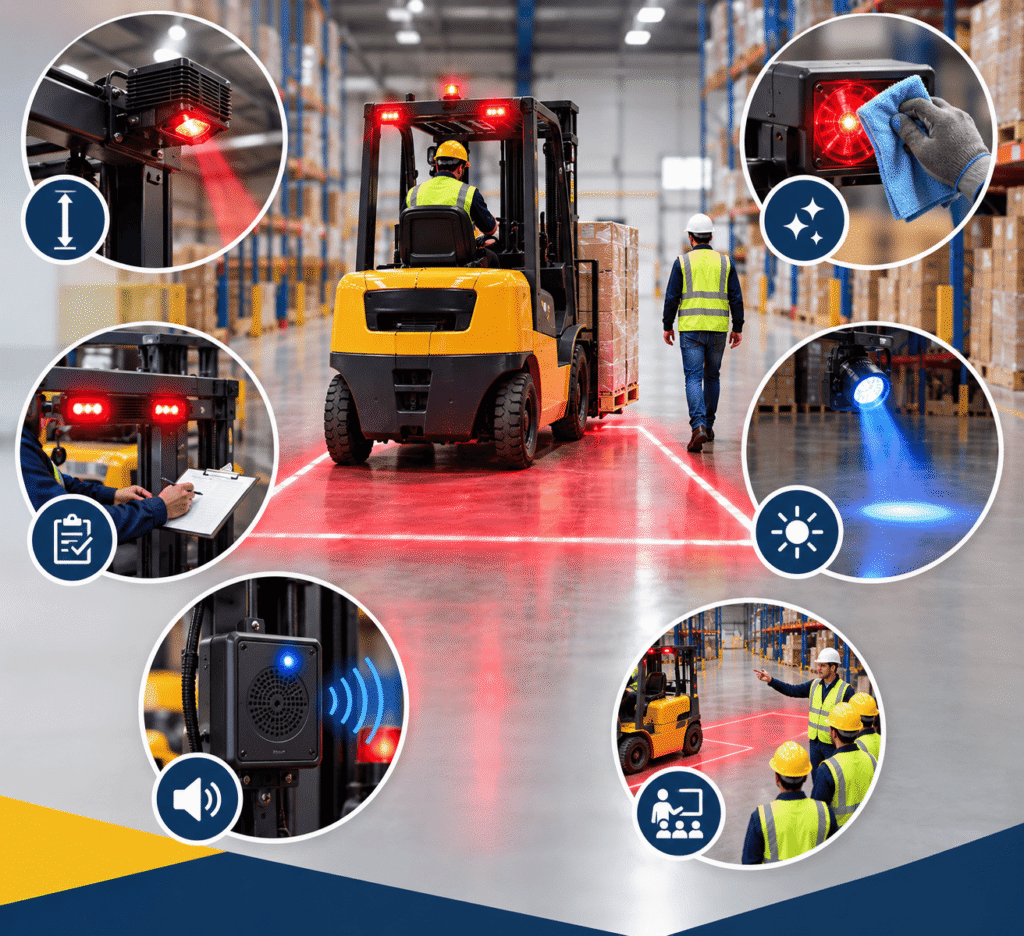
Best Practices for Installing and Maintaining Red Zone Lights
Getting the full benefit from a red zone warning light depends on correct fitting and regular upkeep, not just the purchase itself.
- Mount the light at the height recommended by the manufacturer for clear floor projection
- Clean the lens regularly to keep the red lines bright and visible
- Test the unit during routine forklift inspections
- Pair the light with a Kill Zone Light for layered protection in extreme hazard areas
- Combine it with a pedestrian alert system for audio and visual coverage together
- Train staff to recognize and respect the projected boundary as a stop signal
Conclusion
Keeping pedestrians safe around moving forklifts does not have to rely on chance or good luck. A simple, visible boundary created by red zone lights can make the difference between a near miss and a serious accident.
Myport Services India Pvt Ltd is an Indian manufacturer and supplier of industrial safety systems and port equipment solutions, offering forklift safety devices, pedestrian warning systems, proximity and collision avoidance systems, and crane safety equipment for warehouses, ports, mines, and construction sites across the country. If you want to make your floor safer for both drivers and pedestrians, Contact Us today to get a quote and find the right red zone lighting solution for your facility.
FAQs
Red zone lights create a bright, visible boundary around a forklift so pedestrians know exactly how close they can safely stand or walk near the vehicle.
A forklift red zone light gives a visual warning by projecting lines on the floor, while a reverse alarm gives an audible warning through sound, so combining both helps cover workers who may not see or hear one signal alone.
Yes, most red zone warning lights are built with weatherproof, diecast aluminum housings that hold up well in outdoor ports, yards, and loading areas.
Quality red zone lights use high output LED chips that remain clearly visible in both daylight and low light conditions inside a facility.
Most industrial grade red zone lights are rated for more than 50000 hours of continuous operation before replacement is needed.
Red zone lights are designed for straightforward mounting on the sides or rear of most forklift models without major changes to the vehicle.