
How Do Forklift Safety Systems Save Lives?
Walk into any warehouse or industrial yard and you will spot forklifts moving constantly between aisles, docks, and loading bays. These machines make heavy lifting easy, but they also create serious risks for the people working around them. This is exactly where forklift safety systems come in.
At Myport Services India Pvt Ltd, we design and supply safety hardware that helps industrial teams across India prevent accidents before they happen, rather than just reacting after the fact.
Every year, thousands of workers are hurt near forklifts, and most of these incidents can be avoided. Safety managers who invest in the right combination of lights, sensors, and alert systems consistently see fewer near misses and a calmer, safer floor overall. In this blog, we look at how forklift safety systems work, why they matter, and which devices make the biggest difference on your site.
Understanding Forklift Safety Systems and Why They Matter
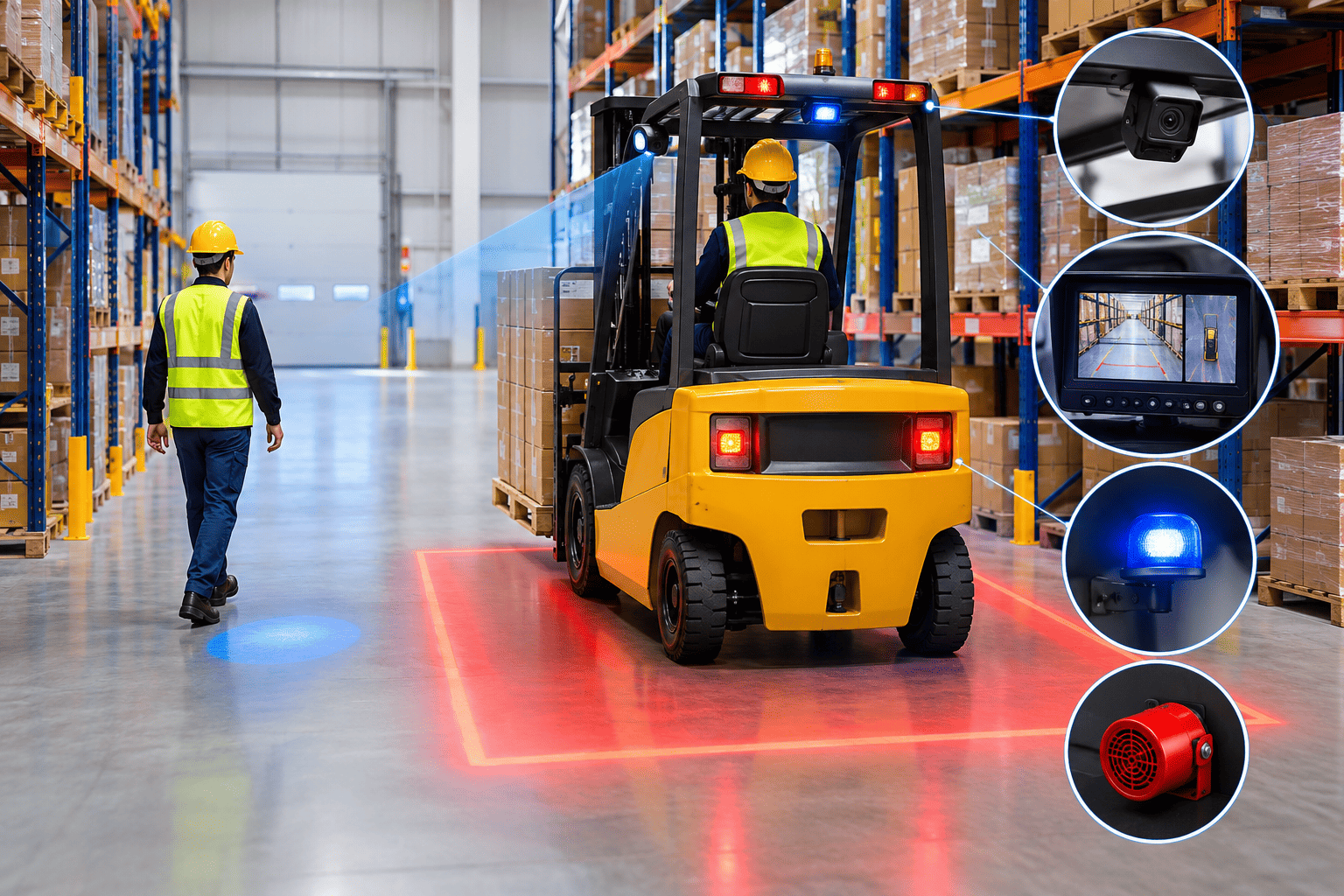
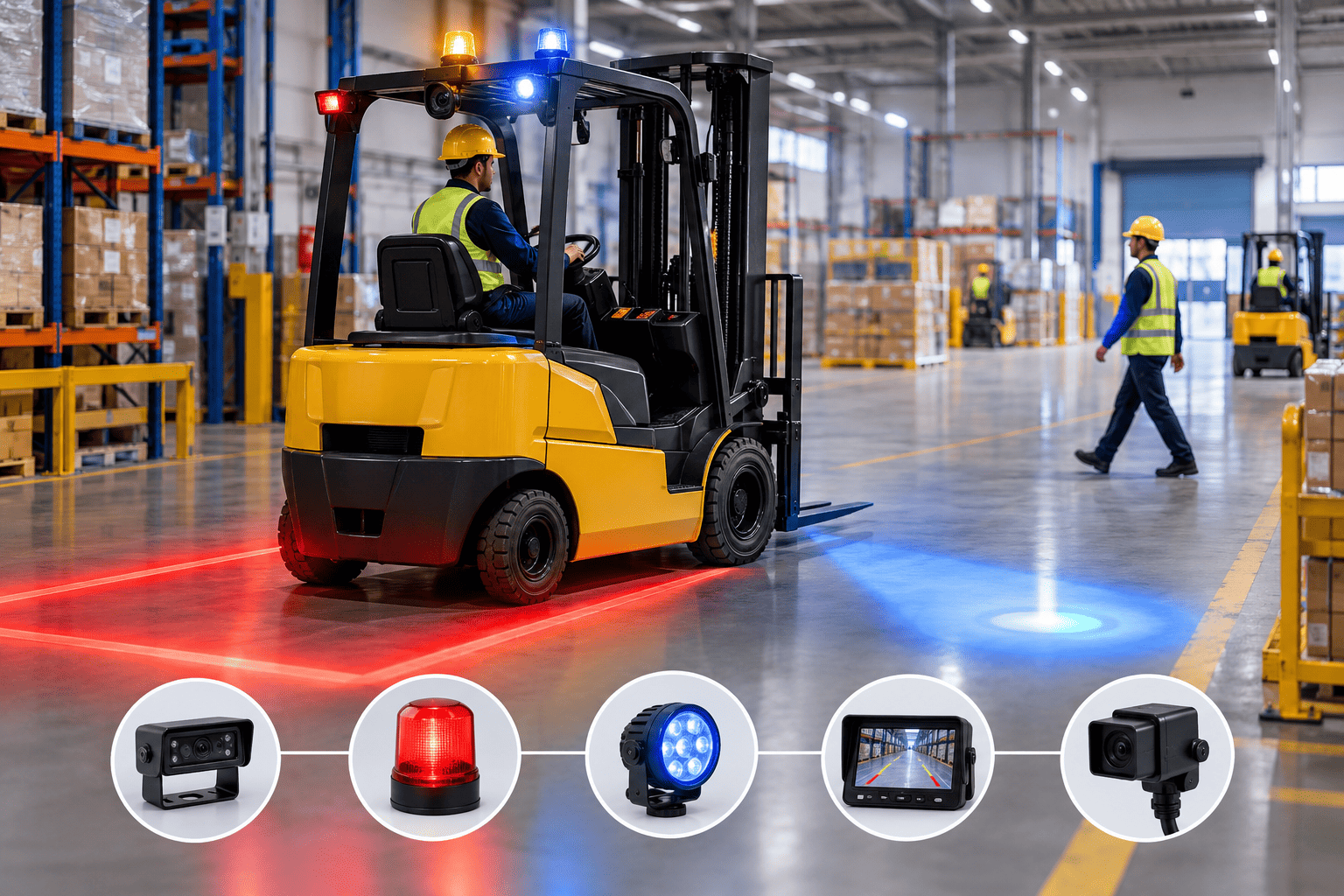
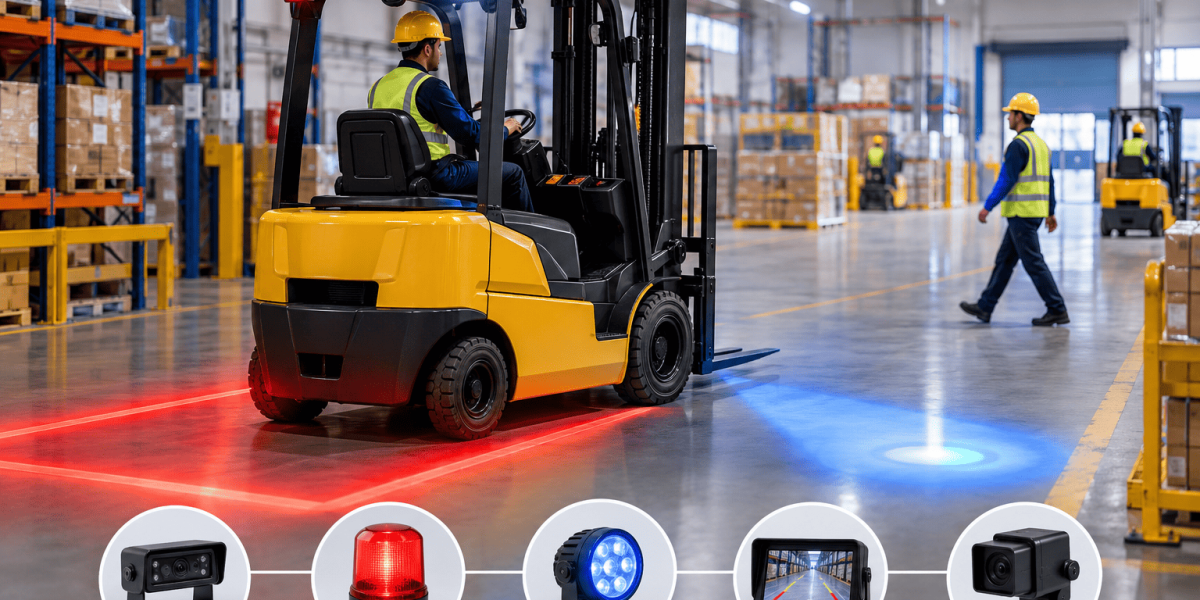
A forklift safety system is not a single product. It is a set of tools working together, lights, cameras, sensors, and alarms, all built to reduce blind spots, warn pedestrians, and control vehicle speed. Warehouses, ports, mines, and manufacturing plants each use a different mix of these tools depending on their layout and traffic patterns.
What Do Forklift Safety Systems Include?
- Warning lights and beacons that improve visibility around the vehicle
- Pedestrian alert systems that detect people nearby and trigger an alarm
- Camera systems that remove blind spots for the driver
- Proximity sensors that measure distance to nearby objects or people
- Speed control systems that limit how fast a forklift can travel in busy zones
- Anti tilt devices that reduce the chance of a tip over
The Real Cost of Forklift Accidents
Forklift accidents are far more common than most safety managers realise. According to OSHA, forklifts are linked to around 85 worker deaths and close to 34,900 serious injuries across workplaces every year. Close to a third of these fatal accidents involve a pedestrian who was struck by the vehicle rather than the operator. About 11 percent of all forklifts in operation will be involved in some type of accident each year, which shows how quickly a small oversight can turn into a major incident.
Common Causes of Forklift Accidents
- Poor visibility around corners and blind spots
- Pedestrians walking too close to active forklift lanes
- Excess speed inside congested aisles
- Overloaded forks that affect balance
- Uneven flooring or ramps that lead to tipping
How Forklift Safety Lights Improve Visibility
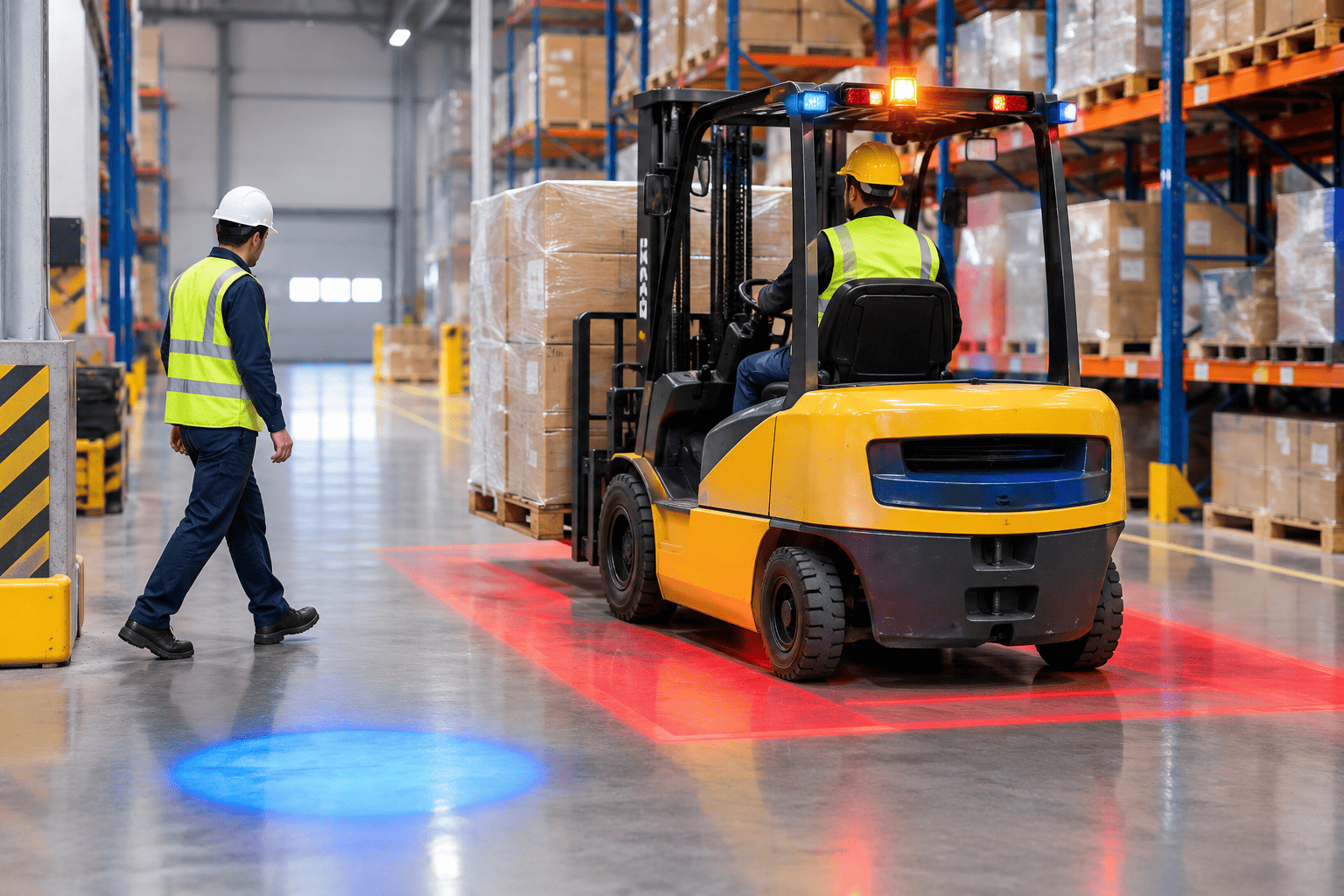
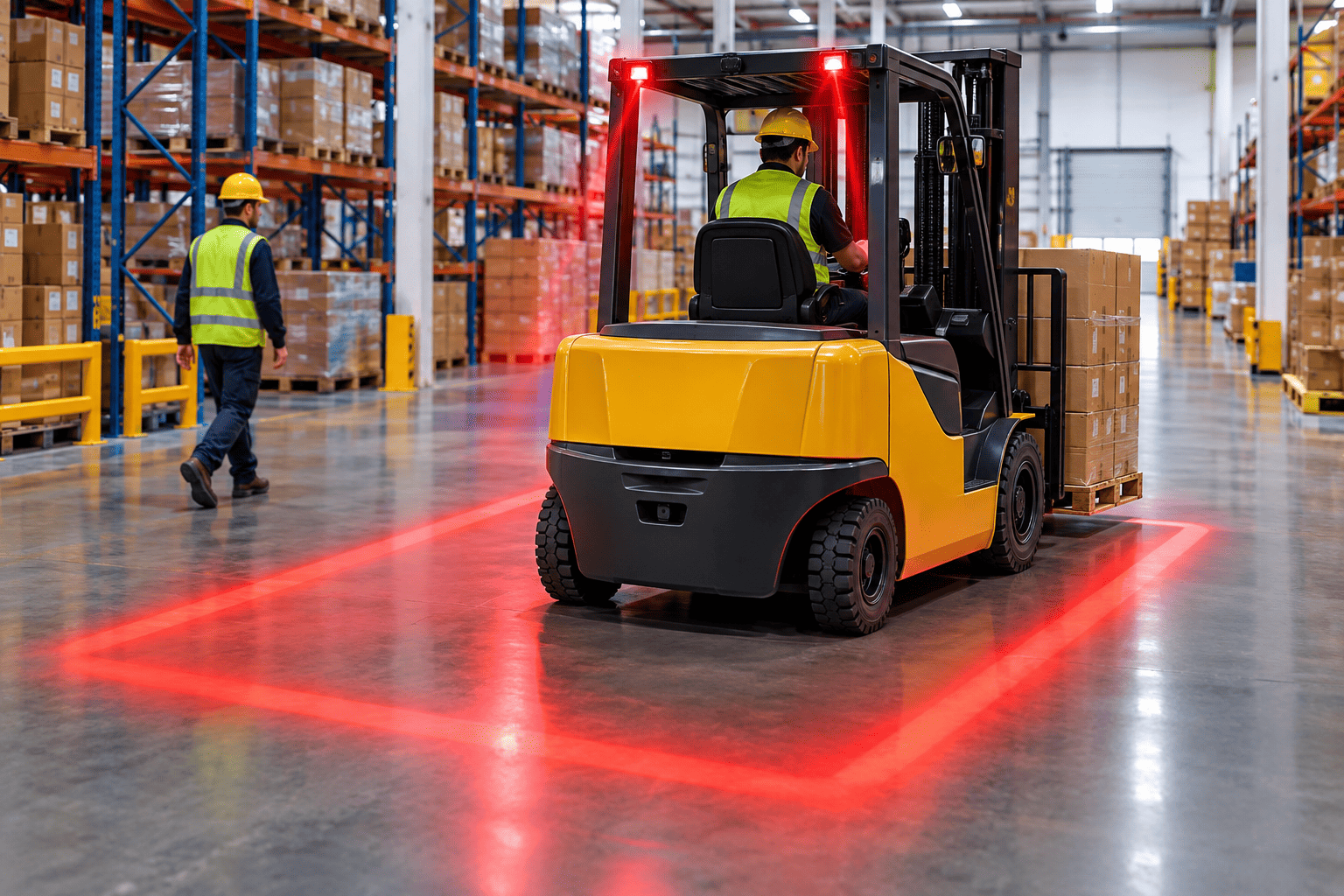
One of the simplest and most effective upgrades is adding forklift safety lights to every vehicle in your fleet. A bright blue or red spot light projected ahead of or behind the forklift gives pedestrians several seconds of advance warning before the vehicle turns a corner, and it works even in noisy or crowded areas where an alarm alone might go unnoticed.
Types of Forklift Safety Lights
- Blue spot lights that project a visible warning on the floor
- Red zone lights that mark a no go area around the vehicle
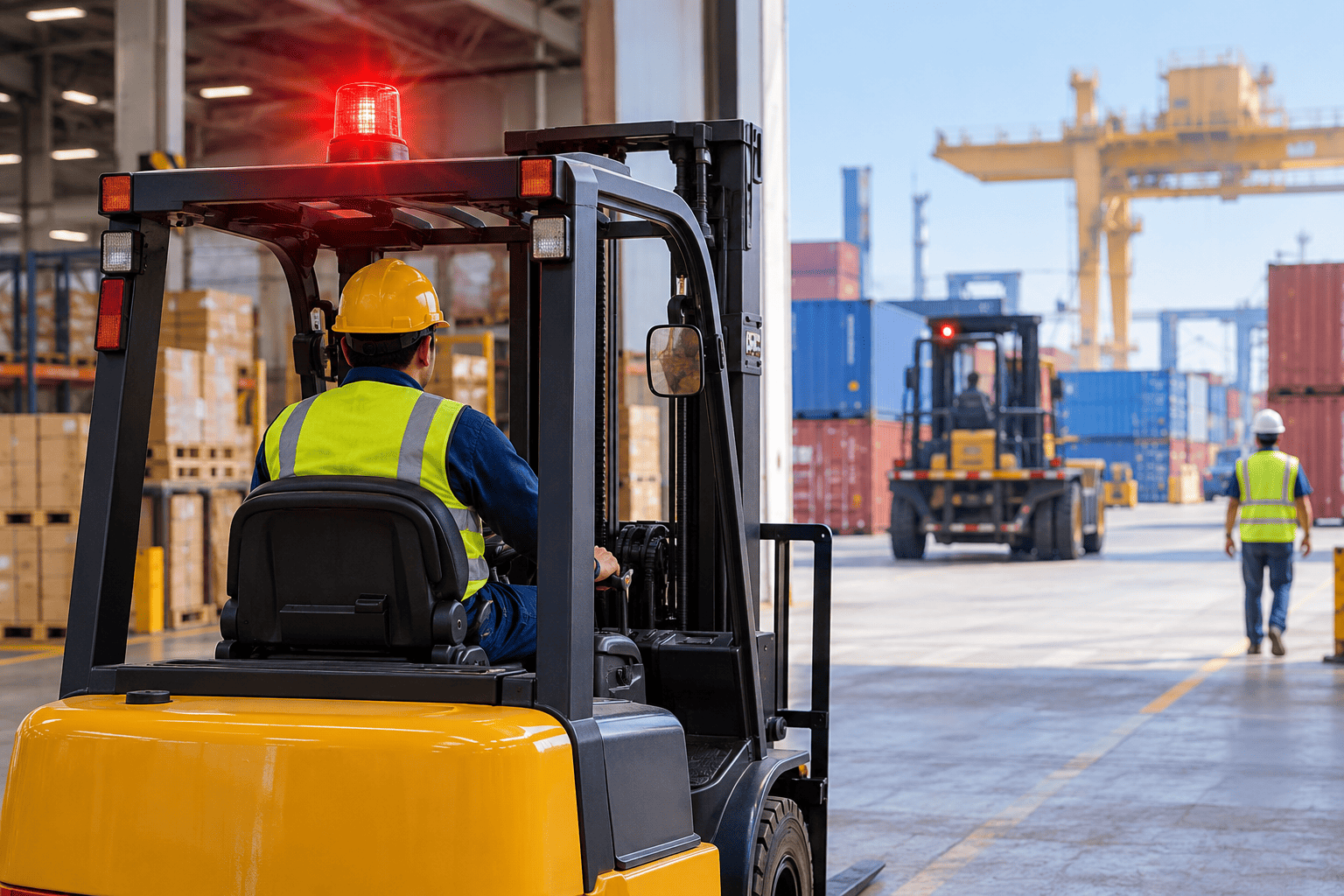
- Rotating or strobe beacons for open yards and loading docks
- Arc lights that outline the full width of the forklift path
A red zone light, for example, projects a bright red boundary on the floor around the forklift, so pedestrians know exactly how close is too close. This one visual cue removes a lot of guesswork on a busy floor.
How a Forklift Pedestrian Alert System Protects Workers
A forklift pedestrian alert system takes visibility a step further by actively detecting people rather than just marking a zone. Workers carry a small tag, and when they step into range, the driver receives an audible and visual warning inside the cab. Our system can sense a person from about one to six and a half metres away, even around a wall or shelf, which makes it especially useful in tight aisles.
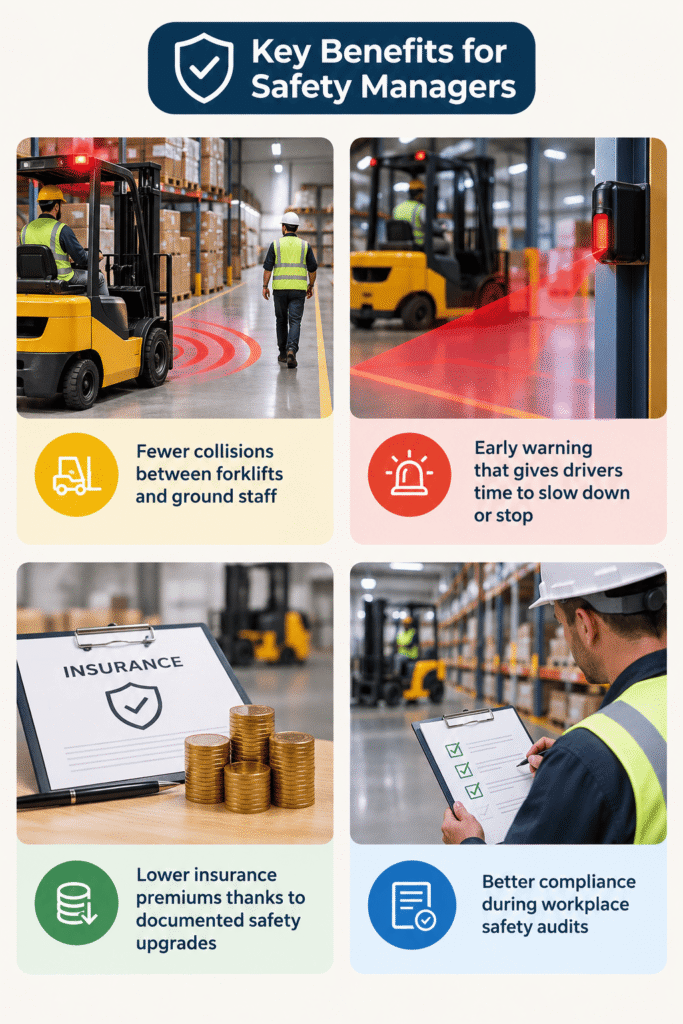
Key Benefits for Safety Managers
- Fewer collisions between forklifts and ground staff
- Early warning that gives drivers time to slow down or stop
- Lower insurance premiums thanks to documented safety upgrades
- Better compliance during workplace safety audits
The Role of a Forklift Safety Camera System
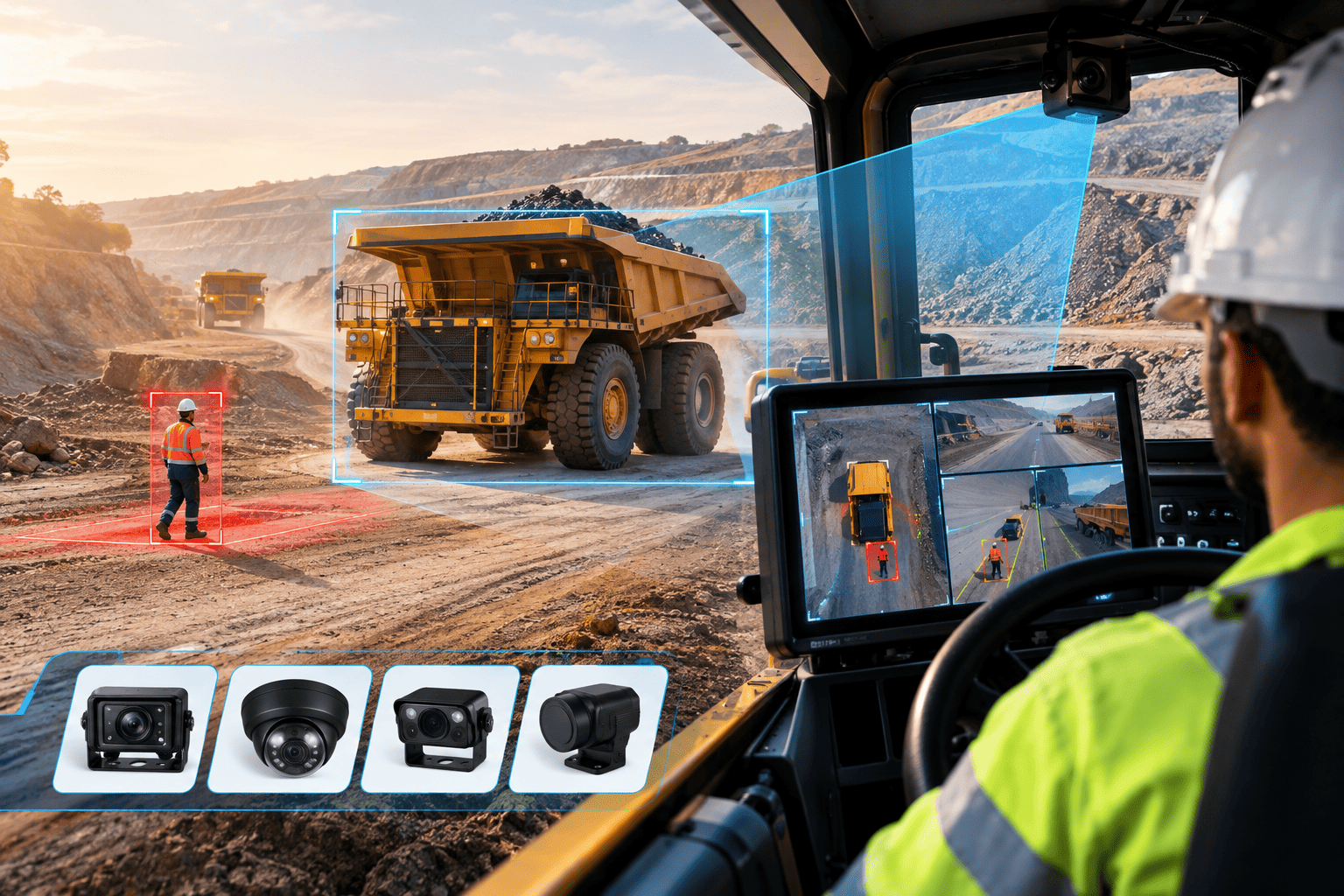
A forklift safety camera system removes the blind spots that mirrors alone cannot cover. Cameras mounted on the mast, forks, or rear of the vehicle stream a live view directly to a screen inside the cab, so the operator always knows what is behind or above the load. This is especially useful when stacking pallets at height or reversing out of narrow racking.
What to Look for in a Camera System
- Wide angle or full 360 degree coverage
- Clear night vision for dim warehouse corners
- Weatherproof housing for outdoor yards and ports
- Easy integration with existing dashboards
Proximity Sensors, Speed Control, and Tip Over Prevention
A radar based proximity sensor quietly tracks how close a forklift is to people, racking, or other vehicles, and sounds an alert well before contact happens. This works around the clock and does not depend on the driver remembering to check a mirror.
Pairing this with a speed detection system means drivers are automatically prompted to slow down inside congested zones, sharp turns, or ramps, taking some of the guesswork out of speed control on a busy floor.
An anti tilt device adds one more layer of protection by warning the operator when a load or turn puts the vehicle at risk of tipping, which OSHA data shows remains the single biggest cause of forklift fatalities.
Building a Complete Forklift Safety Program
No single device can remove every risk, which is why safety experts recommend layering lights, alert systems, cameras, and sensors together. A layered approach catches the gaps that any one device might miss, since a pedestrian who steps out unexpectedly from behind a rack is still protected even if the driver did not notice the warning light in time.
Best Practices for Safety Managers
- Audit every high traffic aisle and loading dock for blind spots
- Train pedestrians and drivers together, not separately
- Review incident and near miss reports every quarter
- Upgrade ageing forklifts with retrofit safety kits rather than waiting for a full fleet replacement
Myport Services India Pvt Ltd: Your Partner in Industrial Safety
Myport Services India Pvt Ltd is a manufacturer and supplier of industrial safety systems and port equipment solutions, serving warehouses, ports, mining sites, and manufacturing plants across India. From forklift safety lights and pedestrian alert systems to camera systems and proximity sensors, we help safety managers build a complete, layered safety programme suited to their site.
Every forklift accident prevented is a life protected and a cost avoided, and that is the outcome we work toward with every installation. Contact us today to discuss which forklift safety systems suit your operation, or reach out for a free site assessment and quote.
FAQs
A forklift safety system is a combination of devices, including lights, cameras, sensors, and alarms, that work together to prevent collisions between forklifts, pedestrians, and other equipment on a busy industrial floor.
OSHA estimates that forklifts are linked to around 85 worker deaths and close to 34,900 serious injuries in workplaces every year, making them one of the most hazardous machines on an industrial site.
Tipping over is the leading cause of forklift fatalities, responsible for roughly 42 percent of deaths, followed by workers being struck by the vehicle or crushed between it and a surface.
A forklift pedestrian alert system detects a tag carried by a worker within a set range and immediately warns the driver with a light or sound signal, giving both the driver and pedestrian time to react.
Yes. Federal regulations require proximity detection systems on certain underground coal mining machines, and safety authorities also encourage similar collision avoidance technology on surface and metal mining equipment.
Warehouses, ports, mining sites, and manufacturing plants with narrow aisles, high stacking, or heavy foot traffic benefit most from a forklift safety camera system, since it removes blind spots that mirrors alone cannot cover.