
Why Do Mining Companies Use AI Safety Systems?
Mining sites are some of the toughest work environments in the world. Massive haul trucks move constantly, dust reduces visibility, and workers must stay alert through long and demanding shifts. A single moment of poor visibility or driver fatigue can lead to a serious accident. That is exactly why more mining companies are turning to artificial intelligence to protect their teams. Myport Services India Pvt Ltd designs and supplies AI powered safety systems that are helping mines and industrial sites across India reduce accidents, cut downtime, and protect the people who keep operations running.
Traditional safety measures like mirrors, spotters, and radio calls still have a place, but they depend heavily on human attention. Fatigue, noise, and blind spots make it easy to miss a warning sign until it is too late. AI safety systems close this gap by watching the site around the clock, spotting hazards faster than a person can, and alerting operators before an incident happens.
What Is an AI Safety System in Mining?
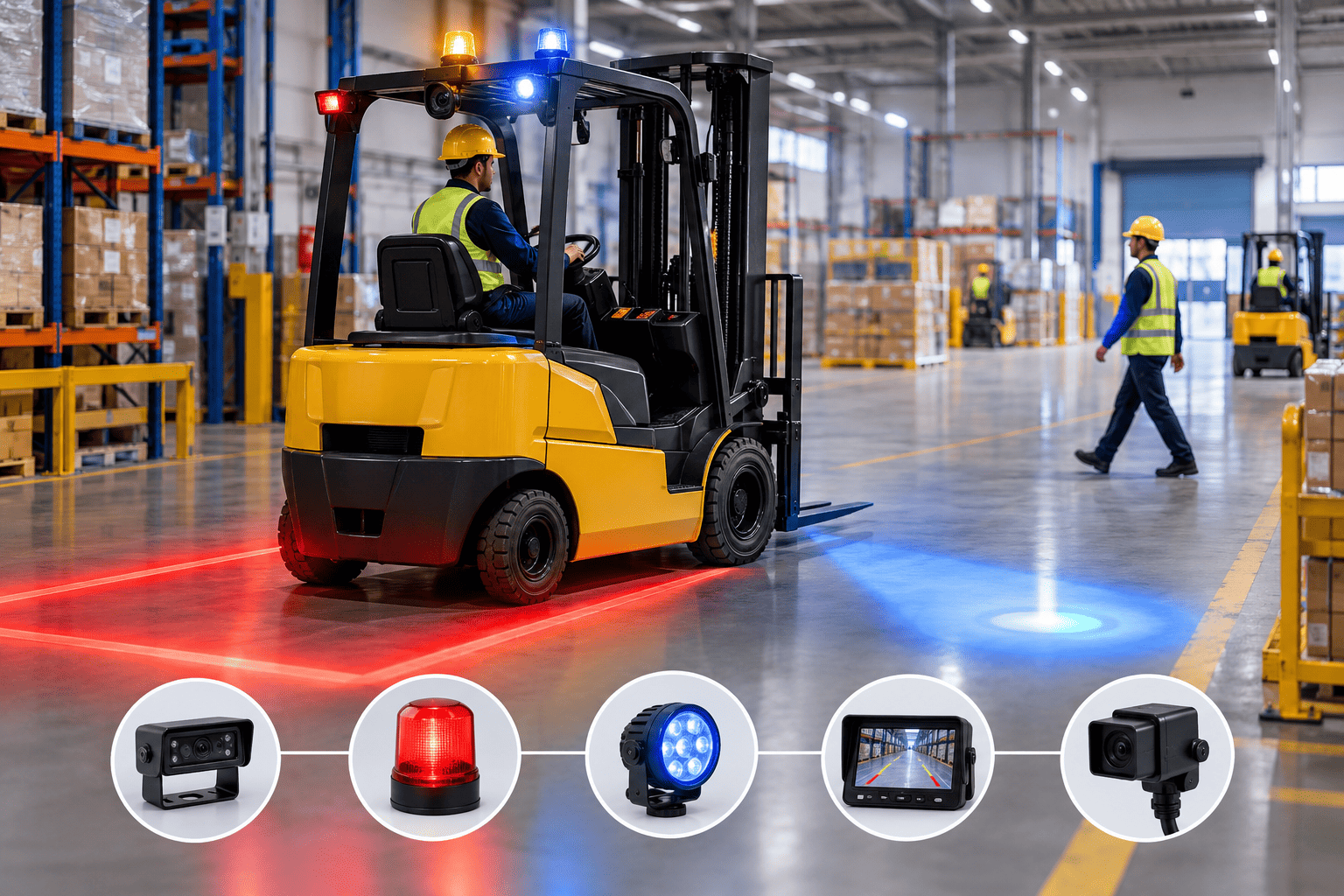
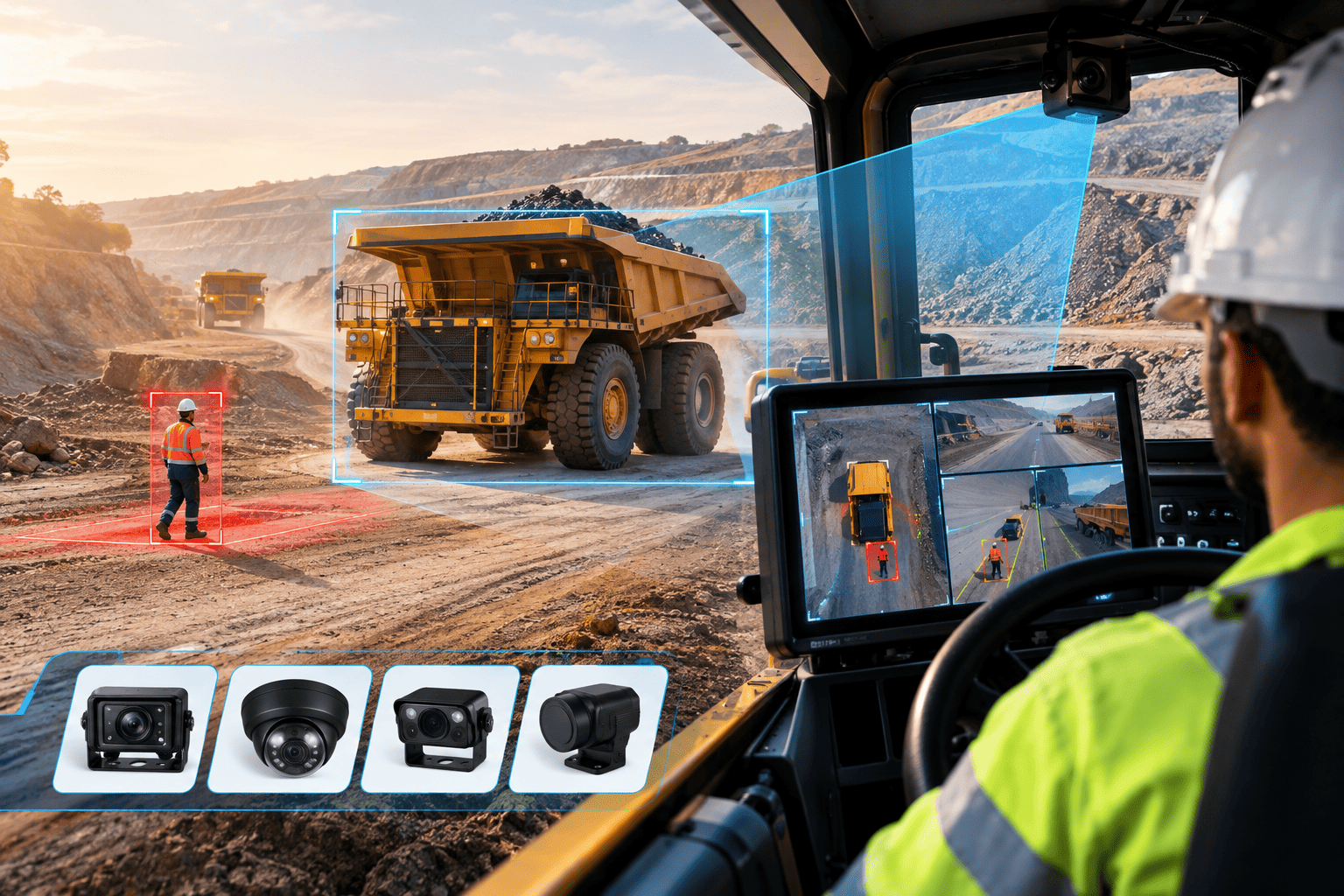
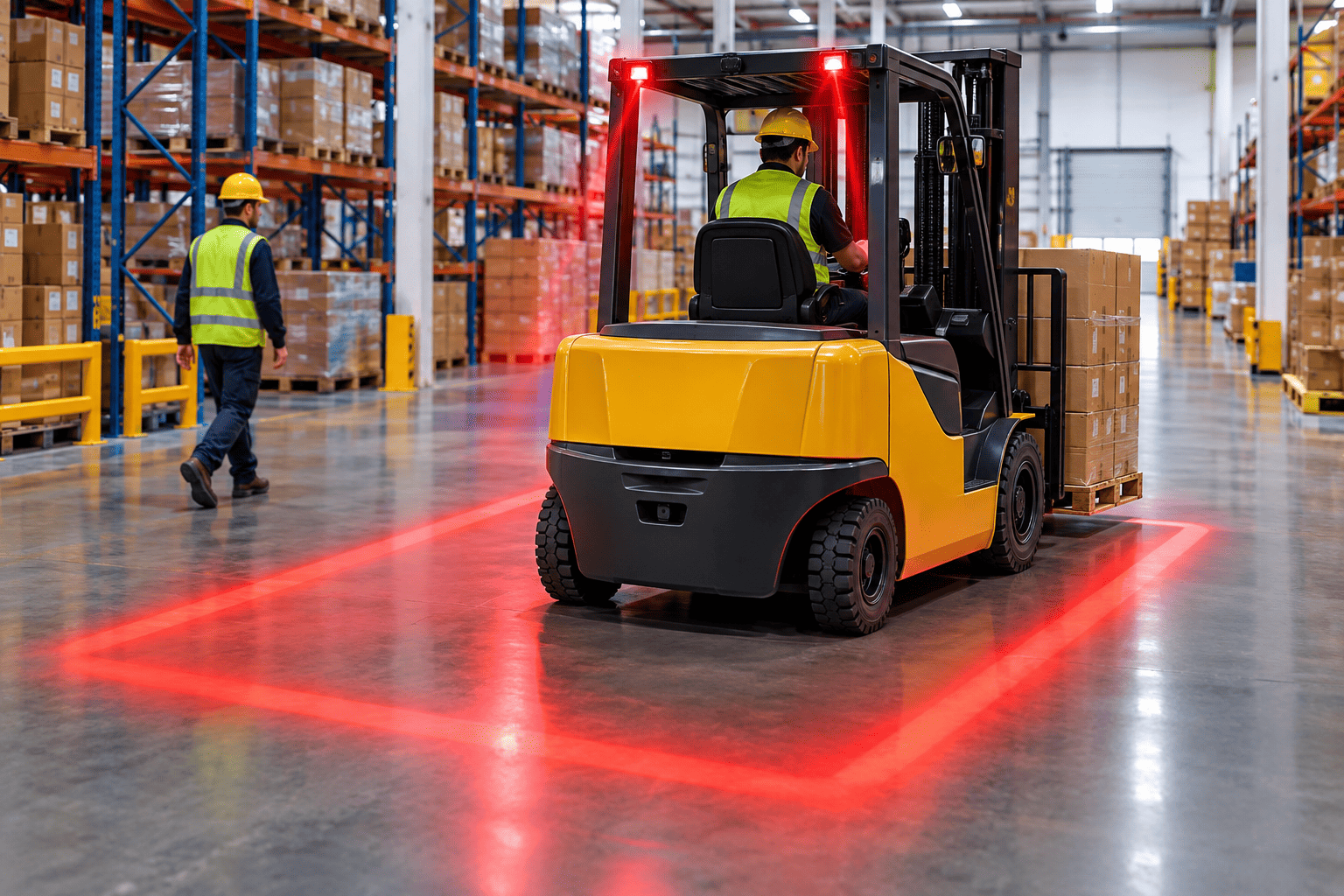
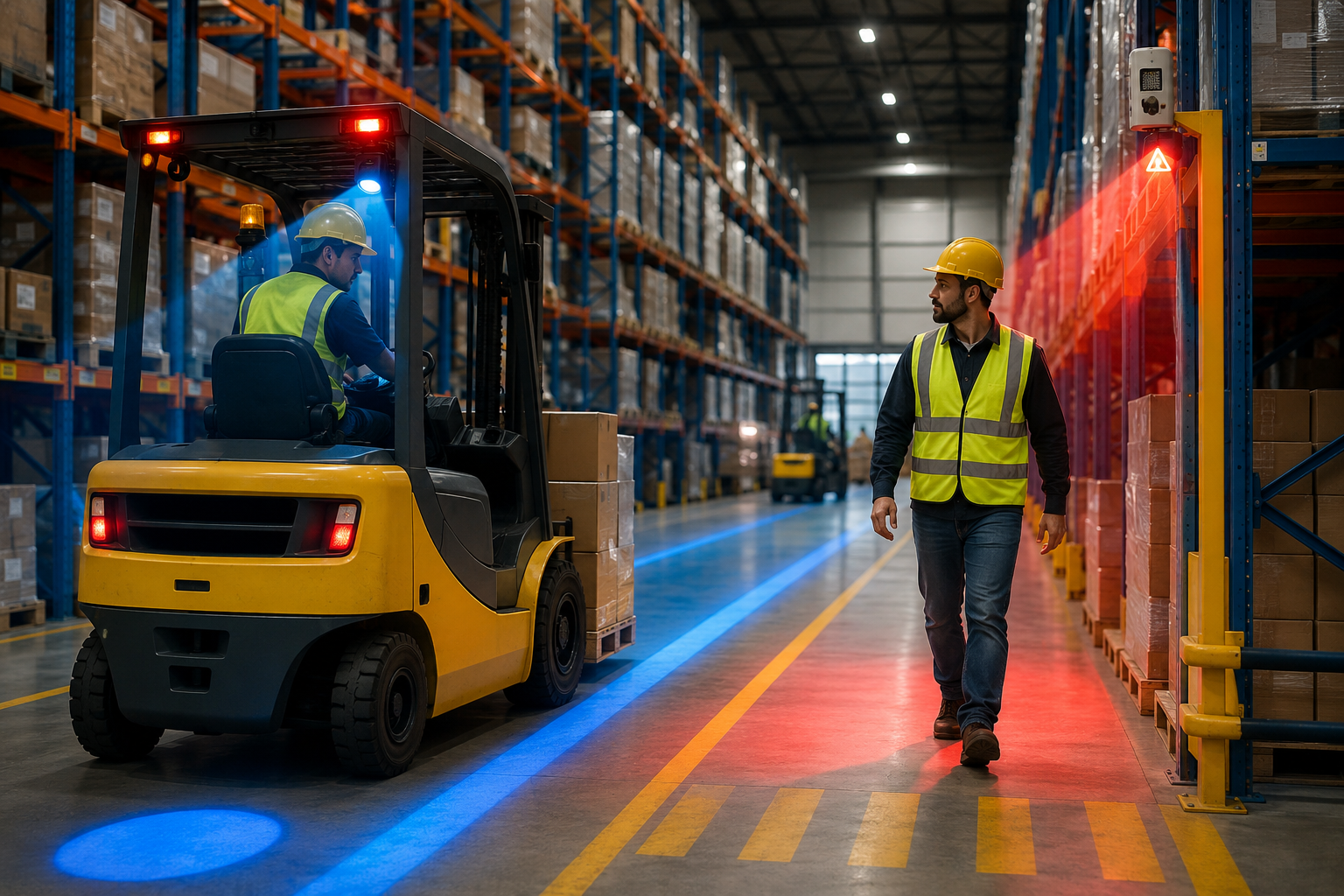
An AI safety system uses cameras, radar, and machine learning to understand what is happening around a vehicle or worksite in real time. Instead of simply recording footage, the system actively looks for people, obstacles, and risky driving patterns, then reacts within a fraction of a second. Many of these ideas actually started with forklift proximity technology used in warehouses, and mining companies have adapted the same approach for much larger and heavier equipment.
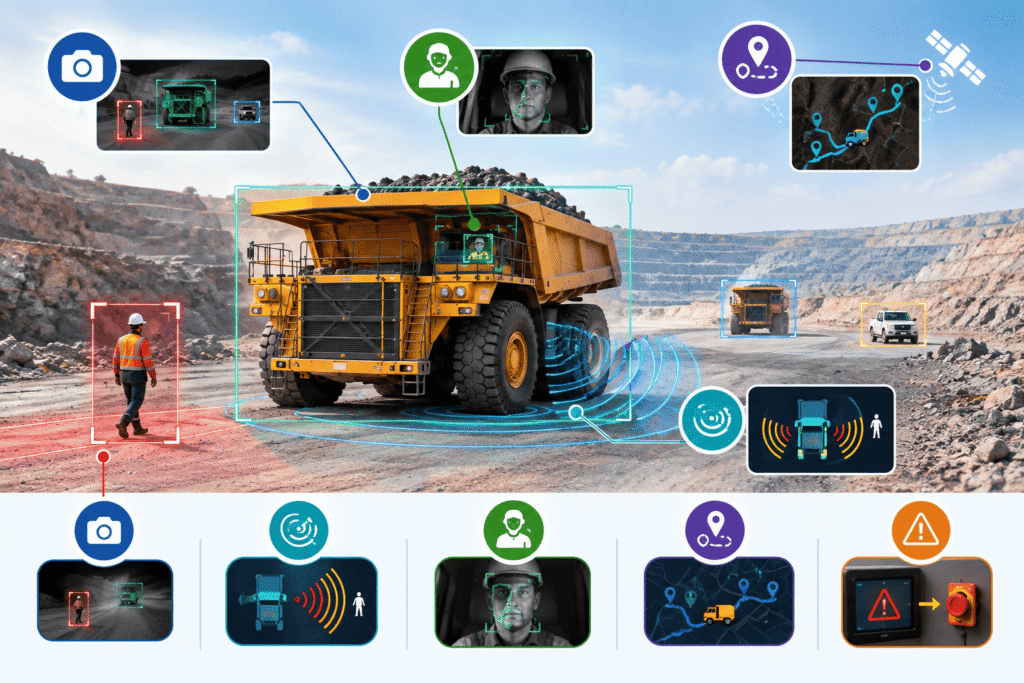
Core Technologies Behind These Systems
- Object recognition cameras: spot people, vehicles, and obstacles even in low light or dusty conditions.
- Radar and proximity sensors: measure distance and closing speed between machines and workers.
- Driver monitoring cameras: track eye movement and head position to catch fatigue or distraction.
- GPS and motion tracking: pinpoint the exact location of vehicles across a large site.
- Automated alerts and cutoffs: warn the operator first, then slow or stop the machine if there is no response.
Top Reasons Mining Companies Use AI Safety Systems
Safety statistics make the case clearly. The Mine Safety and Health Administration recorded 33 mining fatalities across the United States in 2025, a rise of about 27 percent from the 26 fatalities reported in 2024. Numbers like these are why mine operators are not waiting for regulations to force their hand. Many are adopting AI safety systems on their own.
Preventing Powered Haulage Accidents
Powered haulage, meaning trucks, loaders, and other moving equipment, was the leading cause of mining deaths in 2025, responsible for 13 of the 33 fatalities recorded. An anti collision sensor mounted on haul trucks and loaders gives drivers an early warning when a person or another vehicle enters their path, which is often the only difference between a near miss and a tragedy.
Meeting Mine Safety Regulations
Regulators have taken notice too. Federal rules already require proximity detection systems on certain underground coal mining machines, and safety authorities actively encourage similar technology across surface and metal mining operations as well. Beyond meeting compliance requirements, these systems genuinely change how safely a site can operate, from open pit mining to construction and other heavy industries.
How Pedestrian Detection Cameras Improve Site Safety
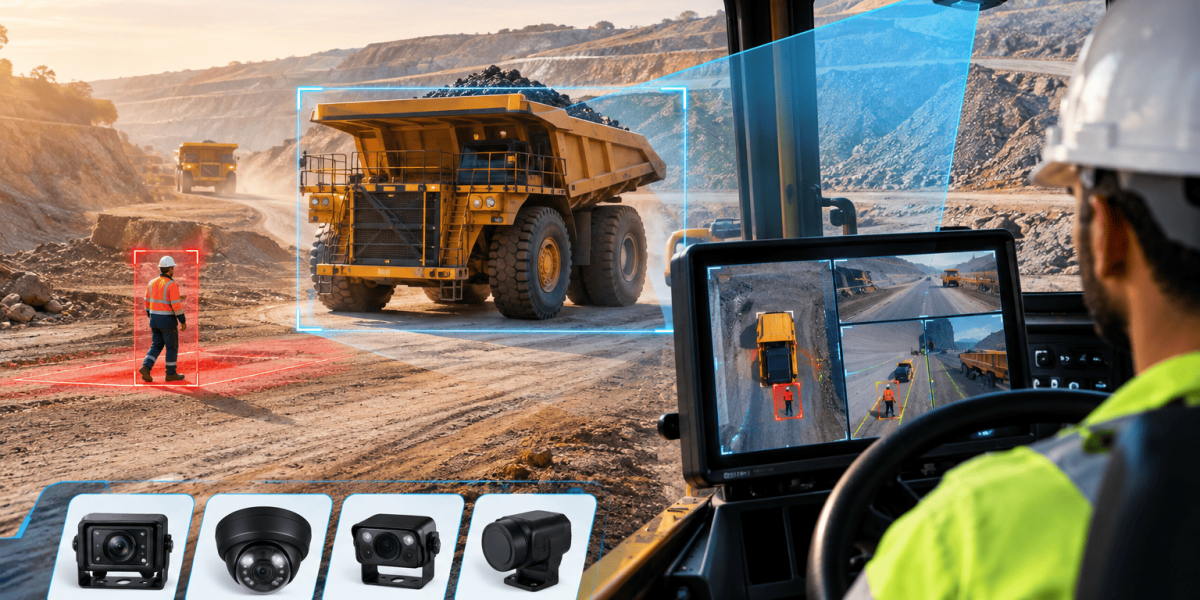
A pedestrian detection camera is one of the simplest and most effective tools a mine can add to its fleet. It scans a wide zone in front of or around a vehicle and picks up the reflective tape on standard high vis safety gear. If a worker gets too close, both the driver and the pedestrian receive an instant audible alert, giving everyone time to react before contact happens.
Reducing Blind Spot Incidents Around Heavy Vehicles
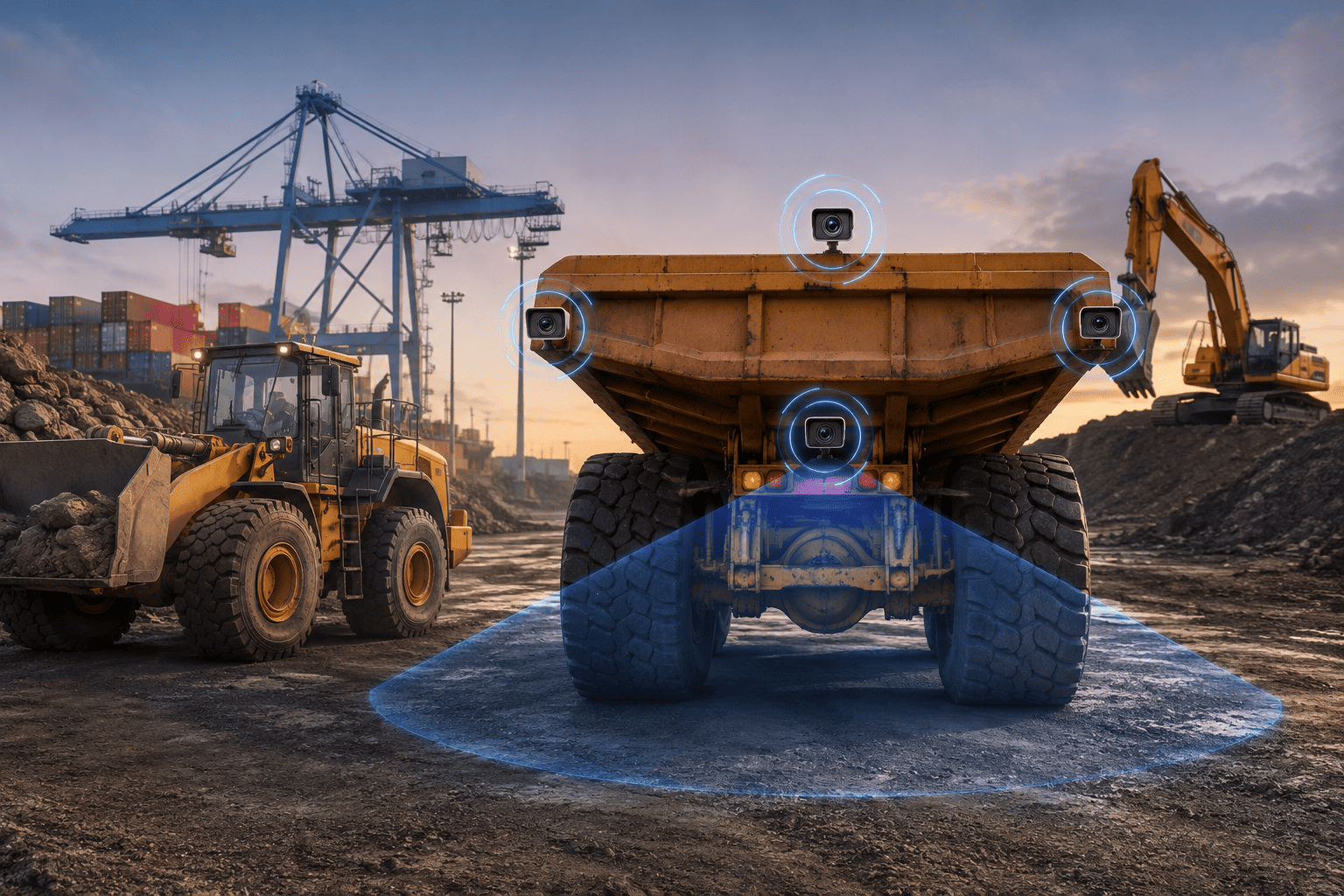
Large mining vehicles have blind spots that no mirror can fully cover. Pairing pedestrian detection with a 360 degree camera system gives the operator a complete view around the machine, not just what is directly behind it. This combination is especially useful during reversing, loading, and tight maneuvering in busy pit areas.
The Role of AI Driver Monitoring Systems in Cutting Fatigue Risk
Long shifts, early starts, and repetitive routes make fatigue one of the biggest hidden risks in mining. An AI driver monitoring system watches for the early signs, drooping eyelids, slow blinking, a tilted head, and sounds an alert the moment it detects a lapse in attention. Some systems even send a live notification to a control room so supervisors can step in immediately.
Why Fatigue Detection Matters in Mining
Fatigue related errors do not always look dramatic in the moment, a slightly delayed brake or a missed turn, but they add up over a shift and across a fleet. Catching these moments early, before they turn into an incident, is exactly what fatigue detection technology is built to do.
Key Benefits of AI Safety Systems for Mining Companies
The benefits of moving to AI powered safety go well beyond avoiding accidents. Mining companies that have adopted these systems commonly report the following gains:
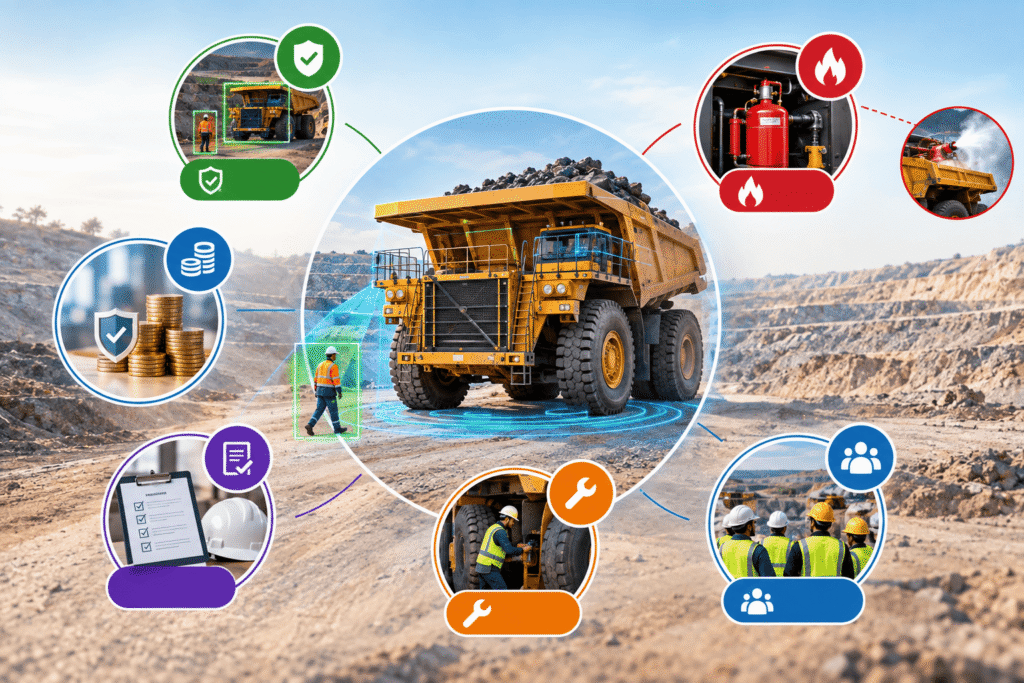
- Fewer site accidents: early warnings give drivers and pedestrians extra seconds to react.
- Lower insurance and liability costs: fewer incidents generally lead to a better claims history over time.
- Stronger regulatory compliance: automated logs make it easy to show inspectors what happened and when.
- Less unplanned downtime: preventing a collision also prevents the repair time and lost production that follows it.
- Better worker confidence: teams feel safer and more supported when they know technology is watching out for them.
Fire related risks matter just as much as collisions on a mine site. Pairing collision avoidance with an automatic fire suppression system on haul trucks and heavy equipment covers two of the biggest hazards on any mine in one connected safety plan.
Choosing the Right AI Safety Partner for Your Mine
Not every safety system is built for the punishing conditions found on a mine site. Dust, vibration, extreme temperatures, and constant equipment movement all put hardware to the test. Look for a partner with proven industrial safety and support services, equipment rated for harsh environments, and a team that understands mining operations rather than a generic vehicle safety catalogue.
Partner With Myport Services India Pvt Ltd for Safer Mining Operations
Myport Services India Pvt Ltd is an industrial safety and port equipment company that designs, supplies, and supports AI powered safety systems for mines, ports, warehouses, and manufacturing sites across India. From pedestrian detection cameras to driver monitoring devices and fire suppression systems, the company builds solutions around the real risks that mining teams face every day, not just a standard product list.
If your mine is ready to move from reactive safety to proactive protection, our team can help you choose the right combination of AI safety systems for your site. Contact us today to book a free consultation and get a customised quote for your operation.
FAQs
AI safety systems in mining use cameras, radar, and driver monitoring technology to detect people, vehicles, and hazards in real time, then alert operators before an accident can happen. They are used across haul trucks, loaders, and other heavy equipment on both surface and underground sites.
The Mine Safety and Health Administration recorded 33 mining fatalities in the United States in 2025, up from 26 in 2024. Powered haulage was the single largest cause, responsible for 13 of those deaths.
A pedestrian detection camera scans the area around a vehicle for the reflective tape found on standard high vis safety gear and sounds an audible alert for both the driver and the pedestrian when someone gets too close, helping prevent struck by accidents on busy sites.
An AI driver monitoring system uses an inward facing camera to track eye closure, blink rate, and head position. When it detects signs of drowsiness or distraction, it triggers an alert for the driver and can notify a control room in real time.
Yes. Federal regulations require proximity detection systems on certain underground coal mining machines, and safety authorities also encourage similar collision avoidance technology on surface and metal mining equipment.
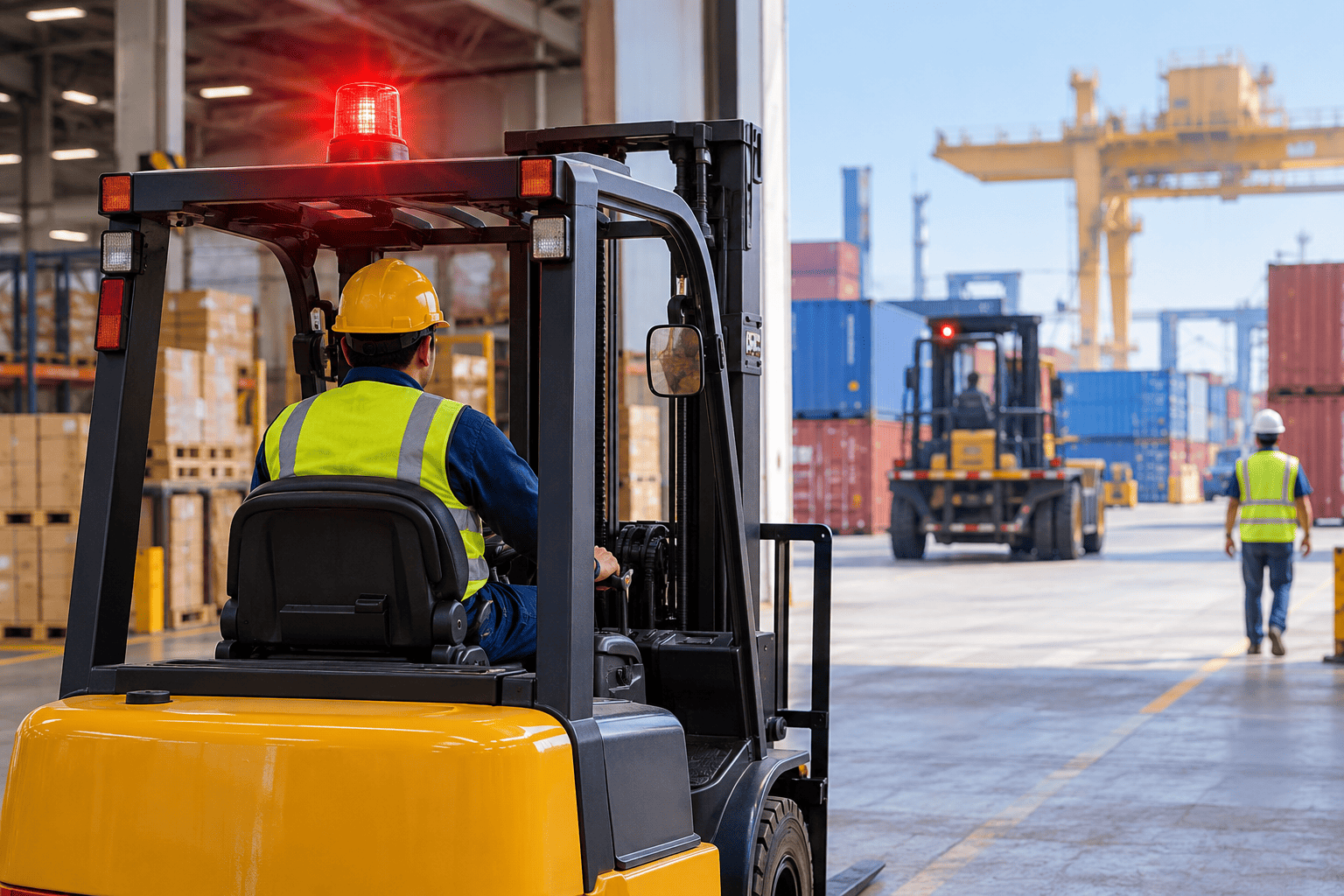
Yes. The same underlying technology, including pedestrian alert systems, camera systems, and anti collision sensors, is widely used across ports, warehouses, and construction sites on forklifts, cranes, and other heavy vehicles.