
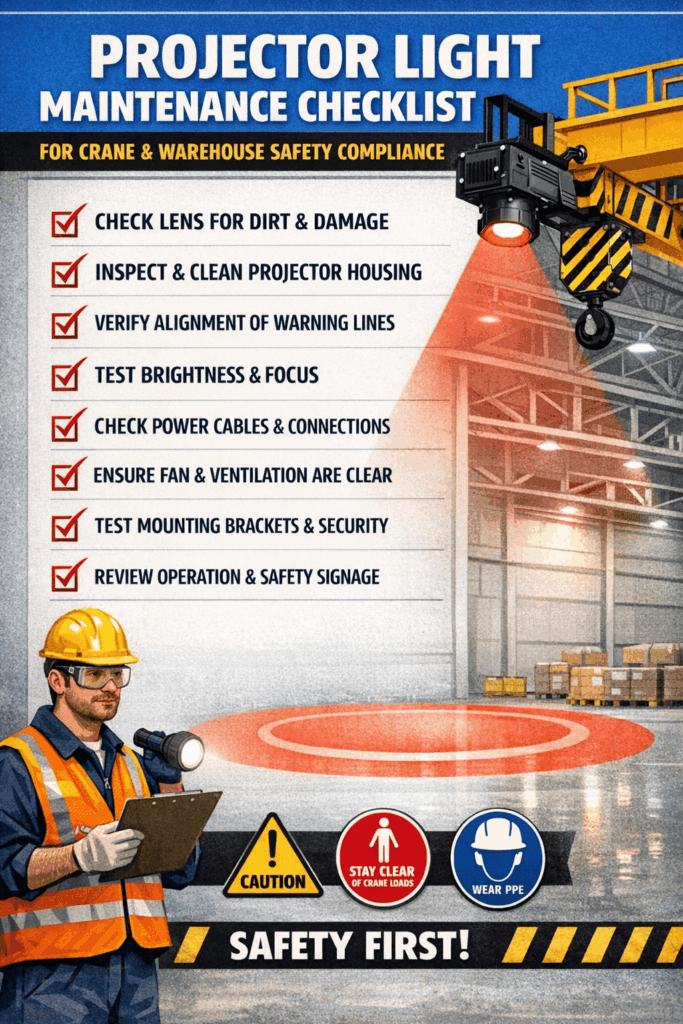
Projector Light Maintenance Checklist for Crane & Warehouse Safety Compliance
In high-risk industrial environments like warehouses, ports, and construction sites, safety is not optional — it is a legal and operational necessity. A well-maintained projector light system is one of the most critical tools for preventing accidents involving cranes, forklifts, and heavy machinery. Regular inspection and upkeep of crane warning lights and forklift safety devices ensures your facility stays compliant, your workers stay protected, and your operations run without costly interruptions. This checklist will guide you through everything you need to know.
Why Projector Light Maintenance Is Critical for Safety Compliance
Industrial facilities are governed by strict safety regulations. Faulty or dim projector lights on cranes and forklifts can lead to collision accidents, regulatory penalties, and — worst of all — serious injuries. Proactive maintenance helps you avoid these risks by ensuring every warning light and safety device functions at peak performance. Explore our full range of industrial projector light solutions designed specifically for heavy-duty environments.
The Complete Projector Light Maintenance Checklist
1. Daily Visual Inspection
Before every shift, operators should visually inspect all warning lights and safety systems. Key checks include:
- Confirm all projector lights on cranes and forklifts are illuminated and functioning
- Look for cracks, moisture ingress, or physical damage to the light housing
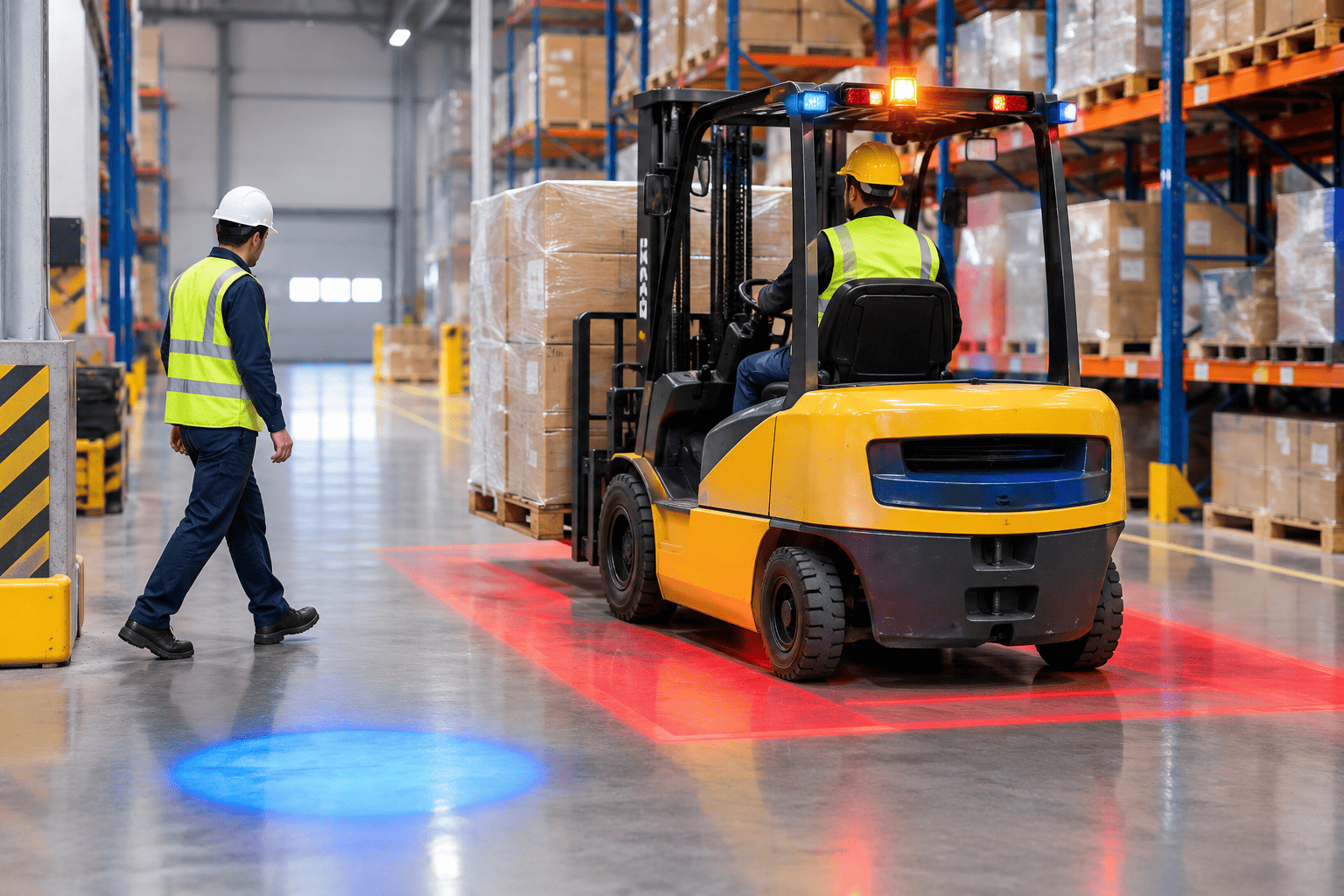
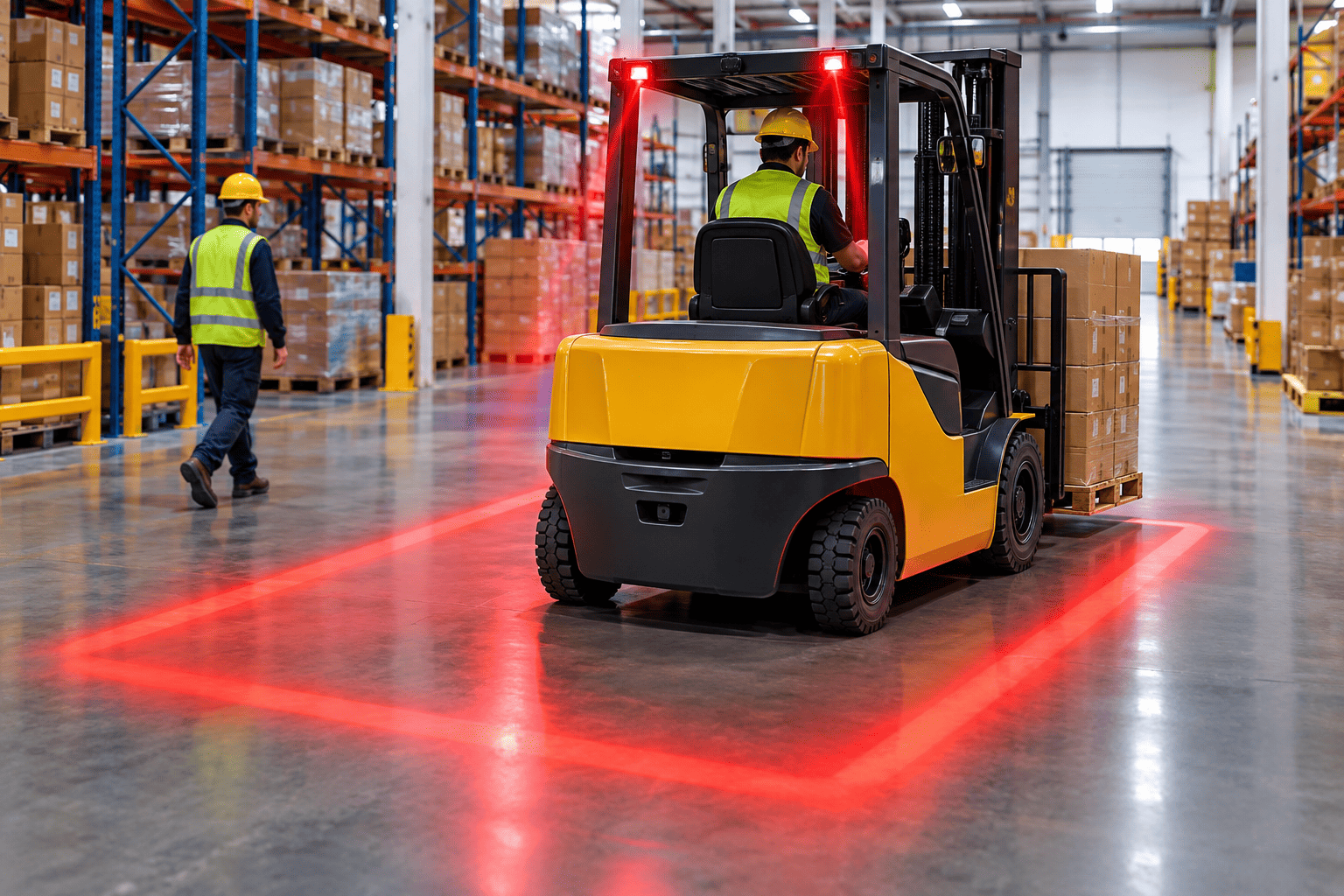
- Verify the color accuracy of crane warning lights (red/blue zones must be clearly visible)
- Check that forklift safety light beams project at the correct angle and distance
2. Weekly Electrical & Mounting Checks
Electrical faults are a leading cause of warning light failure. Weekly checks should cover:
- Inspect wiring harnesses and connectors for corrosion, fraying, or loose connections
- Test voltage levels at the light fixture to ensure consistent power supply
- Tighten mounting brackets and hardware to prevent vibration-related misalignment
- Clean lens covers and housings with appropriate non-abrasive cleaning solutions
3. Monthly Performance & Alignment Testing
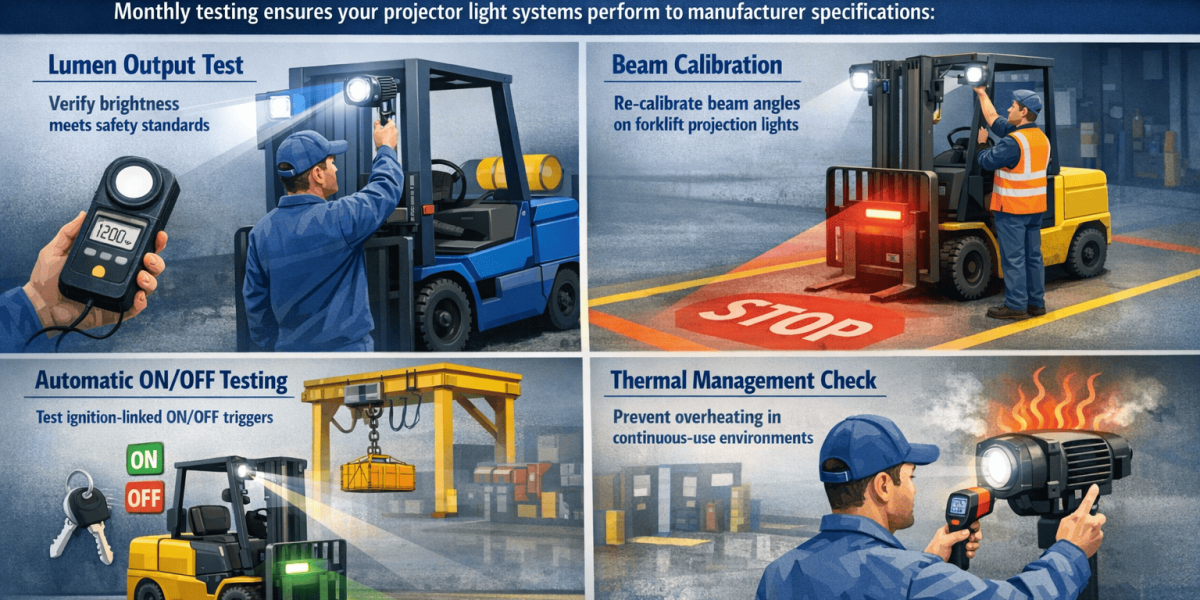
Monthly testing ensures your projector light systems perform to manufacturer specifications:
- Conduct lumen output tests to verify brightness meets safety standards
- Re-calibrate beam angles on forklift projection lights to maintain correct floor zone markings
- Test automatic ON/OFF triggers linked to crane or forklift ignition systems
- Check thermal management components to prevent overheating in continuous-use environments
4. Inspect Your Forklift Safety Camera System
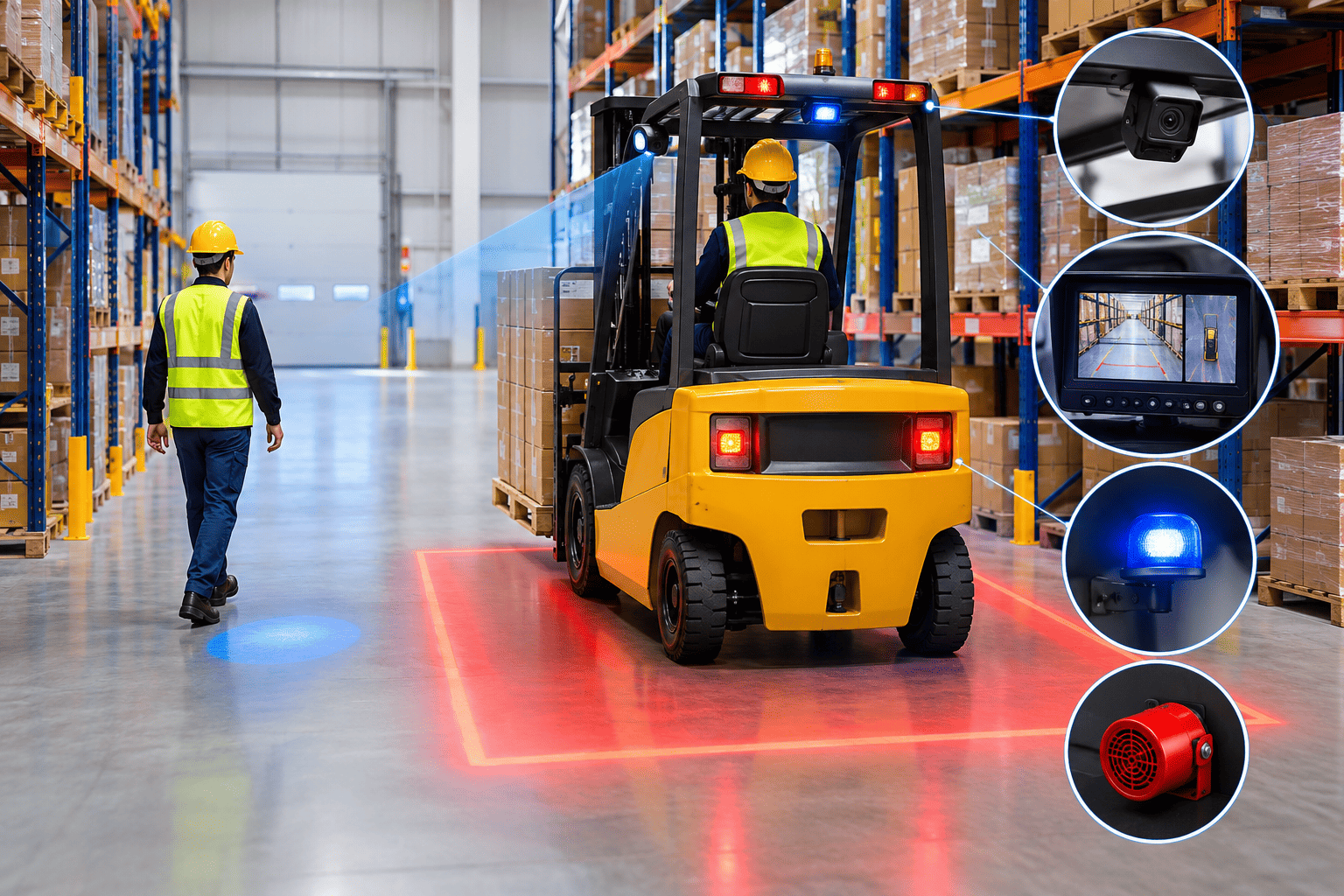
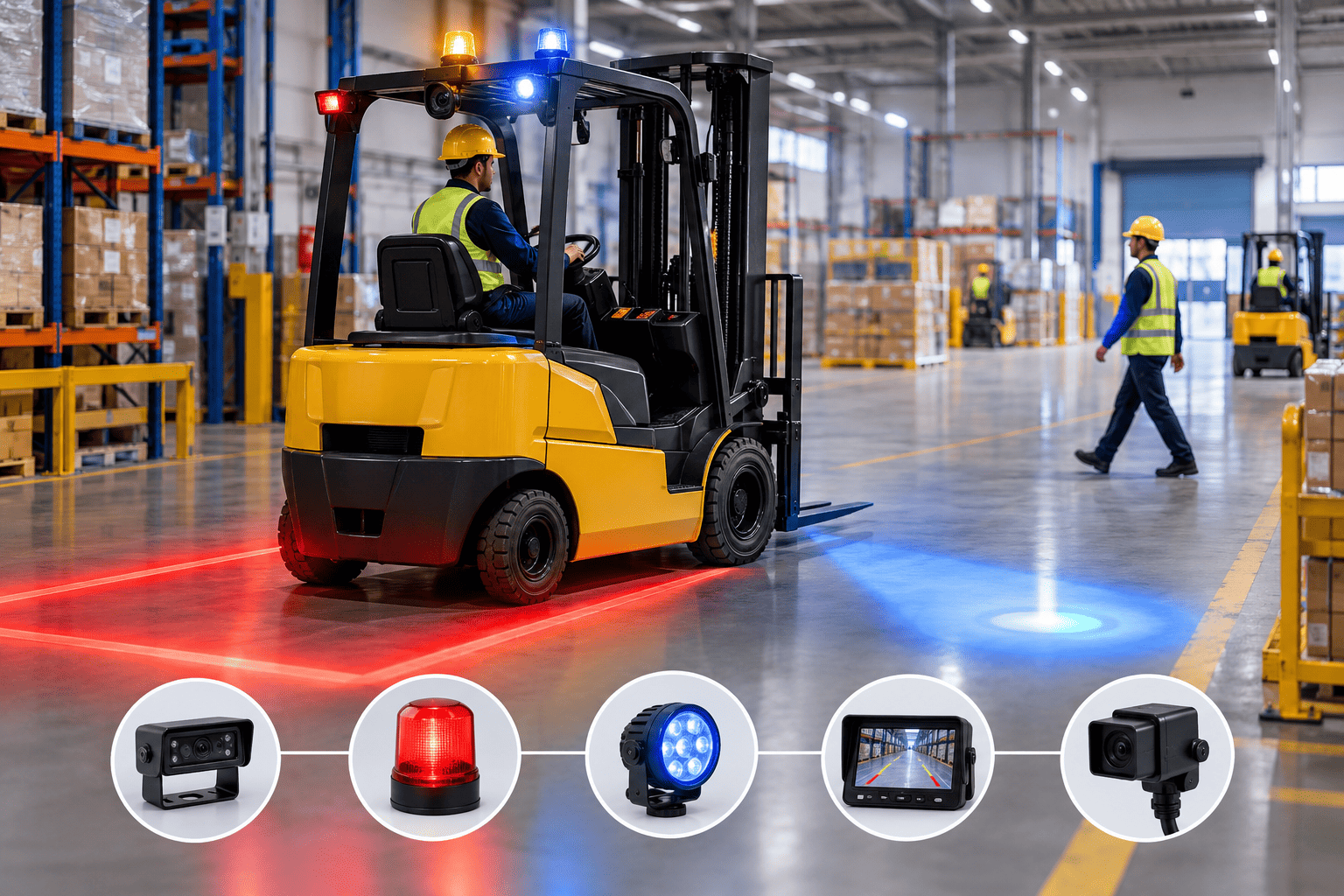
A forklift safety camera system works in tandem with projector lights to provide complete operator visibility. Monthly camera checks should include:
- Clean camera lenses to remove dust, oil, or debris that reduces image clarity
- Test real-time video feeds on the in-cabin monitor for latency or signal loss
- Inspect camera housing for physical damage or seal integrity to prevent water/dust ingress
- Verify camera angles cover all required blind spots as per your facility’s safety layout
Our Fork View Camera System is engineered to integrate seamlessly with industrial forklift operations, delivering real-time visibility in the most demanding conditions.
Quarterly & Annual Compliance Audits
Beyond routine maintenance, scheduled compliance audits are essential to meet industry safety standards:
- Full system documentation review: Maintain logs of all inspection dates, replacements, and repair work
- Third-party safety assessment: Engage certified inspectors to evaluate crane warning light and forklift safety system compliance
- Staff training refresh: Ensure all operators know how to identify and report malfunctioning projector light units
- Spare parts inventory check: Maintain adequate stock of replacement projector lights and camera components to minimise downtime
For comprehensive guidance on building a compliant and proactive workplace, read our detailed resource on warehouse safety management for accident prevention.
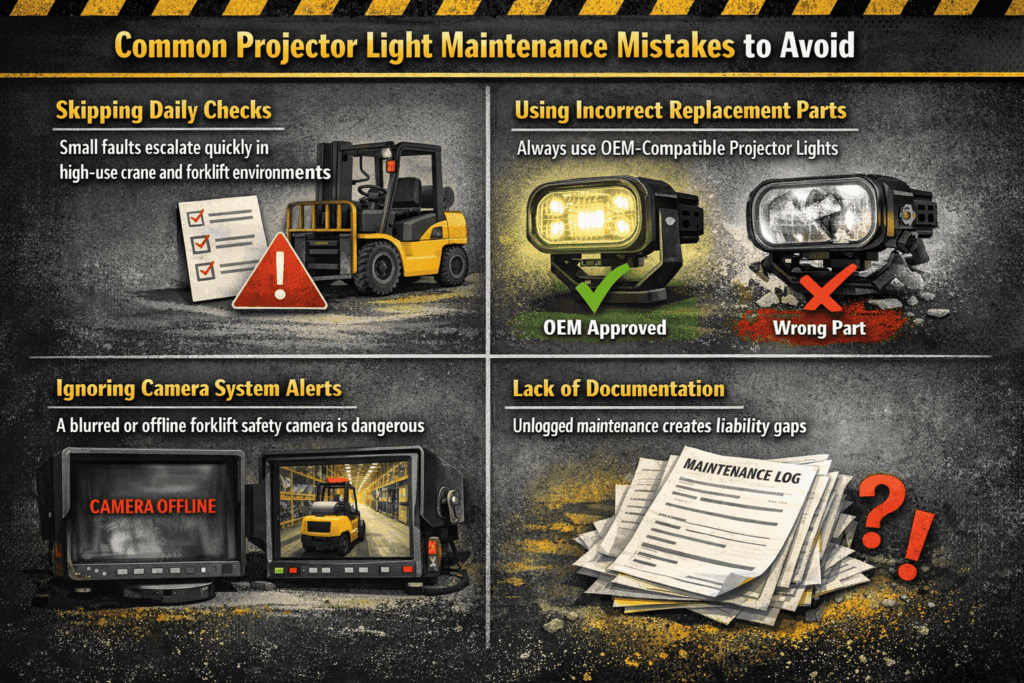
Common Projector Light Maintenance Mistakes to Avoid
- Skipping daily checks: Small faults escalate quickly in high-use crane and forklift environments
- Using incorrect replacement parts: Always use OEM-compatible projector lights rated for industrial voltage and vibration
- Ignoring camera system alerts: A blurred or offline forklift safety camera is as dangerous as no camera at all
- Lack of documentation: Unlogged maintenance creates liability gaps during safety audits and incident investigations.
Conclusion
A consistent maintenance routine for your projector lights, crane warning lights, and forklift safety camera system is not just a regulatory requirement — it is a commitment to protecting your workforce and maintaining operational efficiency. By following this checklist, you minimise unexpected failures, reduce liability exposure, and create a safer workplace. Don’t wait for an incident to identify a gap in your safety systems.
Ready to Upgrade Your Warehouse Safety Systems?
Contact our safety specialists today at My Port Services India to get expert advice on projector lights, crane warning systems, and forklift safety camera systems tailored to your facility’s needs.
FAQs
Projector lights on cranes should be visually inspected daily before each shift. A more thorough electrical and performance check should be carried out weekly, with full compliance audits conducted quarterly or as required by your facility’s safety policy.
Crane warning lights are high-intensity industrial projector lights mounted on cranes to project bright warning zones on the floor or surfaces below. They alert ground-level workers to the crane’s operational area, significantly reducing the risk of collision and crush injuries.
No — they serve different but complementary functions. A forklift safety camera system improves the operator’s visibility of blind spots, while projector lights warn pedestrians on the ground. Using both together creates a multi-layered safety solution that provides superior protection in busy warehouse environments.
The most common causes include vibration from heavy machinery loosening electrical connections, moisture ingress compromising internal components, power surges causing LED burnout, and the use of non-industrial grade replacement units not rated for the operating environment.
You can reach out to the experts at My Port Services India for professional guidance, product sourcing, and tailored safety solutions for your facility. Our team specialises in crane, forklift, and port safety systems.